
The Ghurids or Ghorids were a dynasty of Iranian origin from the Ghor region of present-day central Afghanistan, but the exact ethnic origin is uncertain. The dynasty converted to Sunni Islam from Buddhism, after the conquest of Ghor by the Ghaznavid sultan Mahmud of Ghazni in 1011. The dynasty overthrew the Ghaznavid Empire in 1186 when Sultan Mu’izz ad-Din Muhammad of Ghor conquered the last Ghaznavid capital of Lahore.
At their zenith, the Ghurid empire encompassed Khorasan in the west and reached northern India as far as Bengal in the east. Their first capital was Firozkoh in Mandesh, Ghor, which was later replaced by Herat, and finally Ghazna. The Ghurids were patrons of Persian culture and heritage.
Abu Ali ibn Muhammad (reigned 1011–1035) was the first Muslim king of the Ghurid dynasty to construct mosques and Islamic schools in Ghor.
The Ghurids were succeeded in Khorasan and Persia by the Khwarazmian dynasty, and in northern India by the Mamluk dynasty of the Delhi Sultanate.
Contents
- Origins
- Language
- History
- Early history
- The Ghurids at their zenith
- Decline and fall
- Cultural influences
- Bamiyan Branch
- Ghurid family tree
- Rulers of Ghurid Dynasty
- See also
- Notes
- References
- Sources
- External links
Origins
In the 19th century some European scholars, such as Mountstuart Elphinstone, favoured the idea that the Ghurid dynasty was related to today’s Pashtun people but this is generally rejected by modern scholarship and, as explained by Morgenstierne in the Encyclopaedia of Islam, is for “various reasons very improbable”. Instead scholars assume that the dynasty might have been of Tajik origin. Bosworth further points out that the actual name of the Ghurid family, Āl-e Šansab (Persianized: Šansabānī), is the Arabic pronunciation of the originally Middle Persian name Wišnasp.
When the Ghurids started to distinguish themselves during their conquests, courtiers and genealogists (such as Fakhr al-Din Mubarakshah al-Marwarrudhi and al-Juzjani) forged a fictive genealogy which connected the Ghurids with the Iranian past. They traced the Ghurid family back to the legendary Arab tyrant Zahhak, mentioned in the medieval Persian epic Shahnameh (“The Book of Kings”), whose family had reportedly settled in Ghur after the Iranian hero Fereydun had ended his thousand-year tyranny.
Ghur remained primarily populated by Buddhists till the 11th century. It was then Islamised and gave rise to the Ghurids.
Language
The Ghurids’ native language was apparently different from their court language, Persian. Abu’l-Fadl Bayhaqi, the famous historian of the Ghaznavid era, wrote on page 117 in his book Tarikh-i Bayhaqi: “Sultan Mas’ud I of Ghazni left for Ghoristan and sent his learned companion with two people from Ghor as interpreters between this person and the people of that region.” However, like the Samanids and Ghaznavids, the Ghurids were great patrons of Persian literature, poetry, and culture, and promoted these in their courts as their own. Contemporary book writers refer to them as the “PersianizedGhurids”.
There is nothing to confirm the recent surmise that the inhabitants of Ghor were originally Pashto-speaking, and claims of the existence of Pashto poetry(as in Pata Khazana) from the Ghurid period are unsubstantiated.
History
Early history
A certain Ghurid prince named Amir Banji was the ruler of Ghor and ancestor of the medieval Ghurid rulers. His rule was legitimized by the Abbasid caliphHarun al-Rashid. Before the mid-12th century, the Ghurids had been bound to the Ghaznavids and Seljuks for about 150 years. Beginning in the mid-12th century, Ghor expressed its independence from the Ghaznavid Empire. In 1149 the Ghaznavid ruler Bahram-Shah of Ghazna poisoned a local Ghurid leader, Qutb al-Din Muhammad, who had taken refuge in the city of Ghaznaafter having a quarrel with his brother Sayf al-Din Suri. In revenge, Sayf marched towards Ghazna and defeated Bahram-Shah. However, one year later, Bahram returned and scored a decisive victory against Sayf, who was shortly captured and crucified at Pul-i Yak Taq. Baha al-Din Sam I, another brother of Sayf, set out to avenge the death of his two brothers, but died of natural causes before he could reach Ghazna. Ala al-Din Husayn, one of the youngest of Sayf’s brothers and newly crowned Ghurid king, also set out to avenge the death of his two brothers. He managed to defeat Bahram-Shah, and then had Ghazna sacked; the city burned for seven days and seven nights. It earned him the title of Jahānsūz, meaning “the world burner”.The Ghaznavids retook the city with Seljuq help, but lost it to Oghuz Turks.
In 1152, Ala al-Din Husayn refused to pay tribute to the Seljuks and instead marched an army from Firozkoh but was defeated and captured at Nab by Sultan Ahmed Sanjar. Ala al-Din Husayn remained a prisoner for two years, until he was released in return for a heavy ransom to the Seljuqs. Meanwhile, a rival of Ala al-Din named Husayn ibn Nasir al-Din Muhammad al-Madini had seized Firozkoh, but was murdered at the right moment when Ala al-Din returned to reclaim his ancestral domain. Ala al-Din spent the rest of his reign expanding the domains of his kingdom; he managed to conquer Garchistan, Tukharistan, and Bamiyan, and later gave Bamiyan and Tukharistan to Fakhr al-Din Masud, starting the Bamiyan branch of the Ghurids. Ala al-Din died in 1161, and was succeeded by his son Sayf al-Din Muhammad, who died two years later in a battle.
The Ghurids at their zenith
Sayf al-Din Muhammad was succeeded by his cousin Ghiyath al-Din Muhammad, who was the son of Baha al-Din Sam I, and proved himself to be a capable king. Right after Ghiyath’s ascension, he, with the aid of his loyal brother Mu’izz al-Din Muhammad, killed a rival Ghurid chief named Abu’l Abbas. Ghiyath then defeated his uncle Fakhr al-Din Masud who claimed the Ghurid throne and had allied with the Seljuq governor of Herat and Balkh.
In 1173, Mu’izz al-Din Muhammad reconquered the city of Ghazna and assisted his brother Ghiyath in his contest with the Khwarezmid Empire for the lordship of Khorasan. In 1175, Mu’izz al-Din Muhammad captured and annexed the Ghaznavid principality of Punjab in 1186. He was alleged by contemporary historians to have exacted revenge for his great-grandfather Muhammad ibn Suri. After the death of his brother Ghiyath in 1202, he became the successor of his empire and ruled until his assassination in 1206 near Jhelum by Khokhar tribesmen (in modern-day Pakistan).
Decline and fall
A confused struggle then ensued among the remaining Ghūrid leaders, and the Khwarezmids were able to take over the Ghūrids’ empire in about 1215. Though the Ghūrids’ empire was short-lived, Mu’izz al-Din Muhammad’s conquests strengthened the foundations of Muslim rule in India. On his death, the importance of Ghazna and Ghor dissipated, and they were replaced by Delhi as the power centre in India during the rule of his Mamluksuccessors.
Cultural influences
The Ghurids were great patrons of Persian culture and literature and lay the basis for a Persianized state in the Indian subcontinent. However, most of the literature produced during the Ghurid era has been lost. They also transferred Iranian architecture to India.
Out of the Ghurid state grew the Delhi Sultanate which established the Persian language as the official court language of the region – a status it retained until the late Mughal era in the 19th century.
-
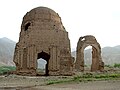
The two mausoleums of Chisht (the western was built in 1167)
-
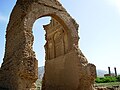
The eastern mausoleum of Chisht (built in 1194)
-

The Minaret of Jam in Ghor Province of Afghanistan (finished in 1174/75) – UNESCO World Heritage Sitesince 2002
-

Inscription on the Minaret of Jam, showing the name and titles of Sultan Ghiyath ad-Din Muhammad
-
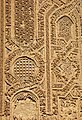
Ornamental bands on the Minaret of Jam, bearing the 19th Sura of the Koran
-

Ruins of the Shah-i Mashhad madrasa (built in 1176)
| Titular Name(s) | Personal Name | Reign | |
|---|---|---|---|
| Malik ملک |
Amir Suri امیر سوری |
9th-century – 10th-century | |
| Malik ملک |
Muhammad ibn Suri محمد بن سوری |
10th-century – 1011 | |
| Malik ملک |
Abu Ali ibn Muhammad ابوعلی بن محمد |
1011–1035 | |
| Malik ملک |
Abbas ibn Shith عباس بن شیث |
1035 – 1060 | |
| Malik ملک |
Muhammad ibn Abbas محمد بن عباس |
1060 – 1080 | |
| Malik ملک |
Qutb al-din Hasan قطب الدین حسن |
1080 – 1100 | |
| Abul-Muluk ابولملک |
Izz al-Din Husayn عز الدین حسین |
1100–1146 | |
| Malik ملک |
Sayf al-Din Suri سیف الدین سوری |
1146–1149 | |
| Malik ملک |
Baha al-Din Sam I بهاء الدین سام |
1149 | |
| Malik ملک Sultan al-Muazzam سلطان المعظم |
Ala al-Din Husayn علاء الدین حسین |
1149–1161 | |
| Malik ملک |
Sayf al-Din Muhammad سیف الدین محمد |
1161–1163 | |
| Sultan Abul-Fateh سلطان ابوالفتح |
Ghiyath al-Din Muhammad غیاث الدین محمد |
1163–1202 | |
| Sultan Shahāb-ud-din Muhammad Ghori سلطان شهاب الدین محمد غوری |
Mu’izz al-Din Muhammad معز الدین محمد |
1202–1206 | |
| Sultan سلطان |
Ghiyath al-Din Mahmud غیاث الدین محمود |
1206–1212 | |
| Sultan سلطان |
Baha al-Din Sam III بهاء الدین سام |
1212–1213 | |
| Sultan سلطان |
Ala al-Din Atsiz علاء الدین دراست |
1213–1214 | |
| Sultan سلطان |
Ala al-Din Ali علاء الدین علی |
1214–1215 | |
| Khwarazmian conquest | |||
- Blue shaded rows signifies Ghurid vassalage under the Ghaznavids.
- Yellow shaded rows signifies Ghurid vassalage under the Seljuks.
- Green shaded row signifies Ghurid vassalage under the Khwarazmian dynasty.
-

Sultan Ghiyath al-Din Muhammad
-

Sultan Mu’izz al-Din Muhammad
Bamiyan Branch
| Titular Name(s) | Personal Name | Reign | |
|---|---|---|---|
| Malik ملک |
Fakhr al-Din Masud فخرالدین مسعود |
1152–1163 | |
| Malik ملک |
Shams al-Din Muhammad ibn Masud شمس الدین محمد بن مسعود |
1163–1192 | |
| Malik ملک |
Abbas ibn Muhammad عباس بن محمد |
1192 | |
| Malik ملک Abul-Mu’ayyid ابوالمؤید |
Baha al-Din Sam II بهاء الدین سام |
1192–1206 | |
| Malik ملک |
Jalal al-Din Ali جلال الدین علی |
1206–1215 | |
| Khwarazmian conquest | |||
- Green shaded row signifies Ghurid vassalage under the Khwarazmian dynasty.
Ghurid family tree
| Amir Suri (9th-century-10th-century) |
|||||||||||||||||||||||||||||||||||||||||||||||||||||||||||||||||||||||||||||||||||||||||||||||||||||||||||||||||||||||
| Muhammad ibn Suri (10th-century-1011) |
|||||||||||||||||||||||||||||||||||||||||||||||||||||||||||||||||||||||||||||||||||||||||||||||||||||||||||||||||||||||
| Abu Ali ibn Muhammad (1011–1035) |
Shith ibn Muhammad | ||||||||||||||||||||||||||||||||||||||||||||||||||||||||||||||||||||||||||||||||||||||||||||||||||||||||||||||||||||||
| Abbas ibn Shith (1035–1060) |
|||||||||||||||||||||||||||||||||||||||||||||||||||||||||||||||||||||||||||||||||||||||||||||||||||||||||||||||||||||||
| Muhammad ibn Abbas (1060–1080) |
|||||||||||||||||||||||||||||||||||||||||||||||||||||||||||||||||||||||||||||||||||||||||||||||||||||||||||||||||||||||
| Qutb al-din Hasan (1080–1100) |
|||||||||||||||||||||||||||||||||||||||||||||||||||||||||||||||||||||||||||||||||||||||||||||||||||||||||||||||||||||||
| Izz al-Din Husayn (1100–1146) |
|||||||||||||||||||||||||||||||||||||||||||||||||||||||||||||||||||||||||||||||||||||||||||||||||||||||||||||||||||||||
| Sayf al-Din Suri (1146–1149) |
Shuja al-Din Muhammad | Qutb al-Din Muhammad | Baha al-Din Sam I (1149) |
Nasir al-Din Muhammad Kharnak | Ala al-Din Husayn (1149–1161) |
Fakhr al-Din Masud (1152–1163) |
|||||||||||||||||||||||||||||||||||||||||||||||||||||||||||||||||||||||||||||||||||||||||||||||||||||||||||||||||
| Ala al-Din Ali (1214–1215) |
|||||||||||||||||||||||||||||||||||||||||||||||||||||||||||||||||||||||||||||||||||||||||||||||||||||||||||||||||||||||
| Ghiyath al-Din Muhammad (1163–1202) |
Mu’izz al-Din Muhammad (1202–1206) |
Shams al-Din Muhammad (1163–1192) |
|||||||||||||||||||||||||||||||||||||||||||||||||||||||||||||||||||||||||||||||||||||||||||||||||||||||||||||||||||||
| Sayf al-Din Muhammad (1149–1157) |
Ala al-Din Atsiz (1213–1214) |
Abbas ibn Muhammad (1192) |
Baha al-Din Sam II (1192–1206) |
||||||||||||||||||||||||||||||||||||||||||||||||||||||||||||||||||||||||||||||||||||||||||||||||||||||||||||||||||||
| Ghiyath al-Din Mahmud (1206–1212) |
|||||||||||||||||||||||||||||||||||||||||||||||||||||||||||||||||||||||||||||||||||||||||||||||||||||||||||||||||||||||
| Jalal al-Din Ali (1206–1215) |
Ala al-Din Muhammad | ||||||||||||||||||||||||||||||||||||||||||||||||||||||||||||||||||||||||||||||||||||||||||||||||||||||||||||||||||||||
| Baha al-Din Sam III (1212–1213) |
|||||||||||||||||||||||||||||||||||||||||||||||||||||||||||||||||||||||||||||||||||||||||||||||||||||||||||||||||||||||
Rulers of Ghurid Dynasty
| King | Reign |
|---|---|
| Amir Suri | 9th Century |
| Muhammad ibn Suri | 1007 – 1011 |
| Abu Ali ibn Muhammad | 1011 – 1035 |
| Abbas ibn Shith | 1035 – 1060 |
| Muhammad ibn Abbas | 1060 – 1080 |
| Qutb al-din Hasan | 1080 – 1100 |
| Izz al-Din Husayn | 1100 – 1146 |
| Sayf al-Din Suri | 1146 – 1149 |
| Baha al-Din Sam I | 1149 |
| Ala al-Din Husayn | 1149 – 1161 |
| Sayf al-Din Muhammad | 1161 – 1163 |
| Ghiyath al-Din Muhammad | 1163 – 1203 |
| Mu’izz al-Din Muhammad | 1172 – 1203 |
| 1203 – 1206 | |
| Ghiyath al-Din Mahmud | 1206 – 1212 |
| Baha al-Din Sam III | 1212 – 1213 |
| Ala al-Din Atsiz | 1213 – 1214 |
| Ala al-Din Ali | 1214 – 1215 |