
The University of Edinburgh is a public research university in Edinburgh, Scotland. Granted a royal charter by King James VI in 1582 and officially opened in 1583, it is one of Scotland’s four ancient universities, and the sixth-oldest university in continuous operation in the English-speaking world. The university played an important role in Edinburgh becoming a chief intellectual centre during the Scottish Enlightenment, and contributed to the city being nicknamed the “Athens of the North”.
The university is a member of a number of prestigious academic organisations, including the Russell Group, the Coimbra Group, the Universitas 21, the League of European Research Universities, a consortium of 23 leading research universities in Europe, and the Una Europa. It has the third-largest endowment of any university in the United Kingdom, after the universities of Cambridge and Oxford. In 2019–20, the university has a consolidated annual income of £1,125.3 million, of which £296.1 million was from research grants and contracts. It has five main campuses in the city of Edinburgh, which include many buildings of historical and architectural significance such as those in the Old Town.
The alumni of the university include some of the major figures of modern history. From naturalist Charles Darwin, statistician Thomas Bayes and philosopher David Hume to inventor Alexander Graham Bell, physicist James Clerk Maxwell, geologist James Hutton, three signatories of the United States Declaration of Independence, ten heads of state and government (including three Prime Ministers of the United Kingdom), and a myriad of famous writers such as Sir Walter Scott, Robert Louis Stevenson, and Sir Arthur Conan Doyle. As of August 2021, Edinburgh’s alumni and academic staff include 19 Nobel laureates, three Turing Award laureates, an Abel Prize laureate and Fields Medalist, two Pulitzer Prize winners, two currently sitting UK Supreme Court Justices, and several Olympic gold medallists.
The university receives approximately 60,000 applications every year, making it the second most popular university in the United Kingdom by volume of applications. It has the 4th-highest average UCAS entry tariff in Scotland, and 7th overall in the United Kingdom. It continues to have links to the British Royal Family, having had Prince Philip, Duke of Edinburgh as its Chancellor from 1953 to 2010 and Princess Anne since 2011.
History
Founding

King James’s College, c. 1647
Founded by the Edinburgh Town Council, the university began life as a college of law using part of a legacy left by a graduate of the University of St Andrews, Bishop Robert Reid of St Magnus Cathedral, Orkney. Through efforts by the council and ministers of the city, such as John Knox’s successor James Lawson, the institution broadened in scope and became formally established as a college by a royal charter, granted by King James VI on 14 April 1582. This was unprecedented in newly Presbyterian Scotland, as older universities in Scotland had been created through papal bulls. Established as Tounis College, it opened its doors to students in October 1583. Instruction began under the charge of another St Andrews graduate, theologian Robert Rollock. It was the fourth Scottish university in a period when the richer and much more populous England had only two. The college was renamed King James’s College when King James VI visited it in 1617.
Development
~Thomas Jefferson, writing to his son-in-law Thomas Mann Randolph, Jr. in 1786.
The university expanded by founding a Faculty of Law in 1707, a Faculty of Arts in 1708, and a Faculty of Medicine in 1726. In 1762, Reverend Hugh Blair was appointed by King George III as the first Regius Professor of Rhetoric and Belles-Lettres. This formalised literature as a subject at the university and the foundation of the English Literature department, making Edinburgh the oldest centre of literary education in Britain. By the 18th century, the university was a leading centre of the Scottish Enlightenment.

The University of Edinburgh, 1827
Before the building of Old College by architect William Henry Playfair to plans by Robert Adam, the University of Edinburgh existed in a hotchpotch of buildings from its establishment until the early 19th century. The university’s first custom-built building was Old College, now home to Edinburgh Law School, situated on South Bridge. The South Bridge Act 1785 was passed in the House of Commons of the United Kingdom on 21 April 1785 for rebuilding or improving the University. Its first forte in teaching was anatomy and the developing science of surgery, from which it expanded into many other subjects. Bodies to be used for dissection were brought to the university’s anatomy lecture theatre through a secret tunnel from the basement of a nearby house (today’s College Wynd student accommodation). It was also through this tunnel that the victims of murderers William Burke and William Hare were delivered in the 1820s, and so was the body of Burke himself after his execution in 1829.
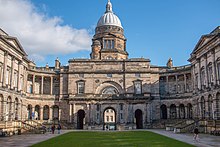
The university’s Old College
Towards the end of the 19th century, Old College was becoming overcrowded and Sir Robert Rowand Anderson was commissioned to design new premises for the Medical School in 1875. Initially, the design incorporated a graduation hall, but this was seen as too ambitious. After funds were donated by brewer and politician Sir William McEwan in 1894, a separate graduation building was constructed after all, also designed by Anderson. The resulting McEwan Hall was presented to the university in 1897.

The university’s McEwan Hall
New College was originally opened in 1846 as a Free Church of Scotland college, later of the United Free Church of Scotland. Since the 1930s it has been the home of the School of Divinity. Prior to the 1929 reunion of the Church of Scotland, candidates for the ministry in the United Free Church studied at New College, whilst candidates for the old Church of Scotland studied in the Divinity Faculty of the University of Edinburgh. During the 1930s the two institutions came together, sharing the New College site on The Mound.

The university’s New College
A students’ representative council (SRC) was founded in 1884 by student Robert Fitzroy Bell. In 1889, the SRC voted to establish a union (the Edinburgh University Union, EUU), to be housed in Teviot Row House. Edinburgh University Sports Union (EUSU) was founded in 1866, and the Edinburgh University Women’s Union in 1906. On 1 July 1973 the SRC, EUU and Chambers Street Union merged to form Edinburgh University Students’ Association (EUSA).

The building that houses the university’s Institute of Geography was once part of the Royal Infirmary.
On 10 May 1951, the Royal (Dick) Veterinary College, founded in 1823, was reconstituted as the Royal (Dick) School of Veterinary Studies, and officially became part of the University of Edinburgh. It achieved full faculty status as Faculty of Veterinary Medicine in 1964. Following the internal restructuring of the university in 2002, it once again became the Royal (Dick) School of Veterinary Studies.
By the end of the 1950s, there were around 7,000 students matriculating annually.
On 1 August 1998, Moray House Institute of Education, founded in 1848, merged with the University of Edinburgh becoming its Faculty of Education. Following the internal restructuring of the university in 2002, Moray House became known as the Moray House School of Education.
2000 to present
The Edinburgh Cowgate Fire of December 2002 destroyed a number of university buildings, including some 3,000 m2 (30,000 sq ft.) of the School of Informatics at 80 South Bridge. This was replaced with the Informatics Forum on the central campus, completed in July 2008.
The Edinburgh Cancer Research Centre (ECRC) was opened in 2002 by Princess Anne on the Western General Hospital site. In 2007, the MRC Human Genetics Unit formed a partnership with the Centre for Genomic and Experimental Medicine and the ECRC to create the Institute of Genetics and Molecular Medicine (IGMM).
The Euan MacDonald Centre was established in 2007 as a research centre for motor neuron disease (MNDs). The centre was part funded by a donation from Scottish entrepreneur Euan MacDonald and his father Donald.
In April 2008, the Roslin Institute, established in 1993, became part of the Royal (Dick) School of Veterinary Studies, and the institute’s 197 staff members became the university employees on 1 May.
On 1 August 2011, the Edinburgh College of Art, founded in 1760, formally merged with the university’s School of Arts, Culture and Environment.

Main Entrance of the Edinburgh College of Art
In 2011, the Royal (Dick) School of Veterinary Studies moved to new premises on the Easter Bush campus. The campus was officially opened by Princess Anne on 27 September 2011.
The Centre for Regenerative Medicine (CRM), a stem cell research centre dedicated to the development of regenerative treatments, was opened by the Princess Anne on 28 May 2012. It is home to biologists and clinical academics from the MRC Centre for Regenerative Medicine, and applied scientists working with the Scottish National Blood Transfusion Service and Roslin Cells. On 25 August 2014, the centre reported on the first working organ, a thymus, grown from scratch inside an animal.
In 2014, the Zhejiang University-University of Edinburgh Institute (ZJE) was founded as a joint institute offering degrees in biomedical sciences, taught in English. The campus, located in Haining, Zhejiang Province, China, opened on 16 August 2016.
Beginning in 2015, the University of Edinburgh maintains a Wikimedian in Residence.
In 2018, the University of Edinburgh was a signatory in the landmark £1.3 billion Edinburgh and South East Scotland City Region Deal, with the UK and Scottish governments, six local authorities and all universities and colleges in the region. The university committed to delivering a range of economic benefits to the region through the Data-Driven Innovation initiative. In conjunction with Heriot-Watt University, the initiative created four innovation hubs – the Bayes Centre, Usher Institute, Edinburgh Futures Institute, Easter Bush Campus, and one based at Heriot-Watt, the National Robotarium. The deal also included creation of the Edinburgh International Data Facility, which performs high-speed data processing in a secure environment.
Medical school
Edinburgh’s Medical School is renowned throughout the world. It was widely considered the best medical school in the English-speaking world throughout the 18th century and the first half of the 19th century.
The Edinburgh Seven were the first group of matriculated undergraduate female students at any British university. Led by Sophia Jex-Blake, they began studying medicine at the University of Edinburgh in 1869. Although they were unsuccessful in their struggle to graduate and qualify as doctors, their campaign gained national attention and won them many supporters including Charles Darwin. Their efforts put the rights of women to university education on the national political agenda, which eventually resulted in legislation to ensure women could study at university in 1877. The University of Edinburgh admitted women to graduate in medicine in 1894. In 2015, the Edinburgh Seven were commemorated with a plaque at the University.
The Polish School of Medicine was established in 1941 as “a wartime testament to this spirit of enlightenment”. Students were to be those drawn from the Polish army to Britain and were taught in Polish. When the school was closed in 1949, 336 students had matriculated, of which 227 students graduated with the equivalent of an MBChB. A total of 19 doctors obtained a doctorate or MD. A bronze plaque commemorating the existence of the Polish School of Medicine is located in the Quadrangle of the Medical School in Teviot Place.
The Little France campus, including the Chancellor’s Building, was opened on 12 August 2002 by the Duke of Edinburgh. The campus houses the Medical School on the site of the Royal Infirmary of Edinburgh.
Campuses
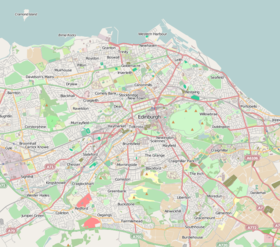


University of Edinburgh campuses. Easter Bush is located 7 miles south of the city
The university has five main sites in Edinburgh:
- Central Area
- King’s Buildings
- BioQuarter
- Western General
- Easter Bush
The university is responsible for a number of historic and modern buildings across the city, including Scotland’s oldest purpose-built concert hall, and the second oldest in use in the British Isles, St Cecilia’s Hall; Teviot Row House, which is the oldest purpose-built student union building in the world; and the restored 17th-century Mylne’s Court student residence which stands at the head of Edinburgh’s Royal Mile.
Central Area
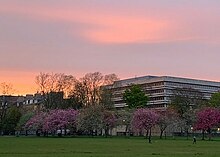
The university’s Main Library viewed from the Meadows

Gordon Aikman Lecture Theatre in George Square
The Central campus is spread around numerous squares and streets in Edinburgh’s Southside, with some buildings in Old Town. It is the university’s oldest area, occupied primarily by the College of Arts, Humanities and Social Sciences and the School of Informatics. The highest concentration of university buildings is around George Square, which includes the Central campus’ largest lecture hall, the Gordon Aikman Lecture Theatre, the Main Library, the Appleton Tower and the 40 George Square, a teaching and administrative building. Around nearby Bristo Square lie the Dugald Stewart Building, the Informatics Forum, McEwan Hall, Teviot Row House, and the old Medical School buildings in Teviot Place, which still house pre-clinical medical courses and biomedical sciences despite the relocation of the Medical School to Little France. The main EUSA buildings of Potterrow, Pleasance and Teviot are located near the Central area, as is the Edinburgh College of Art in Lauriston Place. North of George Square lies the university’s Old College housing the School of Law, St Cecilia’s Hall, and the School of Divinity’s New College on The Mound. Some of these buildings are used to host events during the Edinburgh International Festival every summer.
Pollock Halls

St Leonard’s Hall, Pollock Halls of Residence
Pollock Halls, adjoining Holyrood Park to the east, provides accommodation (mainly half board) for a minority of students in their first year. Two of the older houses in Pollock Halls were demolished in 2002 and a new building (Chancellor’s Court) has been built in their place, leaving a total of ten buildings. Self-catered flats elsewhere account for the majority of university-provided accommodation. The area also includes a £9 million redeveloped John McIntyre Conference Centre, which is the University’s premier conference space.
Holyrood (Moray House)

Moray House main quadrangle
Coat of Arms, displayed on St Leonard’s Land
The Moray House School of Education and Sport, just off the Royal Mile, used to be the Moray House Institute for Education until this merged with the University in August 1998. The University has since extended Moray House’s Holyrood site. The buildings include redeveloped and extended Sports Science, Physical Education and Leisure Management facilities at St Leonard’s Land linked to the Sports Institute in the Pleasance. The 2016 Holyrood North halls have been named after former principal Sir Timothy O’Shea and further student accommodation is provided at Holyrood South. The Outreach Centre, Institute for Academic Development (University Services Group) and the Edinburgh Centre for Professional Legal Studies (School of Law) are also located at Holyrood.
King’s Buildings
The King’s Buildings (KB) campus is located in the south of the city. Most of the Science and Engineering College’s research and teaching activities take place at the King’s Buildings, which occupy a 35-hectare site. It includes C. H. Waddington Building (the Centre for Systems Biology at Edinburgh), James Clerk Maxwell Building (the administrative and teaching centre of the School of Physics and Astronomy and the School of Mathematics), The Royal Observatory, William Rankine Building (School of Engineering’s Institute for Infrastructure and Environment) and others. Until 2012, the King’s Buildings campus was served by three libraries: Darwin Library, James Clerk Maxwell Library, and Robertson Engineering and Science Library. These were replaced by the Noreen and Kenneth Murray Library opened for the 2012/13 academic year. The KB also hosts the National e-Science Centre (NeSC), Scottish Microelectronics Centre (SMC), Scottish Universities Environmental Research Centre (SUERC), and the Scottish Institute for Enterprise.
BioQuarter
BioQuarter, south of Edinburgh is home to the majority of medical facilities of the university, alongside the city’s hospital – the Royal Infirmary of Edinburgh. At Little France, the £40 million Chancellor’s Building was opened on 12 August 2002 by the Duke of Edinburgh, which houses the Edinburgh Medical School at the Royal Infirmary of Edinburgh. The building was a joint project between private investors, local authorities and the University to create a large modern hospital, veterinary clinic and research institute. It has two large lecture theatres and a medical library. It is connected to the Royal Infirmary of Edinburgh by a series of corridors. Queen’s Medical Research Institute was opened in 2005 and provides facilities for research into the understanding of common diseases.
Easter Bush
The Easter Bush campus houses the Royal (Dick) School of Veterinary Studies, the Roslin Institute, Jeanne Marchig International Centre for Animal Welfare Education, and the Veterinary Oncology and Imaging Centre.
The Royal (Dick) School of Veterinary Studies, founded in 1823 by William Dick, is a world leader in veterinary education, research and practice. Its new 11,500 square metre building opened in 2011.
The Roslin Institute is an animal sciences research institute which is sponsored by the Biotechnology and Biological Sciences Research Council. The Institute won international fame in 1996, when its researchers Ian Wilmut, Keith Campbell and their colleagues created Dolly the sheep, the first mammal to be cloned from an adult cell. A year later Polly and Molly were cloned; both sheep contained a human gene.
Western General
The Western General Hospital campus contains the Institute of Genetics and Molecular Medicine, Wellcome Trust Clinical Research Facility, and Clinical Neuroscience.
-

The Roslin Institute
-

The Royal (Dick) School of Veterinary Studies
-

Evolution House, Edinburgh College of Art
-

Main Entrance, Business School
-

Appleton Tower
-

40 George Square, former David Hume Tower
Organisation and administration
Governance
In common with the other ancient universities of Scotland, and in contrast to the position in nearly all of the other pre-1992 Universities which are established by Royal Charters, the University of Edinburgh is constituted by the Universities (Scotland) Acts 1858 to 1966, making specific provision for three major bodies in the governance of the University: the University Court, the Academic Senate (Senatus Academicus), and the General Council.
University Court
The University Court is the university’s governing body and is the legal persona of the university. By the Universities (Scotland) Act 1889, it is a body corporate, with perpetual succession and a common seal, and all the property belonging to the university at the passing of the Act was vested in the Court.
The present powers of the Court are defined in the Universities (Scotland) Act 1966, and include among others:
- the administration and management of the whole revenue and property of the university;
- the regulation of the salaries of all members of staff;
- the establishment of Committees of its own members or others and the determination of the membership and the quorum of such committees.
Senatus Academicus
The Senatus Academicus (Senate) is the university’s supreme academic body. The core function of the Senate is to regulate and superintend the teaching and discipline of the university and to promote research. The Senate is chaired by the Principal & Vice-Chancellor. Senate meets three times per year. At each meeting, Senate hosts a presentation and discussion session which is open to all members of staff.
General Council
The General Council consists of graduates, academic staff, current and former University Court members, which is part of the formal governance structure of the university. By statute, the General Council is required to meet twice per year to consider matters affecting the wellbeing and prosperity of the university. Through its Business Committee, it plays an advisory role to Court in the governance of the university. The Council elects the Chancellor of the university and three Assessors on the University Court.
University officials

Princess Anne, current Chancellor of the university
The Chancellor is the titular head of the university created in 1858. Their duties include conferring degrees and enhancing the profile and reputation of the university on national and global levels. The position of Chancellor is the highest in the university, and is elected by the university’s General Council, and remains Chancellor for life. Princess Anne has held the position of Chancellor of the University since March 2011 succeeding Prince Philip, Duke of Edinburgh. Princess Anne is also Patron of the university’s Royal (Dick) School of Veterinary Studies.
The Lord Rector of the university is elected every three years by the students and staff. The primary role of the Rector is to preside at the University Court. The Rector also chairs meetings of the General Council in absence of the Chancellor. They work closely with students and the Edinburgh University Students’ Association (EUSA). The current Rector of the university is Debora Kayembe.
The Principal is responsible for the overall operation of the university. The Principal, nominated by the Curators of Patronage, is the President of the Senatus Academicus and ex-officio, and a member of the University Court. The current Principal of the university is Peter Mathieson who has held the position since February 2018. Also, as the Vice-Chancellor, he confers degrees on behalf of the Chancellor Princess Anne.
Colleges and schools
In 2002, the university was reorganised from its nine faculties into three “colleges”. While technically not a collegiate university, it now comprises the Colleges of Arts, Humanities and Social Sciences (CAHSS), Science & Engineering (CSE) and Medicine & Vet Medicine (CMVM). Within these colleges are “schools” – roughly equivalent to the departments they succeeded; individual schools have a good degree of autonomy regarding their finances and internal organisation. This has brought a certain degree of uniformity (in terms of administration at least) across the university. The university now has 21 schools in total.
Arts, Humanities and Social Sciences

The English Literature department, the longest-established centre of literary education in Britain, was founded in 1762 when Rev. Hugh Blair was appointed the first Regius Professor of Rhetoric and Belles-Lettres by George III.
The College of Arts, Humanities and Social Sciences is the largest of the three colleges in the University of Edinburgh. It has 11 schools, one centre, 25,815 students, and 3,071 academic staff. An advantage of its size is the very wide range of subjects and research specialisms. There are over 300 undergraduate, 200 taught postgraduate programmes, and about 2,200 research postgraduate students. In the 2014 REF, 12 out of 23 Units submitted by the college were ranked within the top five in the UK, with five Units were placed within the top three. It includes the oldest English Literature department in Britain, which was ranked 7th in the world in the 2021 QS English Language & Literature subject rankings. The college hosts Scotland’s ESRC Doctoral Training Centre (DTC), the Scottish Graduate School of Social Science, which is the biggest one amongst 14 ESRC-accredited DTCs in the UK.
- Business School
- School of Divinity
- School of Economics
- Edinburgh College of Art
- Moray House School of Education and Sport
- School of Health in Social Science
- School of History, Classics and Archaeology
- School of Law
- School of Literatures, Languages and Cultures
- School of Philosophy, Psychology and Language Sciences
- School of Social and Political Science
- The Centre for Open Learning
Medicine and Veterinary Medicine

The Edinburgh Medical School’s historical main building on Teviot Place
The College of Medicine and Veterinary Medicine has a long history as one of the best medical institutions in the world. In the last research assessment exercise, it was rated 1st in the UK for medical research submitted to the Hospital-based Clinical Subjects Panel. All of the work was rated at International level and 40% at the highest, “world-leading” level. The medical school is ranked 1st in Scotland and 3rd in the UK by the Times Good University Guide 2013, the Complete University Guide 2013, and the Guardian University Guide 2013.
The eight original faculties formed four Faculty Groups in August 1992. Medicine and Veterinary Medicine became one of these, and in September 2002, became the smallest of the university’s three colleges, with 7,250 students and 1,984 academic staff.
- Edinburgh Medical School
- Royal (Dick) School of Veterinary Studies
Science and Engineering

The Informatics Forum, home to the School of Informatics since 2008
In the sixteenth century, science was taught as “natural philosophy”. The seventeenth century saw the institution of the University Chairs of Mathematics and Botany, followed the next century by Chairs of Natural History, Astronomy, Chemistry and Agriculture. During the eighteenth century, the University was a key contributor to the Scottish Enlightenment and it educated many of the most notable scientists of the time. It was Edinburgh’s professors who took a leading part in the formation of the Royal Society of Edinburgh in 1783. In 1785, Joseph Black, professor of Chemistry and discoverer of carbon dioxide, founded the world’s first Chemical Society. The nineteenth century was a time of huge advances in scientific thinking and technological development. The first named degrees of Bachelor and Doctor of Science was instituted in 1864, and a separate ‘Faculty of Science’ was created in 1893 after three centuries of scientific advances at Edinburgh. The Regius Chair in Engineering was established in 1868, and the Regius Chair in Geology in 1871. In 1991 the Faculty of Science was renamed the Faculty of Science and Engineering, and in 2002 it became the College of Science and Engineering. The college has 11,445 students and 2,838 academic staff.
- School of Biological Sciences
- School of Chemistry
- School of Engineering
- School of GeoSciences
- School of Informatics
- School of Mathematics
- School of Physics and Astronomy
Sub-units, centres and institutes
Some subunits, centres and institutes within the university are listed as follows:
- Artificial Intelligence Applications Institute (AIAI)
- Centre for the History of the Book (CHB)
- Centre for Regenerative Medicine (CRM)
- Centre for the Study of World Christianity (CSWC)
- Centre for Theology and Public Issues (CTPI)
- Digital Curation Centre (DCC)
- Edinburgh Cancer Research Centre (ECRC)
- Edinburgh Dental Institute (EDI)
- Edinburgh Parallel Computing Centre (EPCC)
- Edinburgh School of Architecture and Landscape Architecture (ESALA)
- Euan MacDonald Centre
- Institute for Advanced Studies in the Humanities (IASH)
- International Centre for Mathematical Sciences (ICMS)
- Institute for the Study of Science, Technology and Innovation (ISSTI)
- Koestler Parapsychology Unit
- Laboratory for Foundations of Computer Science (LFCS)
- MRC Human Genetics Unit (HGU)
- Nursing Studies
- Roslin Institute
- Scottish Studies
- UK Centre for Astrobiology (UKCA)
Academic profile
The University of Edinburgh is a member of the Russell Group of research-led British universities and one of several British universities to be a member of both the Coimbra Group and the LERU. The university is also a member of the Una Europa and Universitas 21, an international association of research-led universities. Edinburgh is a member of the Sutton 13 of top-ranked Universities in the UK. Beside, the university maintains historically strong ties with the neighbouring Heriot-Watt University for teaching and research.
The University of Edinburgh offers a wide range of free online MOOC courses on three global platforms Coursera, Edx and FutureLearn.
Admissions
| 2017 | 2016 | 2015 | 2014 | 2013 | |
|---|---|---|---|---|---|
| Applications | 62,480 | 61,650 | 59,255 | 55,060 | 50,750 |
| Offer Rate (%) | 50.4 | 48.6 | 49.2 | 45.9 | 44.3 |
| Enrols | 6,800 | 6,250 | 6,185 | 5,780 | 5,490 |
| Yield (%) | 21.6 | 20.9 | 21.2 | 22.9 | 24.4 |
| Applicant/Enrolled Ratio | 9.19 | 9.86 | 9.58 | 9.53 | 9.24 |
| Average Entry Tariff | 189 | 180 | 483 | 485 | 482 |
For the academic year 2019/20, Edinburgh had the 7th-highest average entry qualification for undergraduates among UK universities, with new students averaging 186 UCAS points, equivalent to just above AAAaa in A-level grades. The university gives offers of admission to 50.4% of its 18 year old applicants, the 5th-lowest amongst the Russell Group.
As the number of places available for Scottish and EU students are capped by the Scottish Government since students do not pay tuition fees, students applying from the rest of the UK and outside of the European Union have a higher likelihood of an offer. Excluding courses within the Edinburgh College of Art, the most competitive courses for Scottish/EU applicants in 2016 were International Relations, Oral Health Sciences and Business Studies with offer rates of 7%, 8% and 9% respectively. In comparison, students from the rest of the UK have a 55% chance of receiving an offer for International Relations and students from outside of the EU have a 79% chance of an offer for International Relations.
33.6% of Edinburgh’s undergraduates are privately educated, the seventh-highest proportion amongst mainstream British universities. As of the end of 2016, the university has a higher proportion of female than male students with a male to female ratio of 39:61 in the undergraduate population. The undergraduate student body is composed of 37% Scottish students, 31% from the rest of the UK, 11% from the EU, and 20% from outside of the EU.

Graduates leaving the McEwan Hall
Rankings and reputation
| National rankings | |
|---|---|
| Complete (2022) | 12 |
| Guardian (2021) | 13 |
| Times / Sunday Times (2021) | 17 |
| Global rankings | |
| ARWU (2020) | 42 |
| QS (2022) | 16 |
| THE (2021) | 30 |
In the 2014 Research Excellence Framework (REF), Edinburgh was ranked 4th by research power and 9th by GPA in the UK, both were 1st in Scotland. The results also indicate that the university was home to over 35% of Scotland’s 4* (world-leading) research. In 2008, the Research Assessment Exercise (RAE) rated the medicine and informatics 1st in the UK. Edinburgh places within the top 10 in the UK and 1st in Scotland for the employability of its graduates as ranked by recruiters from the UK’s major companies. A 2015 government report found that Edinburgh is one of only two Scottish universities (along with the St Andrews) that London-based recruitment and elite professions such as investment banking consider applicants from. Edinburgh was ranked 13th overall in The Sunday Times 10-year average (1998–2007) ranking of British universities based on consistent league table performance.
Edinburgh was ranked 26th in the world and 5th in the UK by the 2020 Aggregate Ranking of Top Universities, a league table based on the three major world university rankings, ARWU, QS and THE, displayed in the right box. In the 2021 U.S. News & World Report, Edinburgh was ranked 30th worldwide and 5th in the UK. Edinburgh was placed at 37th in the world and 6th in the UK in the 2020 Round University Ranking. The 2021–22 Center for World University Rankings placed Edinburgh at 45th in the world and 6th in the UK. In 2021, it ranked 63rd among the universities around the world by SCImago Institutions Rankings.
The noticeable disparity between the University of Edinburgh’s research capacity, endowment and international status on the one hand, and its ranking in national league tables on the other, is largely on account of the central role which ‘student satisfaction’ plays in the latter. The University of Edinburgh was ranked bottom in the UK for teaching quality by its students in the 2012 National Student Survey. According to The Times and Sunday Times Good University Guide 2015, “The university is trying to address undergraduates’ concerns with a new personal tutor system and a peer support scheme. However, Edinburgh achieved an unwanted clean sweep of rock bottom rankings among universities in this year’s National Student Survey (NSS) for questions to do with the promptness, usefulness and extent of academic feedback, suggesting the university still has a long way to go to turn around a poor position”. In the Good University Guide 2017, Edinburgh fell to its worst-ever position of joint 37th (placed with local Heriot-Watt University) in a domestic league table. The fall was attributed to lower NSS scores combined with a significant drop (78.6% to 73%) in the prospects of its graduates.
In the 2022 Complete University Guide, 32 out of the 49 subjects offered by Edinburgh were ranked within the top 10 nationally, with Asian Studies, Chemical Engineering, Education, Geology, Linguistics, Mechanical Engineering, Medicine, Music, Nursing, Physics & Astronomy, Social Policy, Theology & Religious Studies and Veterinary Medicine within top 5.
In the 2021 ARWU Global Ranking of Academic Subjects, Biological Sciences, Biotechnology, Clinical Medicine, Computer Science & Engineering, Ecology, Geography, Marine/Ocean Engineering, Mathematics, Pharmacy & Pharmaceutical Sciences, Physics, Public Health, Sociology, Telecommunication Engineering, and Veterinary Sciences were all ranked within the top 50 in the world.
In the 2021 QS World University Rankings by Subject, Edinburgh was placed at 11th in the world for Arts & Humanities, 24th for Life Sciences & Medicine, 43rd for Natural Sciences, 59th for Social Sciences & Management, and 75th for Engineering & Technology.
The 2021 THE World University Rankings by Subject listed Edinburgh in 10th place for Arts and Humanities worldwide, 15th for Law, 16th for Psychology, 21st for Clinical & Health, 22nd for Computer Science, 28th for Education, 28th for Life Science, 43rd for Business & Economics, 44th for Social Sciences, 45th for Physical Sciences, and 86th for Engineering & Technology.
In the 2021 U.S. News & World Report Subject Rankings, Arts & Humanities, Biology & Biochemistry, Biotechnology & Applied Microbiology, Cardiac & Cardiovascular Systems, Clinical Medicine, Endocrinology & Metabolism, Immunology, Microbiology, Molecular Biology & Genetics, Neuroscience & Behavior, Pharmacology & Toxicology, Physics, Public, Environmental & Occupational Health, Space Science, and Surgery were placed within the top 50 worldwide.
According to CSRanking, Edinburgh ranked 33rd overall worldwide (1st in the UK) in computer science, and best in the world in natural language processing (NLP) by publications from 2011 to 2021.
Library system

Playfair Library Hall
The Edinburgh University Library pre-dates the university by three years. Founded in 1580 through the donation of a large collection by Clement Littill, its collection has grown to become the largest university library in Scotland with over 2.5 million volumes. These are housed in the main University Library building in George Square, designed by Sir Basil Spence. At the time of its completion in 1967, it is the largest building of its type in Britain and today a category A listed building.
The library system also includes many faculty and collegiate libraries.
Exchange programmes
The University of Edinburgh offers students the opportunity to study in Europe and beyond via Erasmus and International Exchange programmes with around 300 student exchange partners in nearly 40 countries worldwide.
University-wide exchanges are open to almost any student whose degree permits a year abroad and who can find a suitable course combination. The list of selected partner institutions is showed as follows:
- Erasmus+ exchange: University of Copenhagen, University of Helsinki, Sciences Po, University College Dublin, University of Amsterdam, Lund University, Uppsala University
- International exchange
- Asia: Fudan University, University of Hong Kong, Korea University, Seoul National University, Yonsei University, National University of Singapore, Singapore Management University
- Canada: Carleton University, McGill University, Queen’s University, University of British Columbia, University of Toronto
- Latin America: University of San Andrés, University of São Paulo, Pontifical Catholic University of Chile, University of the Americas Puebla, National Autonomous University of Mexico
- Oceania: University of Adelaide, University of Melbourne, University of New South Wales, University of Queensland, University of Sydney, Massey University, University of Auckland, University of Otago
- United States: American University, Barnard College, Caltech, George Washington University, Georgetown University, Haverford College, University of California (except for Merced and San Francisco), University of Connecticut, University of Maryland, University of Mississippi, University of North Carolina at Chapel Hill, University of Pennsylvania, University of Richmond, University of Texas at Austin, University of Virginia, University of Washington, Washington University in St. Louis
Subject-specific exchanges are open to students studying in particular schools or subject areas, including exchange programmes with Australian National University, University of Vienna, KU Leuven, Peking University, HEC Paris, Heidelberg University, LMU Munich, Technical University of Munich, Trinity College Dublin, Bocconi University, Kyoto University, Leiden University, Utrecht University, University of Oslo, Pompeu Fabra University, Karolinska Institute, EPFL, ETH Zürich, University of Zurich, National Taiwan University, Carnegie Mellon University, Case Western Reserve University, Dartmouth College, Emory University, Northeastern University, Rhode Island School of Design, University of Chicago, University of Illinois Urbana-Champaign, and etc..
Student life
Students’ Association

The University’s Teviot Row House student union building
The Edinburgh University Students’ Association (EUSA) consists of the unions and the Student Representative Council. The union buildings include Teviot Row House, Potterrow Student Centre, Kings Buildings House, The Pleasance, and shops, cafés and refectories across the various campuses. Teviot Row House is claimed to be the oldest purpose-built student union building in the world. EUSA represents students to the university and the outside world. It is also responsible for over 250 student societies at the University. The association has five sabbatical office bearers – a president and four vice presidents. The association is affiliated to the National Union of Students.
Performing arts
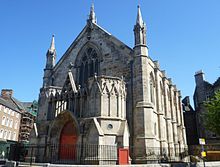
The student-run Bedlam Theatre, home to the Edinburgh University Theatre Company
The city of Edinburgh is an important cultural hub for comedy, amateur and fringe theatre throughout the UK. Amateur dramatic societies at the University benefit from this, and especially from being based in the home of the Edinburgh Fringe Festival.
Edinburgh University Theatre Company (EUTC), founded in 1890 as the Edinburgh University Drama Society, is known for running Bedlam Theatre, the oldest student-run theatre in Britain. Bedlam Theatre is an Edinburgh Fringe venue. The EUTC also fund and run acclaimed student improvised comedy troupe The Improverts during term time and fringe. Alumni include Sir Michael Boyd, Ian Charleson, Kevin McKidd, and Greg Wise.
Edinburgh Studio Opera (formerly Edinburgh University Opera Club) is the only student opera company in Edinburgh. The group performs at least one fully staged opera each year.
The Edinburgh University Savoy Opera Group (EUSOG) are an opera/musical theatre company founded by students in 1961 to promote and perform the comic operettas of William Gilbert and Arthur Sullivan, collectively known as Savoy Operas after the theatre in which they were originally staged.
The Edinburgh University Footlights are a musical theatre company founded in 1989 and produce two large scale shows a year.
Theatre Parodok, founded in 2004, is a student theatre company that aims to produce shows that are “experimental without being exclusive”. They produce a large show each semester and one for the festival.
Media
The Student is a weekly student newspaper at the University of Edinburgh. Founded in 1887, it is the oldest student newspaper in the United Kingdom.
The Journal was an independent publication, established in 2007 by three students at the University of Edinburgh, and was also distributed to the four other higher education institutions in the city – Heriot-Watt University, Edinburgh Napier University, Queen Margaret University and the Edinburgh College of Art. It was the largest such publication in Scotland, with a print run of 14,000 copies and was produced by students from across the city. It folded in 2015.
FreshAir is an alternative music student radio station, one of the oldest surviving student radio stations in the UK. It was founded in October 1992.
In September 2015, Edinburgh University Student Television (EUTV) became the newest addition to the student media scene at the university, producing a regular magazine styled programme, documentaries and other special events.
Sport

The Pleasance, a theatre, bar, sports and recreation complex
Edinburgh University’s student sport consists of 67 clubs from the traditional rugby, football, rowing and judo to the more unconventional korfball and gliding. Over 67 sports clubs are run by the Edinburgh University Sports Union (EUSU).
The Scottish Varsity, known as the “world’s oldest varsity match”, is a rugby match played annually against the University of St Andrews. It is played at the beginning of the academic year and since 2015 it has been played at Murrayfield Stadium in Edinburgh. The Scottish Boat Race is an annual rowing race between the University of Glasgow and the University of Edinburgh, rowed between competing eights on the River Clyde in Glasgow, Scotland. Started in 1877, it is believed to be the third oldest university boat race in the world, predated only by the Oxford and Cambridge Boat Race and the Harvard–Yale Regatta.
During the 2008 Summer Olympics in Beijing, the University of Edinburgh alumni and students secured four medals – three gold and a silver. The three gold medals were won by the cyclist Chris Hoy and the silver was won by Katherine Grainger in rowing. In the 2012 Summer Olympics, Edinburgh University alumni topped the UK University Medals table with three gold medals, two from Chris Hoy and one from Katherine Grainger.
Student activism
There are a number of campaigning societies at the university. The largest of these include the environment and poverty campaigning group People & Planet and the Amnesty International Society. International development organisations include Edinburgh Global Partnerships, which was established as a student-led charity in 1990. There is also a significant left-wing presence on campus, including an active anti-cuts group, an anarchist society, Edinburgh University Socialist Society, Marxist Society, feminist society, Young Greens, a Students for Justice in Palestine group, and the Edinburgh University Conservative and Unionist Association. Protests, demonstrations and occupations are regular occurrences at the university.
The activist group People and Planet took over Charles Stewart House in 2015 and again in 2016 in protest over the Universities investment in Arms and Fossil fuels. In May 2015, a security guard was charged in relation to the occupations.
Student co-operatives
There are three student-run co-operatives on campus: Edinburgh Student Housing Co-operative, providing affordable housing for 106 students; The Hearty Squirrel Food Cooperative, selling ‘healthy, local, ethical, organic and Fairtrade’ food; and the SHRUB Co-op, a ‘swap and re-use hub’ aimed at reducing waste and promoting sustainability. The co-operatives form part of the Students for Cooperation network.
Notable people
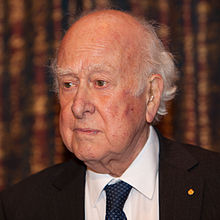
Peter Higgs, emeritus professor of the University of Edinburgh, Nobel laureate in Physics in 2013
The university is associated, through alumni and academic staff, with some of the most significant intellectual and scientific contributions in human history. As of August 2021, 19 Nobel laureates have been affiliated with the university as alumni, faculty members or researchers (three additional laureates acted as administrative staff), including one of the fathers of quantum mechanics Max Born, physicist Charles Glover Barkla and Peter Higgs, biochemist Peter D. Mitchell, supramolecular chemist Sir Fraser Stoddart, immunologist Peter C. Doherty, economist Sir James Mirrlees, pioneer in cryo-electron microscopy Richard Henderson, and pioneer in in-vitro fertilisation Sir Robert Edwards. Computer scientists Robin Milner, Leslie Valiant and Geoffrey Hinton – all Turing Award laureates – and mathematician Sir Michael Atiyah, Fields Medalist and Abel Prize winner, are associated with the university.
The university is further associated with people whose contributions include: laying the foundations of Bayesian statistics (Thomas Bayes), nephrology (Richard Bright), the theory of evolution (Charles Darwin), modern sociology (Adam Ferguson), modern geology (James Hutton), antiseptic surgery (Joseph Lister), knot theory (Peter Guthrie Tait), the wave theory of light (Thomas Young), the classical theory of electromagnetism (James Clerk Maxwell) and thermodynamics (William Rankine), the discovery of carbon dioxide, latent heat and specific heat (Joseph Black), nitrogen (Daniel Rutherford), Brownian motion (Robert Brown), the HPV vaccine (Ian Frazer), the Higgs mechanism (Sir Tom Kibble), the Hepatitis B vaccine (Sir Kenneth Murray), chloroform anaesthesia (Sir James Young Simpson) and the SARS coronavirus (Zhong Nanshan), and the invention of the telephone (Alexander Graham Bell), the hypodermic syringe (Alexander Wood), the kaleidoscope (Sir David Brewster), the telpherage (Fleeming Jenkin), the vacuum flask (Sir James Dewar), the ATM (John Shepherd-Barron), the pneumatic tyres (John Boyd Dunlop) and the diving chamber (John Scott Haldane).
Other notable alumni and academic staff of the university have included signatories to the US Declaration of Independence Benjamin Rush, James Wilson and John Witherspoon, former Prime Ministers Gordon Brown, Lord John Russell and Henry John Temple, actor Ian Charleson, architects Robert Adam and William Henry Playfair, astronaut Piers Sellers, biologists Sir Richard Owen and Sir Ian Wilmut, chemist Alexander R. Todd, composers Marjory Kennedy-Fraser and Kenneth Leighton, economists Kenneth E. Boulding, Thomas Chalmers and Adam Smith, editor Ella Carmichael, geologist Sir William Edmond Logan, historian Thomas Carlyle, journalists Laura Kuenssberg and Kirsty Wark, judges Patrick Hodge, David Hope and Robert Reed, mathematician Colin Maclaurin and John Playfair, philosophers Benjamin Constant, David Hume, Sir William David Ross and Dugald Stewart, physician William Cullen, physicist Sheila Tinney, pilot Eric Brown, surgeons James Barry, Gertrude Herzfeld and B. K. Misra, writers Sir J.M. Barrie, Sir Arthur Conan Doyle, Sir Walter Scott, Robert Louis Stevenson and Aeneas Francon Williams, former Chancellor of the Exchequer John Anderson, former Director General of MI5 Stella Rimington, former acting First Minister of Scotland Jim Wallace, and former Home Secretary Henry Dundas. Olympic Games gold medallists from the university include six-times Olympic champion cyclist Sir Chris Hoy, rower Katherine Grainger and runner Eric Liddell.
- Notable Edinburgh alumni before the 20th century
-
Robert Adam, neoclassical architect
-

J. M. Barrie, novelist and playwright
-

James Barry, surgeon, first caesarean section
-
Thomas Bayes, statistician
-
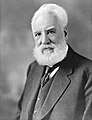
Alexander Graham Bell, engineer and inventor
-

Joseph Black, physicist and chemist
-

David Brewster, inventor
-
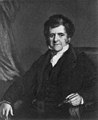
Richard Bright, physician, father of nephrology
-
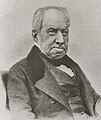
Robert Brown, botanist, discovering Brownian motion
-
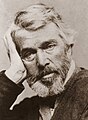
Thomas Carlyle, historian and satirist
-

Thomas Chalmers, political economist
-
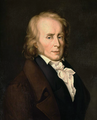
Benjamin Constant, political philosopher
-
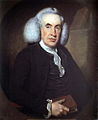
William Cullen, physician and chemist
-

Charles Darwin, naturalist and biologist
-

Adam Ferguson, philosopher, father of modern sociology
-

David Hume, philosopher
-

James Hutton, geologist, father of modern geology
-
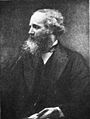
James Clerk Maxwell, mathematician and physicist