
Jews (Hebrew: יְהוּדִים ISO 259-2 Yehudim, Israeli pronunciation ) or Jewish people are members of an ethnoreligious group and a nation originating from the Israelites and Hebrews of historical Israel and Judah. Jewish ethnicity, nationhood, and religion are strongly interrelated, as Judaism is the ethnic religion of the Jewish people, although its observance varies from strict to none.
Jews originated as an ethnic and religious group in the Middle East during the second millennium BCE, in the part of the Levant known as the Land of Israel. The Merneptah Stele appears to confirm the existence of a people of Israel somewhere in Canaan as far back as the 13th century BCE (Late Bronze Age). The Israelites, as an outgrowth of the Canaanite population, consolidated their hold with the emergence of the kingdoms of Israel and Judah. Some consider that these Canaanite sedentary Israelites melded with incoming nomadic groups known as ‘Hebrews’. Though few sources mention the exilic periods in detail, the experience of diaspora life, from the Babylonian captivity and exile to the Roman occupation and exile, and the historical relations between Jews and their homeland thereafter, became a major feature of Jewish history, identity and memory.
In the millennia following, Jewish diaspora communities coalesced into three, major ethnic subdivisions according to where their ancestors settled: Ashkenazim (Central and Eastern Europe), Sephardim (initially in the Iberian Peninsula), and Mizrahim (Middle East and North Africa). Prior to World War II, the worldwide Jewish population reached a peak of 16.7 million, representing around 0.7 percent of the world population at that time. Approximately 6 million Jews were systematically murdered during the Holocaust. Since then the population has slowly risen again, and as of 2018 was estimated at 14.6–17.8 million by the Berman Jewish DataBank, less than 0.2 percent of the total world population.
The modern State of Israel is the only country where Jews form a majority of the population. It defines itself as a Jewish and democratic state in the Basic Laws, Human Dignity and Liberty in particular, which is based on the Declaration of Independence. Israel’s Law of Return grants the right of citizenship to Jews who have expressed their desire to settle in Israel.
Despite their small percentage of the world’s population, Jews have significantly influenced and contributed to human progress in many fields, both historically and in modern times, including philosophy, ethics, literature, politics, business, fine arts and architecture, music, theatre and cinema, medicine, and science and technology, as well as religion; Jews authored the Bible, founded Early Christianity and had a profound influence on Islam. Jews have also played a significant role in the development of Western Civilization.
Name and etymology
The English word “Jew” continues Middle English Gyw, Iewe. These terms were loaned via the Old French giu, which itself evolved from the earlier juieu, which in turn derived from judieu/iudieu which through elision had dropped the letter “d” from the Medieval Latin Iudaeus, which, like the New Testament Greek term Ioudaios, meant both “Jew” and “Judean” / “of Judea”. The Greek term was a loan from Aramaic Y’hūdāi, corresponding to Hebrew יְהוּדִי Yehudi, originally the term for a member of the tribe of Judah or the people of the kingdom of Judah. According to the Hebrew Bible, the name of both the tribe and kingdom derive from Judah, the fourth son of Jacob. Genesis 29:35 and 49:8 connect the name “Judah” with the verb yada, meaning “praise”, but scholars generally agree that the name of both the patriarch and the kingdom instead have a geographic origin—possibly referring to the gorges and ravines of the region.
The Hebrew word for “Jew” is יְהוּדִי Yehudi, with the plural יְהוּדִים Yehudim. Endonyms in other Jewish languages include the Ladino ג׳ודיו Djudio (plural ג׳ודיוס, Djudios) and the Yiddish ייִד Yid (plural ייִדן Yidn).
The etymological equivalent is in use in other languages, e.g., يَهُودِيّ yahūdī (sg.), al-yahūd (pl.), in Arabic, “Jude” in German, “judeu” in Portuguese, “Juif” (m.)/”Juive” (f.) in French, “jøde” in Danish and Norwegian, “judío/a” in Spanish, “jood” in Dutch, “żyd” in Polish etc., but derivations of the word “Hebrew” are also in use to describe a Jew, e.g., in Italian (Ebreo), in Persian (“Ebri/Ebrani” (Persian: عبری/عبرانی)) and Russian (Еврей, Yevrey). The German word “Jude” is pronounced , the corresponding adjective “jüdisch” (Jewish) is the origin of the word “Yiddish”.
According to The American Heritage Dictionary of the English Language, fourth edition (2000),
It is widely recognized that the attributive use of the noun Jew, in phrases such as Jew lawyer or Jew ethics, is both vulgar and highly offensive. In such contexts Jewish is the only acceptable possibility. Some people, however, have become so wary of this construction that they have extended the stigma to any use of Jew as a noun, a practice that carries risks of its own. In a sentence such as There are now several Jews on the council, which is unobjectionable, the substitution of a circumlocution like Jewish people or persons of Jewish background may in itself cause offense for seeming to imply that Jew has a negative connotation when used as a noun.
Who is a Jew?
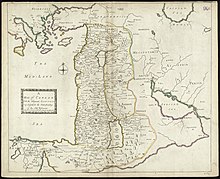
Map of Canaan
Judaism shares some of the characteristics of a nation, an ethnicity, a religion, and a culture, making the definition of who is a Jew vary slightly depending on whether a religious or national approach to identity is used. Generally, in modern secular usage Jews include three groups: people who were born to a Jewish family regardless of whether or not they follow the religion, those who have some Jewish ancestral background or lineage (sometimes including those who do not have strictly matrilineal descent), and people without any Jewish ancestral background or lineage who have formally converted to Judaism and therefore are followers of the religion.
Historical definitions of Jewish identity have traditionally been based on halakhic definitions of matrilineal descent, and halakhic conversions. These definitions of who is a Jew date back to the codification of the Oral Torah into the Babylonian Talmud, around 200 CE. Interpretations of sections of the Tanakh, such as Deuteronomy 7:1–5, by Jewish sages, are used as a warning against intermarriage between Jews and Canaanites because ” will cause your child to turn away from Me and they will worship the gods of others.” Leviticus 24:10 says that the son in a marriage between a Hebrew woman and an Egyptian man is “of the community of Israel.” This is complemented by Ezra 10:2–3, where Israelites returning from Babylon vow to put aside their gentile wives and their children. A popular theory is that the rape of Jewish women in captivity brought about the law of Jewish identity being inherited through the maternal line, although scholars challenge this theory citing the Talmudic establishment of the law from the pre-exile period. Another argument is that the rabbis changed the law of patrilineal descent to matrilineal descent due to the widespread rape of Jewish women by Roman soldiers. Since the anti-religious Haskalah movement of the late 18th and 19th centuries, halakhic interpretations of Jewish identity have been challenged.
According to historian Shaye J. D. Cohen, the status of the offspring of mixed marriages was determined patrilineally in the Bible. He brings two likely explanations for the change in Mishnaic times: first, the Mishnah may have been applying the same logic to mixed marriages as it had applied to other mixtures (Kil’ayim). Thus, a mixed marriage is forbidden as is the union of a horse and a donkey, and in both unions the offspring are judged matrilineally. Second, the Tannaim may have been influenced by Roman law, which dictated that when a parent could not contract a legal marriage, offspring would follow the mother. Rabbi Rivon Krygier follows a similar reasoning, arguing that Jewish descent had formerly passed through the patrineal descent and the law of matrilineal descent had its roots in the Roman legal system.
Origins

Egyptian depiction of the visit of Western Asiatics in colorful garments, labeled as Aamu. The painting is from the tomb of a 12th dynasty official Khnumhotep II at Beni Hasan, and dated to c. 1900 BCE. Their nearest Biblical contemporaries were the earliest of Hebrews, such as Abraham and Joseph.

Depiction of King Jehu, tenth king of the northern Kingdom of Israel, on the Black Obelisk of Shalmaneser III, 841–840 BCE. This is “the only portrayal we have in ancient Near Eastern art of an Israelite or Judaean monarch”.
A factual reconstruction for the origin of the Jews is a difficult and complex endeavor. It requires examining at least 3,000 years of ancient human history using documents in vast quantities and variety written in at least ten near Eastern languages. As archaeological discovery relies upon researchers and scholars from diverse disciplines, the goal is to interpret all of the factual data, focusing on the most consistent theory. The prehistory and ethnogenesis of the Jews are closely intertwined with archaeology, biology, and historical textual records, as well as religious literature and mythology. The ethnic stock to which Jews originally trace their ancestry was a confederation of Iron Age Semitic-speaking tribes known as the Israelites that inhabited a part of Canaan during the tribal and monarchic periods. Modern Jews are named after and also descended from the southern Israelite Kingdom of Judah.
According to the Hebrew Bible narrative, Jewish ancestry is traced back to the Biblical patriarchs such as Abraham, his son Isaac, Isaac’s son Jacob, and the Biblical matriarchs Sarah, Rebecca, Leah, and Rachel, who lived in Canaan. The Twelve Tribes are described as descending from the twelve sons of Jacob. Jacob and his family migrated to Ancient Egypt after being invited to live with Jacob’s son Joseph by the Pharaoh himself. The patriarchs’ descendants were later enslaved until the Exodus led by Moses, after which the Israelites conquered Canaan under Moses’ successor Joshua, went through the period of the Biblical judges after the death of Joshua, then through the mediation of Samuel became subject to a king, Saul, who was succeeded by David and then Solomon, after whom the United Monarchy ended and was split into a separate Kingdom of Israel and a Kingdom of Judah. The Kingdom of Judah is described as comprising the Tribe of Judah, the Tribe of Benjamin, partially the Tribe of Levi, and later adding remnants of other tribes who migrated there from the Kingdom of Israel. Modern Jews claim lineage from those tribes since the ten northern tribes were lost following Assyrian captivity.
Modern archaeology has largely discarded the historicity of this narrative, with it being reframed as constituting the Israelites’ inspiring national myth narrative. The Israelites and their culture, according to the modern archaeological account, did not overtake the region by force, but instead branched out of the Canaanite peoples and culture through the development of a distinct monolatristic—and later monotheistic—religion centered on Yahweh. The growth of Yahweh-centric belief, along with a number of cultic practices, gradually gave rise to a distinct Israelite ethnic group, setting them apart from other Canaanites.
The Israelites become visible in the historical record as a people between 1200 and 1000 BCE. It is not certain if a period like that of the Biblical judges occurred nor if there was ever a United Monarchy. There is well accepted archeological evidence referring to “Israel” in the Merneptah Stele, which dates to about 1200 BCE, and the Canaanites are archeologically attested in the Middle Bronze Age. There is debate about the earliest existence of the Kingdoms of Israel and Judah and their extent and power, but historians agree that a Kingdom of Israel existed by c. 900 BCE:169–95 and that a Kingdom of Judah existed by c. 700 BCE. It is widely accepted that the Kingdom of Israel was destroyed around 720 BCE, when it was conquered by the Neo-Assyrian Empire.
History
The term Jew originated from the Roman “Judean” and denoted someone from the southern kingdom of Judah. The shift of ethnonym from “Israelites” to “Jews” (inhabitant of Judah), although not contained in the Torah, is made explicit in the Book of Esther (4th century BCE), a book in the Ketuvim, the third section of the Jewish Tanakh. In 587 BCE Nebuchadnezzar II, King of the Neo-Babylonian Empire, besieged Jerusalem, destroyed the First Temple, and deported the most prominent citizens of Judah.
| Tribes of Israel |
|---|
 |
| The Tribes |
|
| Related topics |
|