
The Chief Minister of Odisha, an Indian state, is the head of the Government of Odisha. As per the Constitution of India, the governoris the state’s de jure head, but de facto executive authority rests with the chief minister. Following elections to the Odisha Legislative Assembly, the governor usually invites the party (or coalition) with a majority of seats to form the government. The governor appoints the chief minister, whose council of ministers are collectively responsible to the assembly. Given that he has the confidence of the assembly, the chief minister’s term is for five years and is subject to no term limits.
On 1 April 1936, Orissa Province was formed. The province has been controlled by the King of Paralakhemundi, Maharaja Krishna Chandra Gajapati Narayan Deo. He ruled till July, 1937. There after the All India Congress party leader Biswanath Das took over the charges for two more years. Again the King took the control before finally handed over to Dr. Harekrushna Mahatab in the year 1946. After India got its freedom and constitution was enacted, the state persuaded working in the principles of democracy. Till the first election, Dr. Harekrushna Mahatab continued to be the chief minister of Odisha and then it was taken over by Nabakrushna Choudhury. Here is the list of chief minister of Odisha since 1946. Since 1946, Odisha has had 14 chief ministers. Serving since 2000, Naveen Patnaik of the Biju Janata Dal is the incumbent chief minister, and the longest-serving one in Odisha’s history.
Premiers/Prime Ministers of Orissa
| No | Name | Portrait | Term of office | Party | Days in office | ||
|---|---|---|---|---|---|---|---|
| 1 | Krushna Chandra Gajapati |  |
1 April 1937 | 19 July 1937 | Independent | 3 months, 2 weeks and 4 days | |
| 2 | Biswanath Das |  |
19 July 1937 | 4 November 1939 | Indian National Congress | 2 years, 3 months, 2 weeks and 2 days | |
| (1) | Krushna Chandra Gajapati | |
29 November 1941 | 29 June 1944 | Independent | 2 years and 7 months | |
| 3 | Harekrushna Mahatab |  |
23 April 1946 | 15 August 1947 | Indian National Congress | 1 year, 3 months, 3 weeks and 2 days | |
Chief Ministers of Odisha
| Colour key for parties |
|---|
|
Biju Janata Dal
Indian National Congress
Janata Dal
Janata Party
Swatantra Party
N/A (President’s rule)
|
| No | Name | Portrait | Constituency | Tenure | Assembly(election) | Party | |||
|---|---|---|---|---|---|---|---|---|---|
| 1 | Harekrushna Mahatab | |
15 August 1947 | 12 May 1950 | 2 years, 270 days | Indian National Congress | |||
| 2 | Nabakrushna Choudhury | 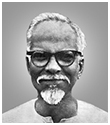 |
Barchana | 12 May 1950 | 20 Feb 1952 | 6 years, 160 days | |||
| 20 Feb 1952 | 19 Oct 1956 | ||||||||
| (1) | Harekrushna Mahatab |  |
Soro | 19 October 1956 | 6 Apr 1957 | 4 years, 129 days | |||
| 6 Apr 1957 | 22 May 1959 | ||||||||
| 22 May 1959 | 25 Feb 1961 | ||||||||
| – | Vacant (President’s rule) |
 |
N/A | 25 February 1961 | 23 June 1961 | N/A | |||
| 3 | Biju Patnaik |  |
Choudwar | 23 June 1961 | 2 October 1963 | 2 years, 101 days | Indian National Congress | ||
| 4 | Biren Mitra |  |
Cuttack City | 2 October 1963 | 21 February 1965 | 1 year, 142 days | |||
| 5 | Sadashiva Tripathy |  |
Omerkote | 21 February 1965 | 8 March 1967 | 2 years, 15 days | |||
| 6 | Rajendra Narayan Singh Deo |  |
Bolangir | 8 March 1967 | 9 January 1971 | 3 years, 307 days | Fourth Assembly(1967-71)
(1967 election) |
Swatantra Party | |
| – | Vacant (President’s rule) |
|
N/A | 11 January 1971 | 3 April 1971 | N/A | |||
| 7 | Biswanath Das | |
Rourkela | 3 April 1971 | 14 June 1972 | 1 year, 72 days | Fifth Assembly(1971-73)
(1971 election) |
Independent | |
| 8 | Nandini Satpathy |  |
14 June 1972 | 3 March 1973 | 262 days | Indian National Congress | |||
| – | Vacant (President’s rule) |
|
N/A | 3 March 1973 | 6 March 1974 | N/A | |||
| (8) | Nandini Satpathy | |
Dhenkanal | 6 March 1974 | 16 December 1976 | 2 years, 285 days | Sixth Assembly(1974-77)
(1974 election) |
Indian National Congress | |
| – | Vacant (President’s rule) |
|
N/A | 16 December 1976 | 29 December 1976 | N/A | |||
| 9 | Binayak Acharya |  |
Berhampur | 29 December 1976 | 30 April 1977 | 122 days | Indian National Congress | ||
| – | Vacant (President’s rule) |
|
N/A | 30 April 1977 | 26 June 1977 | N/A | |||
| 10 | Nilamani Routray |  |
Basudevpur | 26 June 1977 | 17 February 1980 | 2 years, 236 days | Seventh Assembly(1977-80)
(1977 election) |
Janata Party | |
| – | Vacant (President’s rule) |
|
N/A | 17 February 1980 | 9 June 1980 | N/A | |||
| 11 | Janaki Ballabh Patnaik |  |
Athagarh | 9 June 1980 | 10 Mar 1985 | 9 years, 181 days | Eight Assembly(1980-85)
(1980 election) |
Indian National Congress | |
| 10 Mar 1985 | 7 Dec 1989 | Ninth Assembly(1985-90)
(1985 election) |
|||||||
| 12 | Hemananda Biswal |  |
Laikera | 7 December 1989 | 5 March 1990 | 88 days | |||
| (3) | Biju Patnaik | |
Bhubaneswar | 5 March 1990 | 15 March 1995 | 5 years, 10 days(total 7 years, 111 days) | Tenth Assembly(1990-95)
(1990 election) |
Janata Dal | |
| (11) | Janaki Ballabh Patnaik | |
Begunia | 15 March 1995 | 17 February 1999 | 3 years, 339 days | Eleventh Assembly(1995-2000)
(1995 election) |
Indian National Congress | |
| 13 | Giridhar Gamang |  |
Laxmipur | 17 February 1999 | 6 December 1999 | 292 days | |||
| (12) | Hemananda Biswal | |
Laikera | 6 December 1999 | 5 March 2000 | 90 days(total 178 days) | |||
| 14 | Naveen Patnaik |  |
Hinjili | 5 March 2000 | 16 May 2004 | 21 years, 43 days | Twelfth Assembly(2000-04)
(2000 election) |
Biju Janata Dal | |
| 16 May 2004 | 21 May 2009 | Thirteenth Assembly(2004-09)
(2004 election) |
|||||||
| 21 May 2009 | 21 May 2014 | Fourteenth Assembly(2009-14)
(2009 election) |
|||||||
| 21 May 2014 | 29 May 2019 | Fifteenth Assembly(2014-19)
(2014 election) |
|||||||
| 29 May 2019 | Incumbent | Sixteenth Assembly (2019 -)(2019 election) | |||||||
- Notes
- ^ This column only names the chief minister’s party. The state government he heads may be a complex coalition of several parties and independents; these are not listed here.
- ^ Jump up to:a b c d e f When President’s rule is in force in a state, its council of ministers stands dissolved. The office of chief minister thus lies vacant. At times, the legislative assembly also stands dissolved.