
Ibrahim Khan Lodi (died 21 April 1526) was an Afghan Sultan of the Delhi Sultanate, who became Sultan in 1517 after the death of his father Sikandar Lodi. He was the last ruler of the Lodi dynasty, reigning for nine years until 1526, when he was defeated and killed at the Battle of Panipat by Babur’s invading army, giving way to the emergence of the Mughal Empire in India.
Biography
Ibrahim was an ethnic Pashtun. He attained the throne upon the death of his father, Sikandar, but was not blessed with the same ruling capability. He faced a number of rebellions. Ibrahim Lodi also displeased the nobility when he replaced old and senior commanders with younger ones who were loyal to him. His Afghan nobility eventually invited Babur to invade India.
In 1526, the Mughal forces of Babur, the king of Kabulistan (Kabul, present Afghanistan), defeated Ibrahim’s much larger army in the Battle of Panipat. He was killed in the battle. It is estimated that Babur’s forces numbered around 12,000–30,000 men and had between 20 and 24 pieces of field artillery. Ibrahim Lodi had around 100,000–120,000 men along with at least 300 war elephants.
After the end of Lodi dynasty, the era of Mughal rule commenced.
Tomb
His tomb is often mistaken to be the Shisha Gumbad within Lodi Gardens, Delhi. Rather Ibrahim Lodi’s Tomb is actually situated near the tehsil office in Panipat, close to the Dargah of Sufi saint Bu Ali Shah Qalandar. It is a simple rectangular structure on a high platform approached by a flight of steps. In 1866, the British relocated the tomb during construction of the Grand Trunk Road and renovated it with an inscription highlighting Ibrahim Lodi’s death in the Battle of Panipat. He also built a Khwaja Khizr Tomb in Sonipat in 1522.
Gallery
-

An awards ceremony in the Sultan Ibrāhīm’s court before being sent on an expedition to Sambhal
-

1526-First Battle of Panipat-Ibrahim Lodhi and Babur
-
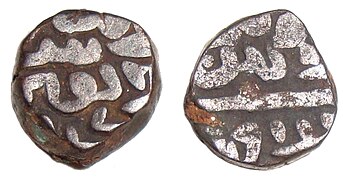
Quarter Tanka Of Ibrahim Lodi
-
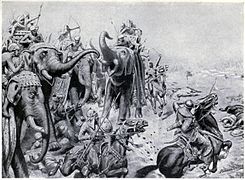
Babur introduced field guns at panipat, 1526
-
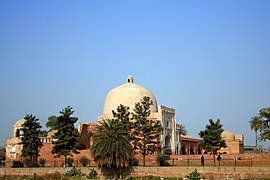
Kabuli Bagh Mosque