
Mehrauli is a neighbourhood in South Delhi, a districtof Delhi in India. It represents a constituency in the legislative assembly of Delhi. The area is located close to Gurgaon and next to Vasant Kunj. Naresh Yadav of Aam Aadmi Party is the current MLA from Mehrauli.
Contents
- History
- Geography and climate
- Architecture
- Politics
- Schools
- 2008 blasts
- Accessibility
- Areas in South Delhi
- Historical architecture in Mehrauli
- See also
- References
- Further reading
- External links
History

Mahatma Gandhi visiting the dargah of Qutbuddin Bakhtiar Kaki, on his Urs, 27 January 1948.
Mehrauli is one of the seven ancient citiesthat make up the present state of Delhi.
The Lal Kot fort was constructed by the Tanwar chief AnangpalI around 731 AD and expanded by AnangPal II in the 11th century, who shifted his capital to Lal Kot from Kannauj.The Tanwars were defeated by the Chauhans in the 12th century. Prithviraj Chauhan further expanded the fort and called it Qila Rai Pithora. He was defeated and killed in 1192 by Mohammed Ghori, who put his general Qutb-ud-din Aybak in charge and returned to Afghanistan. Subsequently in 1206, after the death of Mohammed Ghori, Qutubuddin enthroned himself as the first Sultan of Delhi. Thus Delhi became the capital of the Mamluk dynasty of Delhi (Slave dynasty), the first dynasty of Muslim sultans to rule over northern India. Mehrauli remained the capital of the Mamluk dynasty which ruled until 1290. During the Khalji dynasty, the capital shifted to Siri.

Balban’s tomb, Mehrauli
In 12th-century Jain scriptures, the location is also mentioned as Yogninipura, now noticeable by the presence of the “Yogmaya Temple”, near the Qutub Minar complex, believed to have been built by the Pandavas.
It was also the execution place of Banda Singh Bahadur due to religious persecution.
Geography and climate
Mehrauli lies in the South district of Delhi at 28°30′57″N 77°10′39″E. To its north lies Malviya Nagar. Vasant Kunj lies to its West and Tughlakabad to its south.
Like the rest of Delhi, Mehrauli has a semi-arid climate with high variation between summer and winter temperatures. While the summer temperatures may go up to 46 °C, the winters can seem freezing to people used to a warm climate with near 0 °C.
The soil of Mehrauli consists of sandy loam to loam texture. The water level has gone down in the recent past hovering between 45 m to 50 m due to rise in population.
Architecture

Ahinsa Sthal is a 13 feet 6 inches Mahaveer single rock idol.

Jamali Kamali Mosque and Tombcomplex, Mehrauli Archaeological Park

Iron Pillar within the Qutb complex
Though Mehrauli is like any ordinary neighborhood today, its past is what distinguishes it in terms of architecture.
Ahinsa Sthal is a Jain temple located in Mehrauli, Delhi. The main deity of the temple is Mahavira, the 24th and last Tirthankara (human spiritual guide) of a present half cycle of time. A magnificent statue of Tirthankara Mahāvīra is installed here.
Even though the capital shifted from Mehrauli after the Slave dynasty rule came to an end, many other dynasties contributed significantly to Mehrauli’s architecture.
The most visible piece of architecture remains the Qutub Minar which was built by Qutb al-Din Aibak with subsequent additions by Iltutmish and Alauddin Khalji. The Qutb Minar complex is today a UNESCO world heritage site,and also the venue for the annual Qutub Festival.Mausoleum of a 13th-century Sufi saint, Khwaja Qutbuddin Bakhtiar Kaki, is also situated near the Qutub Minar Complex and the venue for the annual Phoolwalon-ki-sair Festival. The dargah complex also houses graves of later Mughal emperors, Bahadur Shah I, Shah Alam II, and Akbar II, in an adjacent marble enclosure. To the left of the dargah, lies Zafar Mahal, the summer palace of the last Mughal Emperor Bahadur Shah Zafar along with Moti Masjid, a small mosque, built for private prayer by the son of Aurangeb, Bahadur Shah I
Balban’s tomb belonging to Balban, Slave dynasty ruler of Delhi Sultanate was constructed here in the 13th century can still be seen through in a dilapidated condition. The architecturally important structure as it is the first true arch in Indo-Islamic architecture. Another tomb, that of Balban’s son, Khan Shahid, who died before he could be crowned, is also located nearby in Mehrauli Archeological Park.
A baoli or stepwell known as Rajon Ki Baoli was constructed in 1506 during Sikandar Lodhi’s reign. It was used to store water though it is now completely dried and is now known as Sukhi Baoli (dry well).
The Jamali Kamali mosque was built in 1528, in honour of the Sufi saint Shaikh Hamid bin Fazlullah, also known as Dervish Shaikh Jamali Kamboh Dihlawi or Jalal Khan. The saint’s tomb built-in 1536 upon his death is adjacent to the mosque.
Near Jamali Kamali lies the tomb of Quli Khan, which during the British period was converted into a country house by the Metcalfe family. Known as ‘the retreat’ or ‘Dilkhusha’, this was built by Sir Thomas Theophilus Metcalfe in true English style as a pleasure retreat by surrounding it with many rest houses, follies, and gardens. ‘Dilkhusha’ in the Urdu language means “Delight of the Heart”.
The Adham Khan’s Tomb was constructed by Emperor Akbar in memory of his foster brother and general Adham Khan in 1566. The tomb, also known as Bhulbhulaiyan, as one could get lost in the labyrinth of its passages, it was later used by the British as a residence, rest house and even as a police station. Close to Adham Khan’s tomb, lies that of another Mughal General, Muhammad Quli Khan, later it served as the residence of Sir Thomas Metcalfe, governor-general’s agent at the Mughal court. The Mehrauli Archaeological Park spread over 200 acres, adjacent to Qutb Minar site was redeveloped in 1997.
Politics
In the 2013 Delhi Legislative Assembly election, Parvesh Verma of BJPwas elected as the MLA of Mehrauli. He succeeded Yoganand Shastri, former Delhi Assembly Speaker affiliated to the Indian National Congress
Mehrauli Assembly Constituency comprises four municipal wards, namely, ward 169 Lado Sarai (W), ward 170 Mehrauli (GEN), ward 171 Vasant Kunj (SCW) and wards 172 Kishangarh (W). All four wards are represented by women councilors in the Municipal Corporation.
Schools
- St. John’s School
- St.Maria School
- Baba Banda Singh Bahadur Memorial School
- Lareesa Public School
- I.G. Delhi Public School
- Saraswati Bal Vidya Mandir
- Ramanujan Sarvodaya Kanya Vidyalaya
- Government Boys’ Senior Secondary School-2
- Government Boys’ Senior Secondary School-3
- Suryathan Play School
- Prince Public School
2008 blasts
Concealed in a black polythene bag, a bomb was dropped by two unidentified persons riding a motorcycle In Sarai Electronic Market in New Delhi on September 27, 2008. Exactly a fortnight after three of the capital’s top markets were targeted by terrorists, a medium-intensity blast ripped through the congested flower market in South Delhi’s Mehrauli area killing at least two and injuring 22 others.
Accessibility
- Indira Gandhi International Airport is approximately 17 km.
- 18 km approximately from New Delhi Railway Stations
- Nearest metro station is Chhatarpur, Munirka, R K Puram, IIT Qutab Minar Metro Station.
- Adam Khan Tomb – Also known as Bhool Bhulaiya is situated next to Aggarwal Sweets and near Bus Stand.
- Gandhak ki Baoli – It is an ancient step well located near Mehrauli Post Office.
- Rajon Ki Baoli – 16th century stepwell near Gandhak ki Baoli
- Yogmaya Temple – Around 1 km from Qutub Minar and about 100 meters prior to Bus Stand.
- Village Roads – Village roads in Mehrauli are known in the neighborhood as narrow poorly maintained roads. Non-licensed street vendors/hawkers are very common sites on these roads.
Areas in South Delhi
- Greater Kailash
- Chanakyapuri
- Lajpat Nagar
- Mehrauli
- Nehru Place
- Safdarjung New Delhi
- South Extension
- Kishangarh Village
- Vasant Kunj
- Shahpur Jat
- Khanpur
- Sanjay Van
Historical architecture in Mehrauli
-
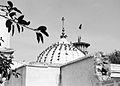
Tomb of Qutbuddin Bakhtiar Kaki, Mehrauli.
-

The tombs of Mughal Emperor, Shah Alam IIand his son Akbar IIwithin Kaki mausoleum complex
-

Madhi Masjid entrance gateway, Mehrauli.
-
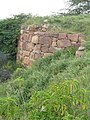
The bastion of Lal Kotfort, Mehrauli
-
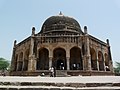
Adham Khan’s Tomb, Mehrauli.
-
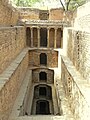
Gandhak ki Baoli, stepwell, Mehrauli.
-

Zafar Mahal built first by Akbar Shah II in the 18th century with addition by Bahadur Shah Zafar II.
-

View of Jahaz Mahalfrom Hauz-i-Shamsi.
-

Bagichi Ki Masjid, Mehrauli Archeological Park
-

Rajon ki Baoli, the stepwell
-
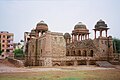
Jahaz Mahal on the bank of Hauz-i-Shamsi
-
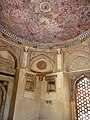
Jamali Kamali tomb interior
-

Tomb of Mohammad Quli Khan, brother of Adham Khan, a general of Mughal Emperor, Akbar, later turned into a country house Metcalfe House or Dilkusha by Sir Thomas Metcalfe, near Qutb complex