
A number of polities have declared independence and sought diplomatic recognition from the international community as de jure sovereign states, but have not been universally recognised as such. These entities often have de facto control of their territory. A number of such entities have existed in the past.
There are two traditional theories used to indicate how a de jure sovereign state comes into being. The declarative theory defines a state as a person in international law if it meets the following criteria:
- a defined territory
- a permanent population
- a government, and
- a capacity to enter into relations with other states.
According to the declarative theory, an entity’s statehood is independent of its recognition by other states. By contrast, the constitutive theory defines a state as a person of international law only if it is recognised as such by other states that are already a member of the international community.
Proto-states often reference either or both doctrines in order to legitimise their claims to statehood. There are, for example, entities which meet the declarative criteria (with de facto partial or complete control over their claimed territory, a government and a permanent population), but whose statehood is not recognised by any other states. Non-recognition is often a result of conflicts with other countries that claim those entities as integral parts of their territory. In other cases, two or more partially recognised states may claim the same territorial area, with each of them de facto in control of a portion of it (as have been the cases of the Republic of China (ROC; commonly called ‘Taiwan’) and the People’s Republic of China (PRC), and North and South Korea). Entities that are recognised by only a minority of the world’s states usually reference the declarative doctrine to legitimise their claims.
In many situations, international non-recognition is influenced by the presence of a foreign military force in the territory of the contested entity, making the description of the country’s de facto status problematic. The international community can judge this military presence too intrusive, reducing the entity to a puppet state where effective sovereignty is retained by the foreign power. Historical cases in this sense can be seen in Japanese-led Manchukuo or the German-created Slovak Republic and Independent State of Croatia before and during World War II. In the 1996 case Loizidou v. Turkey, the European Court of Human Rights judged Turkey for having exercised authority in the territory of Northern Cyprus.
There are also entities which do not have control over any territory or do not unequivocally meet the declarative criteria for statehood but have been recognised to exist de jure as sovereign entities by at least one other state. Historically this has happened in the case of the Holy See (1870–1929), Estonia, Latvia and Lithuania (during Soviet annexation), and more recently the State of Palestine at the time of its declaration of independence in 1988. The Sovereign Military Order of Malta is currently in this position. See list of governments in exile for unrecognised governments without control over the territory claimed.
Criteria for inclusion
The criteria for inclusion mean that a polity must claim sovereignty, lack recognition from at least one UN member state, and either:
- satisfy the declarative theory of statehood, or
- be recognised as a state by at least one UN member state.
Background
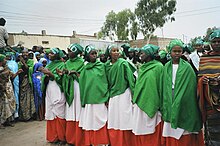
Women in Somaliland wearing the colors of the Somaliland flag
There are 193 United Nations (UN) member states, while both the Holy See and Palestine have observer state status in the United Nations. However, some countries fulfill the declarative criteria, are recognised by the large majority of other states and are members of the United Nations, but are still included in the list here because one or more other states do not recognise their statehood, due to territorial claims or other conflicts.
Some states maintain informal (officially non-diplomatic) relations with states that do not officially recognise them. The Republic of China (ROC; commonly called ‘Taiwan’) is one such state, as it maintains unofficial relations with many other states through its Economic and Cultural Offices, which allow regular consular services. This allows the ROC to have economic relations even with states that do not formally recognise it. A total of 56 states, including Germany, Italy, the United States, and the United Kingdom, maintain some form of unofficial mission in Taiwan. Kosovo, Artsakh (Nagorno-Karabakh), Northern Cyprus, Abkhazia, Transnistria, the Sahrawi Republic, Somaliland, and Palestine also host informal diplomatic missions, and/or maintain special delegations or other informal missions abroad.
Present geopolitical entities by level of recognition
UN member states not recognised by at least one UN member state
| Name | Declared | Status | Other claimants | Further information | References |
|---|---|---|---|---|---|
 State of Israel State of Israel |
1948 | Israel, founded in 1948, is not recognised by 28 UN members. The Palestine Liberation Organization (PLO), which enjoys majority international recognition as sole representative of the Palestinian people, recognised Israel in 1993. In January 2018 and October 2018, the Palestinian Central Council voted to suspend recognition of Israel, but this position has yet to be acted upon by Palestinian President Abbas. | The  State of Palestine considers itself to be the legitimate government of the West Bank, much of which is under de facto occupation. State of Palestine considers itself to be the legitimate government of the West Bank, much of which is under de facto occupation.The  Syrian Arab Republic considers itself to be the legitimate government of the Golan Heights, a territory which Israel controls and claims with limited recognition. Syrian Arab Republic considers itself to be the legitimate government of the Golan Heights, a territory which Israel controls and claims with limited recognition. |
Foreign relations, missions (of, to)
International recognition |
|
 Republic of Korea Republic of Korea |
1948 | South Korea (officially the Republic of Korea), independent since 1948, is not recognised by one UN member, North Korea. |  North Korea considers itself to be the sole legitimate government of Korea, and claims all territory controlled by South Korea. North Korea considers itself to be the sole legitimate government of Korea, and claims all territory controlled by South Korea. |
Foreign relations, missions (of, to) | |
| Democratic People’s Republic of Korea |
1948 | North Korea (officially the Democratic People’s Republic of Korea), independent since 1948, is not recognised by 15 UN members states including France, Japan and South Korea, as well as one non-UN member: Taiwan. | South Korea considers itself to be the sole legitimate government of Korea, and claims all territory controlled by North Korea. |
Foreign relations, missions (of, to) | |
 People’s Republic of China People’s Republic of China |
1949 | The People’s Republic of China (PRC), proclaimed in 1949, is the more widely recognised of the two claimant governments of China, the other being the Republic of China (ROC, also known as Taiwan). The United Nations recognised the ROC as the sole representative of China until 1971, when it decided to give this recognition to the PRC instead (see United Nations General Assembly Resolution 2758). The PRC and the ROC do not recognise each other’s statehood, and each enforces its own version of the One-China policy meaning that no state can recognise both of them at the same time. The states that recognise the ROC (13 UN members and the Holy See as of 9 December 2021) regard it as the sole legitimate government of China and therefore do not recognise the PRC. Bhutan is the only UN member state that has never explicitly recognised either the PRC or the ROC. | The  Republic of China considers itself to be the sole legitimate government of China (including Taiwan), and therefore claims exclusive sovereignty over all territory controlled by the PRC. See also: Two Chinas, One China, One Taiwan. Republic of China considers itself to be the sole legitimate government of China (including Taiwan), and therefore claims exclusive sovereignty over all territory controlled by the PRC. See also: Two Chinas, One China, One Taiwan. |
Foreign relations, missions (of, to)
PRC’s diplomatic relations dates of establishment |
|
 Republic of Cyprus Republic of Cyprus |
1960 | The Republic of Cyprus, independent since 1960, is not recognised by one UN member (Turkey) and one non-UN member (Northern Cyprus), due to the ongoing civil dispute over the island. Turkey does not accept the Republic’s rule over the whole island and refers to it as the “Greek Cypriot Administration of Southern Cyprus”. |  Northern Cyprus claims the northeastern half of the island of Cyprus. Northern Cyprus claims the northeastern half of the island of Cyprus. |
Foreign relations, missions (of, to) | |
 Republic of Armenia Republic of Armenia |
1991 | Armenia, independent since 1991, is not recognised by one UN member, Pakistan, which has a position of supporting Azerbaijan since the First Nagorno-Karabakh War. | None | Foreign relations, missions (of, to) |
UN observer states not recognised by at least one UN member state
| Name | Declared | Status | Other claimants | Further information | References |
|---|---|---|---|---|---|
| State of Palestine |
1988 | Israel gained control of the Palestinian territories as a result of the Six-Day War in 1967, but has never formally annexed them. The State of Palestine (commonly known as Palestine) was declared in 1988 by the Palestine Liberation Organization (PLO), which is recognised by a majority of UN member states and the UN itself as the sole representative of the Palestinian people. Since the end of the first Palestinian Intifada against Israel the Israeli government has gradually moved its armed forces and settlers out of certain parts of Palestine’s claimed territory, while still maintaining varying degrees of control over most of it. The Palestinian National Authority (PNA), which performs limited internal government functions over certain areas of Palestine, was established in 1994. The 2007 split between the Fatah and Hamas political parties resulted in competing governments claiming to represent the PNA and Palestine, with Fatah exercising authority exclusively over the West Bank and enjoying majority recognition from UN member states, and a separate Hamas leadership exercising authority exclusively over the Gaza area (except for a short period from 2014 to 2016). Palestine is currently officially recognised as a state by 138 UN member states, the Holy See, and the Sahrawi Arab Democratic Republic. The remaining UN member states, including Israel, do not recognise the State of Palestine. The United Nations designates the claimed Palestinian territories as ‘occupied’ by Israel, and accorded Palestine non-member observer state status in 2012 (see United Nations General Assembly resolution 67/19). Palestine also has membership in the Arab League, the Organisation of Islamic Cooperation and UNESCO. | Israel regards the area claimed by Palestine as ‘disputed’ territory (that is, territory not legally belonging to any state). |
Foreign relations, missions (of, to)
International recognition, Israeli–Palestinian peace process, Proposals for a Palestinian state |
States that are neither UN members nor UN observers
| States recognised by at least one UN member state | |||||
|---|---|---|---|---|---|
| Name | Declared | Status | Other claimants | Further information | References |
| Republic of China |
1912 | The Republic of China (ROC), constitutionally formed in 1912, and located primarily in Taiwan since 1949 (resulting in ‘Taiwan’ being frequently used to refer to the state), enjoyed majority recognition as the sole government of China until roughly the late 1950s/1960s, when a majority of UN member states started to gradually switch recognition to the People’s Republic of China (PRC). The United Nations itself recognised the ROC as the sole representative of China until 1971, when it decided to give this recognition to the PRC instead (see United Nations General Assembly Resolution 2758). The ROC and PRC do not recognise each other’s statehood, and each enforces its own version of the One-China policy meaning that no state can recognise both of them at the same time. The ROC is currently recognised by 13 UN members and the Holy See. Almost all the remaining UN member states, as well as the Cook Islands and Niue, recognise the PRC instead of the ROC and either accept the PRC’s territorial claim over Taiwan, take a non-committal position on Taiwan’s status, or sidestep the Taiwan issue entirely. A significant number of PRC-recognising UN member states, as well as the Republic of Somaliland, nonetheless conduct officially non-diplomatic relations with the ROC, designating it as either ‘Taipei’ or ‘Taiwan’. Bhutan is the only UN member state that has never explicitly recognised the ROC or the PRC. Since the early 1990s, the ROC has sought separate United Nations membership under a variety of names, including ‘Taiwan’. | The People’s Republic of China considers itself to be the sole legitimate government of China (including Taiwan) and therefore claims exclusive sovereignty over all territory controlled by the ROC. See also: Two Chinas, One China, One Taiwan. |
Foreign relations, missions (of, to)
Political status |
|
 Sahrawi Arab Democratic Republic Sahrawi Arab Democratic Republic |
1976 | Morocco invaded and annexed most of Western Sahara, forcing Spain to withdraw from the territory in 1975. In 1976, the Polisario Front declared the independence of Western Sahara as the Sahrawi Arab Democratic Republic (SADR). The SADR is largely a government in exile located in Algeria, which claims the entire territory of Western Sahara, but controls only a small fraction of it. The SADR is recognised by 41 UN member states and South Ossetia. 43 other UN member states have recognised the SADR but subsequently retracted or suspended recognition, pending the outcome of a referendum on self-determination. The remaining UN member states, including Morocco, have never recognised the SADR. The SADR is a member of the African Union. United Nations General Assembly Resolution 34/37 recognised the right of the Western Sahara people to self-determination and recognised also the Polisario Front as the representative of the Western Sahara people. Western Sahara is listed on the United Nations list of Non-Self-Governing Territories. Other than Morocco and the United States, no state officially recognises Morocco’s annexation of Western Sahara, but some states support the Moroccan autonomy plan. The Arab League supports Morocco’s claim over the entire territory of Western Sahara. |  Morocco claims Western Sahara (including the area controlled by the SADR) as part of its sovereign territory. Morocco claims Western Sahara (including the area controlled by the SADR) as part of its sovereign territory. |
Foreign relations, missions (of, to)
International recognition; Political status |
|
| Turkish Republic of Northern Cyprus |
1983 | Northern Cyprus declared its independence in 1983 with its official name being the “Turkish Republic of Northern Cyprus” (TRNC). It is recognised by one UN member, Turkey. The Organisation of Islamic Cooperation and the Economic Cooperation Organization have granted Northern Cyprus observer status under the name “Turkish Cypriot State”. United Nations Security Council Resolution 541 defines the declaration of independence of Northern Cyprus as legally invalid. The International Court of Justice stated in its advisory opinion on Kosovo’s declaration of independence in 2010 that “the Security Council in an exceptional character attached illegality to the DOI of TRNC because it was, or would have been connected with the unlawful use of force” and “general international law contains no applicable prohibition of declarations of independence”. | All UN members except Turkey recognise the TRNC as part of the sovereign territory of Cyprus. |
Foreign relations, missions (of, to)
Cyprus dispute |
|
 Republic of South Ossetia Republic of South Ossetia |
1991 | South Ossetia declared its independence in 1991. It is currently recognised by 5 UN member states (Russia, Syria, Nicaragua, Venezuela, and Nauru), and four non-UN member states (Abkhazia, Artsakh (Nagorno-Karabakh), Transnistria, and the Sahrawi Arab Democratic Republic). One additional UN member state (Tuvalu) had recognised South Ossetia, but subsequently withdrew its recognition. | Nearly all UN members recognise both Abkhazia and South Ossetia as part of the sovereign territory of  Georgia. Georgia. |
Foreign relations, missions (of, to)
International recognition |
|
 Republic of Abkhazia Republic of Abkhazia |
1999 | Abkhazia declared its independence in 1999. It is currently recognised by 5 UN member states (Russia, Syria, Nicaragua, Venezuela, and Nauru), and three non-UN member states (South Ossetia, Artsakh (Nagorno-Karabakh) and Transnistria). Two additional UN member states (Tuvalu and Vanuatu) had recognised Abkhazia, but subsequently withdrew their recognition. | Foreign relations, missions (of, to)
International recognition |
||
 Republic of Kosovo Republic of Kosovo |
2008 | Kosovo declared its independence in 2008. It is currently recognised by 97 UN members, the Republic of China, the Cook Islands and Niue. 15 other UN members have recognised Kosovo and subsequently withdrawn recognition. The United Nations, as stipulated in Security Council Resolution 1244, has administered the territory since 1999 through the United Nations Interim Administration Mission in Kosovo, with cooperation from the European Union since 2008. Kosovo is a member of the International Monetary Fund, World Bank Group, Venice Commission, European Bank for Reconstruction and Development, and the International Olympic Committee, among others. |  Serbia claims Kosovo as part of its sovereign territory. Serbia claims Kosovo as part of its sovereign territory. |
Foreign relations, missions (of, to)
International recognition; Political status |
|
 Donetsk People’s Republic Donetsk People’s Republic |
2014 | The Donetsk People’s Republic (DPR) declared its independence following the 2014 Ukrainian revolution, leading to the War in Donbas. The DPR is recognised by one UN member: Russia; and by three non-UN members: Abkhazia, the Luhansk People’s Republic and South Ossetia. | All UN members except Russia recognise the DPR and LPR as part of the sovereign territory of  Ukraine. Ukraine. |
Foreign relations, missions (of, to)
International recognition; Political status |
|
 Luhansk People’s Republic Luhansk People’s Republic |
The Luhansk People’s Republic (LPR) declared its independence following the 2014 Ukrainian revolution, leading to the War in Donbas. The LPR is recognised by one UN member: Russia; and by three non-UN members: Abkhazia, the Donetsk People’s Republic and South Ossetia. | Foreign relations, missions (of, to)
International recognition; Political status |
|||
| States recognised only by other non-UN member states | |||||
| Name | Declared | Status | Other claimants | Further information | References |
 Pridnestrovian Moldavian Republic Pridnestrovian Moldavian Republic |
1990 | Transnistria (officially the Pridnestrovian Moldavian Republic) declared its independence in 1990. It is recognised by three non-UN members: Abkhazia, Artsakh (Nagorno-Karabakh) and South Ossetia. | All UN members recognise Transnistria as part of the sovereign territory of  Moldova. Moldova. |
Foreign relations, missions (of, to)
International recognition, Political status |
|
 Republic of Artsakh Republic of Artsakh |
1991 | Artsakh (formerly known as the Nagorno-Karabakh Republic) declared its independence in 1991 (roughly at the same time as Azerbaijan itself when the Soviet Union fell). It is recognised by three non-UN members: Abkhazia, South Ossetia and Transnistria. | All UN members recognise Artsakh as part of the sovereign territory of  Azerbaijan. Azerbaijan. |
Foreign relations, missions (of, to)
International recognition, Political status |
|
| States not recognised by any other state | |||||
 Republic of Somaliland Republic of Somaliland |
1991 | Somaliland declared its independence in 1991. It claims to be the successor to the State of Somaliland, a short lived sovereign state that existed from 26 June 1960 (when the British Somaliland Protectorate gained full independence from the United Kingdom) to 1 July 1960 (when the State of Somaliland united with Somalia to form the Somali Republic). It is not officially recognised by any state, though it maintains unofficial relations with several UN member states and the Republic of China. | All UN members recognise Somaliland as part of the sovereign territory of  Somalia. Somalia. |
Foreign relations, missions (of, to) | |
Excluded entities
- The Sovereign Military Order of Malta is a non-state sovereign entity and is not included, as it claims neither statehood nor territory. It has established full diplomatic relations with 107 sovereign states as a sovereign subject of international law, and also maintains full diplomatic relations with the European Union, the Holy See, and the State of Palestine. Additionally, it participates in the United Nations as an observer entity. Although it is not recognised as a subject of international law by France, the order maintains official, but not diplomatic, relations with France and also with four other states: Belgium, Switzerland, Luxembourg and Canada.
- Uncontacted peoples who either live in societies that cannot be defined as states or whose statuses as such are not definitively known.
- Some subnational entities and regions function as de facto independent states, with the central government exercising little or no control over their territory. These entities, however, do not explicitly claim to be independent states and are therefore not included. Examples include Galmudug and Puntland in Somalia, Gaza in Palestine, the Kurdistan Region in Iraq, Rojava in Syria, and the Wa State in Myanmar.
- Entities considered to be micronations are not included. Even though micronations generally claim to be sovereign and independent, it is often debatable whether a micronation truly controls its claimed territory. For this reason, micronations are usually not considered of geopolitical relevance. For a list of micronations, see list of micronations.
- Those areas undergoing current civil wars and other situations with problems over government succession, regardless of temporary alignment with the inclusion criteria (e.g. by receiving recognition as state or legitimate government), where the conflict is still in its active phase, the situation is too rapidly changing and no relatively stable proto-states have emerged yet.
- Rebel groups that have declared independence and exert some control over territory, but that reliable sources do not describe as meeting the threshold of a sovereign state under international law. Examples include Ambazonia and the Southern Movement; see list of rebel groups that control territory for a more complete list of such groups.
- Those of the current irredentist movements and governments in exile that do not satisfy the inclusion criteria by simultaneously not satisfying the declarative theory and not having been recognised as state or legitimate government by any other state.
- Some states can be slow to establish relations with new UN member states and thus do not explicitly recognise them, despite having no dispute and sometimes favorable relations. These are excluded from the list. Examples include Croatia and Montenegro.