
Basti district is one of the districts of Uttar Pradesh state, India, and a part of Basti Division. Basti city is the district headquarters. In the freedom struggle of 1857, about 250 martyrs of Amorha State were hanged by the British Government from peepal trees located at Chhawani.
Origin of name and history
Basti came from the original name Vasisthi. The sage Vasishtha’s ashram was situated in this area. Sher Shah Suri made a well and a sarai here and hence receiving the name.
In 1801, the town Basti became a tehsil headquarter, and in 1865, it was chosen as the headquarters of the newly established Basti district of Gorakhpur Commissionary. Specifically, it happened on 6 May 1865.
At first, the plan was to use the Rapti and Jamuwar rivers as the boundary between Basti and Gorakhpur districts, but this plan was abandoned. Instead, the boundary cut across existing parganas, with a few areas east of the Jamuwar becoming part of Basti district, while the eastern parts of Maghar and Binayakpur parganas remained in Gorakhpur district. New tehsils were established, and most of the original 8 parganas were split into two, for a new total of 13 parganas. Subordinate to the parganas were 131 tappas, which were of significant administrative significance. The resulting setup was the following:
| Tahsil | Parganas | Tappas |
|---|---|---|
| Domariaganj | Rasulpur |
|
| Bansi West |
|
|
| Bansi | Bansi East |
|
| Binayakpur |
|
|
| Haraiya | Amorha |
|
| Basti West |
|
|
| Nagar West |
|
|
| Basti | Basti East |
|
| Nagar East |
|
|
| Maghar West |
|
|
| Mahuli West |
|
|
| Khalilabad | Maghar East |
|
| Mahuli East |
|
Amorha Khas is a historical place situated at a distance of 41 km from the district headquarters. Its old name is Amorha, and it was once a province (state) of Raja Zalim Singh. Raja Zalim Singh’s Mahal is here, old wall of mahal is still there with the mark of a bullet used by the English. The famous temple Ramrekha Mandir is here. Ramrekha Temple is one of the most ancient Hindu Mandir of Lord Ram and Goddess Sita. Lord Shri Ram stayed here for one day during his journey of Janakpur-Ayodhya. Lord Shri Rama and Sita with Lakshmana journeyed towards Ayodhya by the road called Ram Janki Marg (present-day State Highway 72) near Chhawani.
Geography
The district lies between the parallels of 26° 23′ and 27° 30′ North Latitude and 82° 17′ and 83° 20′ East longitude. Its maximum length from north to south is about 75 km. and breadth from east to west about 70 km. The district lies between newly created district Sant Kabir Nagar on the east and Gonda on the west on the south, the Ghaghra river near Amorha Khas previously known as Amorha Province or State of Raja Zalim Singh separates it from the Faizabad (Ayodhya) and newly created district Ambedkar Nagar. On the north it is bounded by district Sidharth Nagar.
Demographics
| Year | Pop. | ±% p.a. |
|---|---|---|
| 1901 | 656,285 | — |
| 1911 | 650,693 | −0.09% |
| 1921 | 684,396 | +0.51% |
| 1931 | 738,712 | +0.77% |
| 1941 | 776,969 | +0.51% |
| 1951 | 848,764 | +0.89% |
| 1961 | 1,010,706 | +1.76% |
| 1971 | 1,142,299 | +1.23% |
| 1981 | 1,366,434 | +1.81% |
| 1991 | 1,686,327 | +2.13% |
| 2001 | 2,084,814 | +2.14% |
| 2011 | 2,464,464 | +1.69% |
| source: | ||
According to the 2011 census, Basti district had a population of 2,464,464, of which only 5.6% lived in urban areas. This ranked it the 178th most populous district in India. The district had a population density of 917 inhabitants per square kilometre (2,380/sq mi). Its population growth rate over the decade 2001–2011 was 18.21%. Basti had a sex ratio of 963 females for every 1000 males, and a literacy rate of 67.22%. The child sex ratio of Basti was 922 females for every 1000 males.
Languages
At the time of the 2011 Census of India, 97.77% of the population in the district spoke Hindi and 2.14% Urdu as their first language.
The Hindi languages spoken in the district include Awadhi in western areas and Bhojpuri in the eastern side. The district Basti may be considered as the demarcation of the Hindi dialects Awadhi and Bhojpuri. In cities and urban areas, due to increase in the educated population, Modern Standard Hindi is also spoken in daily conversations.
Indian diaspora
During the mid to mid 1800s to the early 1900s many people from the district of Basti migrated through the Indian indenture system to Fiji, Mauritius and South Africa, as well as to Guyana, Jamaica, Trinidad and Tobago, Suriname, and other Caribbean countries. Most of them stayed and carried their traditions in those then European colonies. The former President of Guyana, Cheddi Jagan’s parents were from Basti district. In Trinidad, the name of the Indian majority village, Basta Hall, is derived from Basti.
Education

Established in 1911, the Government Inter College, Basti celebrated its centenary year on 11 February 2011. Former President of India Dr A. P. J. Abdul Kalam graced the event as Chief Guest.
The district have medical college named Autonomous State Medical College and one Rajkiya Engineering College in Government Polytechnic, Basti.

MVASMC Basti is providing top notch medical education in whole state.
The district follows a usual 10+2+3 pattern of education as elsewhere in India. Some notable schools and institutions of the district are :
- Central Academy (affiliated to CBSE)
- Government Inter College (GIC), Basti (affiliated to BHSIEUP)
- Kendriya Vidyalaya(affiliated to CBSE)
- St. Basil’s School (affiliated to CISCE)
- Sarla International Academy (affiliated to CBSE)
Medical services and Hospitals
- Maharshi Vashishtha Autonomous State Medical College Basti (U.P.)
- AAMAN Hospital (Private)
- Hajra Hospital, Basti (Private)
- Dental Care Clinic (Private)
- District Govt. Hospital (Government)
- Happy Care Hospital (Private)
- J.K. Hospital (Private)
- Khair Memorial Hospital (Private)
- OPEC Hospital (Government)
- Pindari Hospital (Private)
- PMC Hospital (Private)
- RP Singh Hospital (Private)
- Sant Kabir Eye Hospital (Private)
- Sri Krishan Mission Hospital (Private)
- T.B. Hospital (Private)
- V.R.T.K. District Woman Hospital (Government)
- V.L. Medical Centre (Private)
Administration

IAS Saumya Agarwal is taking oath in DM Office Basti
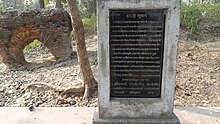
Raja Zalim Singh Smarak Sthal, Amorha, Basti, Uttar Pradesh (राजा ज़ालिम सिंह स्मारक स्थल, अमोढ़ा, बस्ती उ0प्र0)
Basti town is the district headquarters of the district. Basti district, a part of Basti division, is formed of four tehsils: Basti Sadar, Harraiya, Bhanpur and Rudhauli and 15 development blocks, 139 Nyay Panchayats, two Parganas named Amorha and Nagar as well as 10 Gram Sabhas. The development blocks included are:
- Amorha (Pargana)
- Nagar (Pargana)
- Basti
- Bahadurpur
- Bankati
- Dubauliya
- Gaur
- Harraiya (Tahsil)
- Kaptanganj
- Kudaraha
- ParasRampur
- Ramnagar
- Rudhauli (Tehsil)
- Saltaua Gopal Pur
- Sau Ghat
- Vikram Jot
Economy
The district is noted for its cotton textiles and sugar industries. Cottage industries and small-scale industries including the manufacturing units of brassware, iron and carpentry goods, agricultural implements, bricks, agro-products, foot-wear, soaps, candles, and pottery are present here. Basti is also known for its bamboo, eucalyptus (Eucalyptus teritrornis), mango and shisham (Dalbergia sissoo) populations. Four sugar factories are housed in the district. Sugarcane, maize, paddy, pulses, wheat, barley, and potato are commonly cultivated. Most of the population depends for their livelihood on agricultural practices. The district is well-connected through NH 28 which reflects on its good economy. The city is well-connected through railways also.
In 2006 the Ministry of Panchayati Raj named Basti one of the country’s 250 most backward districts (out of a total of 640). It is one of the 34 districts in Uttar Pradesh currently receiving funds from the Backward Regions Grant Fund Programme (BRGF). City is also known for nationwide youth organisation National Association of Youth founded by Bhavesh Kumar Pandey and run from Basti. The organization organizes Basti Mini Marathon every year since 2012.
Transportation
By air
Faizabad (Ayodhya) and Gorakhpur airports are the nearby airports.
By railways

Basti Railway Platform
Basti railway station lies on the main line connecting Lucknow with Gorakhpur and places in Bihar and Assam in the east passes through the south of the district. The main line has 7 railway stations which are, from east to west, Munderwa, Orwara, Basti, Govindnagar, Tinich, Gaur, and Babhnan within the district.
Villages
- Sherwadeeh
By roadways
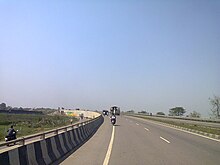
NH 28 passing near Basti facilitates inter-district road transport
Basti is well connected with the nearby cities of Faizabad, Ayodhya, Gorakhpur and Gonda.
There is a daily Intercity express between Gorakhpur, Basti, Ayodhya, Gonda, and Lucknow. National Highway 2a part of the East West Corridor project of Government of India and NHAI, also passes through Basti.
Flora and fauna
The forest cover of the district has dwindled with increasing use of land for agriculture. There are areas with high prevalence of mango (Mangifera indica), mahua (Madhuca longifolia), sal (Shorea robusta), and bamboo (Bambusa arundinacea) trees. Some of the wild animals of the district are the nilgai (Boselaphus tragocamelus), antelok (Anelok cervicapra), pig (Sus scrofa), wolf (Canis lupus), jackal (Conis aureus), fox (Vulpes bengalensis), hare (Lepus ruficandatus), monkey (Macaca mulatta), wild cat (Felis bengalensis) and the porcupine (Hystric leucura). Several species of game birds are also seen, including the peafowl (Pavo cristatus), the black partridge (Frencolinus francolinus) and the gray partridge (Francalinus pondicervanus). A number of migratory water fowls visit the water bodies of the district in winter, such as the goose (Anser anser), common teal (Anas crecca), red-crested pochard (Netta rufina), white-eyed pochard (Aythya rufa) and the wigeon (Mareca penelope). The cobra (Naja naja), krait (Bungarus caeruleus), and rat-snake (Ptyas mucosus) are commonly found. The Indian crocodile or naka (Crocodylus palustris), and the ghariyal (Gavialis gangeticus) are also found in the river Ghaghra. The common fish species are rohu (Lebeo rohita), bhakur (Catla catla), nain (Cirrhina mrigala), parhin (Wallagonia attu), krunch (Labeo calbasu), and tengan (Mystus seenghala).