
Annexation (Latin ad, to, and nexus, joining) is the absorption of territory into a state. In international law, it is the forcible acquisition of one state’s territory by another state and is generally held to be an illegal act. It is distinct from conquest, which refers to the acquisition of control over a territory involving a change of sovereignty, and differs from cession, in which territory is given or sold through treaty, since annexation is a unilateral act where territory is seized and held by one state. It usually follows military occupation of a territory.
Annexation can be legitimized via general recognition by international bodies (i.e. other countries and intergovernmental organisations).
Evolution of international law
Acquisition of title
International law regarding the use of force by states evolved significantly in the 20th century. Key agreements include the 1907 Porter Convention, the 1920 Covenant of the League of Nations and the 1928 Kellogg–Briand Pact, culminating in Article 2(4) of Chapter I of the United Nations Charter, which is in force today: “All Members shall refrain in their international relations from the threat or use of force against the territorial integrity or political independence of any state, or in any other manner inconsistent with the Purposes of the United Nations”. Since the use of force against territorial integrity or political independence is illegal, the question as to whether title or sovereignty can be transferred in such a situation has been the subject of legal debate.
It is generally held that countries are under obligation to abide by the Stimson Doctrine that a state: “cannot admit the legality of any situation de facto nor… recognize any treaty or agreement entered into between those Governments… not… recognize any situation, treaty or agreement which may be brought about by means contrary to the covenants and obligations of the Pact of Paris of August 27, 1928”.
These principles were reconfirmed by the 1970 Friendly Relations Declaration.
Protection of civilians
During World War II, the use of annexation deprived whole populations of the safeguards provided by international laws governing military occupations.
The Fourth Geneva Convention (GCIV) of 1949 amplified the Hague Conventions of 1899 and 1907 with respect to the question of the protection of civilians.
The authors of the Fourth Geneva Convention made a point of giving the rules regarding inviolability of rights “an absolute character”, thus making it much more difficult for a state to bypass international law through the use of annexation. GCIV Article 47, in the first paragraph in Section III: Occupied territories, restricted the effects of annexation on the rights of persons within those territories:
Protected persons who are in occupied territory shall not be deprived, in any case or in any manner whatsoever, of the benefits of the present Convention by any change introduced, as the result of the occupation of a territory, into the institutions or government of the said territory, nor by any agreement concluded between the authorities of the occupied territories and the Occupying Power, nor by any annexation by the latter of the whole or part of the occupied territory.
Examples before 1949

British colonial officer reads the Cook Islands annexation proclamation to Queen Makea on 7 October 1900
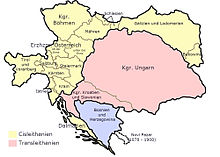
Austria-Hungary’s annexation of Bosnia and Herzegovina (blue) in 1908 was a crucial turning point in European diplomacy that produced many of the conditions that contributed to World War I.
By Austria-Hungary
By Britain
Boer republics
The independent, self-governed Boer Republics known as the Orange Free State and the South African Republic, created by the Dutch-speaking inhabitants of the Cape Colony, were annexed to the British Empire in 1902 at the end of the Second Boer War (1899–1902).
By France
Leeward Islands
Tahiti
By India
By Japan
By Spain
By the United States
Guano Islands Act
The demand for guano (prized as an agricultural fertilizer) led the United States to pass the Guano Islands Act in 1856, which enabled citizens of the United States to take possession, in the name of the United States, of unclaimed islands containing guano deposits. Under the act the United States annexed nearly 100 islands. By 1903, 66 of these islands were recognized as territories of the United States.
Hawaii
Texas
Examples since 1949
British annexation of Rockall

Lieutenant Commander Desmond Scott hoists the Union Flag in 1955
On 18 September 1955 at precisely 10:16 am, Rockall was declared officially annexed by the British Crown when Lieutenant-Commander Desmond Scott RN, Sergeant Brian Peel RM, Corporal AA Fraser RM, and James Fisher (a civilian naturalist and former Royal Marine), were deposited on the island by a Royal Navy helicopter from HMS Vidal (coincidentally named after the man who first charted the island). The team cemented in a brass plaque on Hall’s Ledge and hoisted the Union Flag to stake the UK’s claim. However, any effect of this annexation on valuable maritime rights claims under UNCLOS in the waters beyond 12 nautical miles from Rockall are neither claimed by Britain nor recognised by Denmark (for the Faroe Islands), Iceland or Ireland.
By China

Tibet and approximate line of communist advance in February 1950
The rule of the Qing dynasty over Tibet was established after a Qing expedition force defeated the Dzungar Khanate which had occupied Tibet in 1720, and lasted until the fall of the Qing dynasty in 1912. The Imperial Edict of the Abdication of the Qing Emperor issued in 1912 provided the legal basis for the Republic of China (ROC) to inherit all Qing territories, including Tibet. However, the ROC had no effective control over Tibet from 1912 to 1951; In the opinion of the Chinese government, this condition does not represent Tibet’s de jure independence as many other parts of China also enjoyed de facto independence when the Chinese state was torn by warlordism, Japanese invasion, and civil war.
Tibet came under the control of the People’s Republic of China (PRC) after attempts by the Government of Tibet to gain international recognition, efforts to modernize its military, negotiations between the Government of Tibet and the PRC, a military conflict in the Chamdo area of western Kham in October 1950, and the eventual acceptance of the Seventeen Point Agreement by the Government of Tibet under Chinese pressure in October 1951. Some analysts consider the incorporation of Tibet into the PRC an annexation.
By Ethiopia
Eritrea
In 1952, Ethiopian Emperor Haile Selassie orchestrated a federation with Eritrea. He dissolved it in 1962 and annexed Eritrea, resulting in the Eritrean War of Independence.
By India
Portuguese India

Portuguese India in 1961
In 1954, the residents of Dadra and Nagar Haveli, a Portuguese enclave within India, ended Portuguese rule with the help of nationalist volunteers. From 1954 to 1961, the territory enjoyed de facto independence. In 1961, the territory was merged with India after its government signed an agreement with the Indian government.
In 1961, India and Portugal engaged in a brief military conflict over Portuguese-controlled Goa and Daman and Diu. India invaded and conquered the areas after 36 hours of fighting, thus ending 451 years of Portuguese colonial rule in India. The action was viewed in India as a liberation of historically Indian territory; in Portugal, however, the loss of both enclaves was seen as a national tragedy. A condemnation of the action by the United Nations Security Council (UNSC) was vetoed by the Soviet Union. Goa and Daman and Diu were incorporated into India.
Sikkim

The strategic importance of Sikkim was realized in 1960s during the Sino-Indian War. Map in Polish.
During the British colonial rule in India, Sikkim had an ambiguous status, as an Indian princely state or as an Indian protectorate. Prior to Indian independence, Jawaharlal Nehru, acting as the leader of Executive Council, agreed that Sikkim would not be treated as an Indian state. Between 1947 and 1950, Sikkim enjoyed de facto independence. However, the Indian independence spurred popular political movements in Sikkim and the ruler Chogyal came under pressure. He requested Indian help to quell the uprising, which was offered. Subsequently, in 1950, India signed a treaty with Sikkim bringing it under its suzerainty, and controlling its external affairs, defence, diplomacy and communications. A state council was established in 1955 to allow for constitutional government under the Sikkimese monarch. Meanwhile, trouble was brewing in the state after the Sikkim National Congress demanded fresh elections and greater representation for the Nepalese. In the 1967 Nathu La and Cho La clashes, Chinese border attacks were repulsed. In 1973, riots in front of the palace led to a formal request for protection from India. The Chogyal was proving to be extremely unpopular with the people. In 1975, the Kazi (prime minister) appealed to the Indian Parliament for a change in Sikkim’s status so that it could become a state of India. In April, the Indian Army moved into Sikkim, seizing the city of Gangtok and disarming the Palace Guards. A referendum was held in which 97.5% of the voting people (59% of the people entitled to vote) voted to join the Indian Union. A few weeks later, on May 16, 1975, Sikkim officially became the 22nd state of the Indian Union and the monarchy was abolished.
By Indonesia
East Timor
Following an Indonesian invasion in 1975, East Timor was annexed by Indonesia and was known as Timor Timur. It was regarded by Indonesia as the country’s 27th province, but this was never recognised by the United Nations. The people of East Timor resisted Indonesian forces in a prolonged guerrilla campaign.
Following a referendum held in 1999 under a UN-sponsored agreement between the two sides, the people of East Timor rejected the offer of autonomy within Indonesia. East Timor achieved independence in 2002 and is now officially known as Timor-Leste.
Western New Guinea
Following a controversial plebiscite in 1969, Western New Guinea or West Papua was annexed by Indonesia. West Papua is the western half of the island of New Guinea and smaller islands to its west. The separatist Free Papua Movement (OPM) has engaged in a small-scale yet bloody conflict with the Indonesian military since the 1960s.
By Iraq
After being allied with Iraq during the Iran–Iraq War (largely due to desiring Iraqi protection from Iran), Kuwait was invaded and annexed by Iraq (under Saddam Hussein) in August 1990. Hussein’s primary justifications included a charge that Kuwaiti territory was in fact an Iraqi province, and that annexation was retaliation for “economic warfare” Kuwait had waged through slant drilling into Iraq’s oil supplies. The monarchy was deposed after annexation, and an Iraqi governor installed.
United States president George H. W. Bush ultimately condemned Iraq’s actions, and moved to drive out Iraqi forces. Authorized by the UNSC, an American-led coalition of 34 nations fought the Gulf War to reinstate the Kuwaiti Emir. Iraq’s invasion (and annexation) was deemed illegal and Kuwait remains an independent nation today.
By Israel

Israel and the territories Israel occupied in the Six-Day War.
East Jerusalem
During the 1967 Six-Day War, Israel captured East Jerusalem, a part of the West Bank, from Jordan. It has remained occupied until the present day. On June 27, 1967, Israel unilaterally extended its law and jurisdiction to East Jerusalem and some of the surrounding area, incorporating about 70 square kilometers of territory into the Jerusalem Municipality. Although at the time Israel informed the United Nations that its measures constituted administrative and municipal integration rather than annexation, later rulings by the Israeli Supreme Court indicated that East Jerusalem had become part of Israel. In 1980, Israel passed the Jerusalem Law as part of its Basic Law, which declared Jerusalem the “complete and united” capital of Israel. In other words, Israel purported to annex East Jerusalem. The annexation was declared null and void by UNSC Resolutions 252, 267, 271, 298, 465, 476 and 478.
Jewish neighborhoods have since been built in East Jerusalem, and Israeli Jews have since also settled in Arab neighborhoods there, though some Jews may have returned from their 1948 expulsion after the Battle for Jerusalem. Only Costa Rica recognized Israel’s annexation of East Jerusalem, and those countries who maintained embassies in Israel did not move them to Jerusalem. The United States Congress passed the Jerusalem Embassy Act, which recognizes Jerusalem as the united capital of Israel and requires the relocation of the U.S. embassy there in 1995, The act included a provision permitting the President to delay its implementation due to national security concerns. This waiver was used by presidents Clinton, Bush, Obama, and Trump, but was allowed to expire in 2019.
Golan Heights
Israel occupied two-thirds of the Golan Heights from Syria during the 1967 Six-Day War, and subsequently built Jewish settlements in the area. In 1981, Israel passed the Golan Heights Law, which extended Israeli “law, jurisdiction, and administration” to the area, including the Shebaa farms area. This declaration was declared “null and void and without international legal effect” by UNSC Resolution 497. The states that recognized the annexation are the Federated States of Micronesia and in 2021 the United States joined the recognition.
The vast majority of Syrian Druze in Majdal Shams, the largest Syrian village in the Golan, have held onto their Syrian passports. When Israel annexed the Golan Heights in 1981, 95% of the Majdal Shams residents refused Israeli citizenship, and are still firmly of that opinion, in spite of the Syrian Civil War.
On 29 November 2012, the United Nations General Assembly reaffirmed it was “eeply concerned that Israel has not withdrawn from the Syrian Golan, which has been under occupation since 1967, contrary to the relevant Security Council and General Assembly resolutions,” and “tress the illegality of the Israeli settlement construction and other activities in the occupied Syrian Golan since 1967.” The General Assembly then voted by majority, 110 in favour to 6 against (Canada, Israel, Marshall Islands, Federated States of Micronesia, Palau, United States), with 59 abstentions, to demand a full Israeli withdrawal from the Syrian Golan Heights.
On March 25, 2019, the United States recognized the Golan Heights as sovereign Israeli territory. In response, United Nations Secretary-General António Guterres stated “the status of Golan has not changed,” and the decision received worldwide condemnation with European members of the United Nations Security Council noting “We raise our strong concerns about the broader consequences of recognizing illegal annexation and also about broader regional consequences.” and that “Annexation of territory by force is prohibited under international law,” adding that unilateral changes to borders violate “the rules-based international order and the UN Charter.”
By Jordan
The part of former Mandatory Palestine occupied by Jordan during the 1948 Arab–Israeli War, was renamed “the West Bank”. It was annexed to Jordan in 1950 at the request of a Palestinian delegation. It had been questioned, however, how representative that delegation was, and at the insistence of the Arab League, Jordan was considered a trustee only. Only Pakistan and the United Kingdom recognized the annexation by Jordan. It was not condemned by the UNSC and it remained under Jordanian rule until 1967 when it was occupied by Israel. Jordan did not officially relinquish its claim to rule the West Bank until 1988. Israel has not taken the step of annexing the territory (except for parts of it that was made part of the Jerusalem Municipality), rather, there were enacted a complex (and highly controversial) system of military government decrees in effect applying Israeli law in many spheres to Israeli settlements.
By North Vietnam

Communist Party of Vietnam billboard marking the 30th anniversary of the reunification of the country in 1975
North Vietnam de facto annexed South Vietnam following the military defeat of the South Vietnamese army in April 1975. The communist regime of the Socialist Republic of Vietnam had officially reunified the country.
By Norway
One example of a claimed annexation after World War II is the Kingdom of Norway’s southward expansion of the dependent territory Queen Maud Land. On most maps there had been an unclaimed area between Queen Maud Land’s borders of 1939 and the South Pole until June 12, 2015 when Norway formally claimed to have annexed that area. The Antarctic Treaty, however, states: “The treaty does not recognize, dispute, nor establish territorial sovereignty claims; no new claims shall be asserted while the treaty is in force”.
By Russia

Tourists in Crimea with the Russian flag flying after annexation by Russia (14 June 2015).
In March 2014, Russia annexed the Crimean Peninsula, which had been a part of Ukraine and administers the territory as two federal subjects — the Republic of Crimea and the federal city of Sevastopol. The UN General Assembly considers the Russian possession of Crimea and Sevastopol to be an “attempted annexation” and the Russian Federation an “occupying power”.
Russia rejects the view that this was an annexation and regards it as an accession to the Russian Federation of a state that had just declared independence from Ukraine following a disputed referendum, and considers it secession as a result of irredentism. A term often used in Russia to describe these events is “re-unification” (воссоединение) to highlight the fact that Crimea was a colony of the Russian Empire from 1783 to 1917, and part of the Russian SFSR from 1921 to 1954. Few states recognize this view.
Ukraine considers Crimea and Sevastopol its own territory, and oversees the Crimea Platform, an international diplomatic initiative to restore its sovereignty.
By Morocco
Western Sahara

Morocco officially annexed Western Sahara in 1976
In 1975, and following the Madrid Accords between Mauritania, Morocco, and Spain, the last withdrew from the territory and ceded the administration to Mauritania and Morocco. This was challenged by an independentist movement, the Polisario Front that waged a guerrilla war against both Mauritania and Morocco. In 1979, and after a military putsch, Mauritania withdrew from the territory that left it controlled by Morocco. A United Nations peace process was initiated in 1991, but it has been stalled, and as of mid-2012, the UN is holding direct negotiations between Morocco and the Polisario front to reach a solution to the conflict. The Sahrawi Arab Democratic Republic is a partially recognized state that has claimed the entire region since 1975.
Gallery
-

Annexation of Portuguese India by India in 1961
-
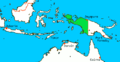
Western New Guinea was formally annexed by Indonesia in 1969
-

Indonesia annexed East Timor in 1976
-

Morocco officially annexed Western Sahara in 1976
-

Israel annexed East Jerusalem in 1980 (see Jerusalem Law) and the Golan Heights in 1981
-

Crimea was annexed by Russia in 2014