
Bad Times at the El Royale is a 2018 American neo-noir thriller film written and directed by Drew Goddard, who produced the project with Jeremy Latcham through TSG Entertainment and Goddard Textiles. It stars Jeff Bridges, Cynthia Erivo, Dakota Johnson, Jon Hamm, Cailee Spaeny, Lewis Pullman, and Chris Hemsworth. The plot follows six strangers and an employee at the El Royale, a hotel in between the California-Nevada border, who arrive with personal dark secrets that eventually intersect on a fateful night.
The spec script for the film was initially written by Goddard in November 2016, before he sold it the following year in March to 20th Century Fox. After Erivo joined the film in a singing role, Russell Crowe signed on to star but dropped out before filming began. To find his replacement, Hamm was given two days to choose whether he wanted to star, a choice he quickly accepted having wanted to work with Bridges. Principal photography started in January 2018 with cinematographer Seamus McGarvey and took place until April in British Columbia, specifically on a large studio set in Vancouver, with additional filming taking place in the United States. During post-production, editing was completed by Lisa Lassek, with the musical score being composed by Michael Giacchino.
Tackling several themes of morality and faith, the film began its marketing campaign in May 2018; several promotional materials were published, including fifteen character posters to shine focus on the ensemble cast, television advertisements costing over $24 million, and an extended preview of the film to introduce moviegoers to its main concept. On September 22, 2018, Bad Times at the El Royale premiered at the TCL Chinese Theatre in Los Angeles, where it received positive feedback.
Theatrically released in the United States on October 12, 2018, in an attempt to avoid competition with the releases of Venom and A Star Is Born, the film was a box-office flop, grossing $32 million worldwide against a $31.9 million production budget and additional marketing costs. The film received mixed reviews, with praise for its ensemble cast, soundtrack, and cinematography, but criticism for its concept, length, and slow pacing. At the 45th Saturn Awards, the film received the award for Best Thriller Film and nominations for Best Writing (Goddard), Best Actor (Bridges), Best Supporting Actor (Pullman), and Best Supporting Actress (Erivo).
Plot
In 1959, Felix O’Kelly stashes a bag of money under the floorboards of a hotel room before being shot and killed by an unknown man.
Ten years later, Catholic priest Daniel Flynn, singer Darlene Sweet, salesman Laramie Seymour Sullivan, and hippie Emily Summerspring arrive at the El Royale hotel that straddles the California-Nevada border, popular with the wealthy until losing its gambling license, and meet the hotel’s only employee, Miles Miller. Upon checking into the honeymoon suite, Sullivan begins removing wiretaps but unexpectedly finds a second set as well. He then discovers a secret corridor from which guest’s rooms can be observed via one-way mirrors and filmed with a movie camera. From the corridor, Sullivan sees Emily committing an apparent kidnapping. He calls into the FBI, where he identifies as Special Agent Dwight Broadbeck and is instructed by J. Edgar Hoover to ignore the kidnapping and to prevent the guests from leaving until the FBI materials are secured; Broadbeck disables all the cars.
Flynn invites Sweet to join him for dinner, where she sees him spiking her drink and knocks him unconscious with a bottle. Miller finds and revives Flynn, and reveals to him the secret passageway, explaining that he used to regularly film intimate encounters that he had to send to “management”. Miller admits having withheld one incriminating film of a deceased public figure who had been kind to him. When Flynn leaves to evaluate said film, Miller witnesses through the one-way mirror Agent Broadbeck attempting to rescue Emily’s hostage, who is revealed to be Emily’s younger sister, Rose. Emily kills Broadbeck with a shotgun, which also shoots out the mirror and brutalizes half of Miller’s face.
Before this, Emily had forcibly removed her sister from a murderous cult. In the present, Rose calls its leader, Billy Lee, to tell him where she is. Witnessing the events, Sweet attempts to escape but fails due to Broadbeck’s tampering with her vehicle. Flynn arrives and reveals to her that he is Dock O’Kelly, imprisoned since the robbery in 1959. Recently paroled, he arrived in disguise to retrieve the money hidden by his brother Felix. Due to O’Kelly’s failing memory, he picked the wrong room, and believing that the money was in Sweet’s room, he had attempted to drug her simply to gain access. Withholding knowledge that he has the film Miles gave him earlier, O’Kelly offers to split the cash with Sweet.
Retrieving the money, O’Kelly and Sweet attempt to leave as Lee and his cult arrive, who takes the pair, Emily, and Miller hostage. Lee finds the money and the film, which he realizes is worth more than the money. Beginning to terrorize the group, Lee kills Emily by playing a life-or-death game of roulette between her and Miller. Before Lee completes another round of roulette, O’Kelly attacks Lee, a melee ensues, and a fire begins to spread. When Sweet implores Miller to pick up a gun and help, he reveals that he served in the Vietnam War as a sniper and killed 123 people. A defiant Miller kills Lee and his followers as a distraught Rose stabs Miller before being shot by O’Kelly. Before Miller dies, Sweet tells “Father Flynn” to absolve Miller of the guilt over his actions in Vietnam. After O’Kelly complies, the pair toss the film into the fire before leaving the El Royale with the money. Sometime later in Reno, Nevada, O’Kelly attends Sweet’s jazz performance at a nightclub. The two smile warmly at each other before she begins to sing.
Cast
- Jeff Bridges as Father Daniel Flynn / Dock O’Kelley
- Cynthia Erivo as Darlene Sweet
- Dakota Johnson as Emily Summerspring
- Jon Hamm as Laramie Seymour Sullivan / Dwight Broadbeck
- Cailee Spaeny as Rose Summerspring
- Lewis Pullman as Miles Miller
- Chris Hemsworth as Billy Lee
- Nick Offerman as Felix O’Kelly
- Xavier Dolan as Buddy Sunday
- Shea Whigham as Dr. Woodbury Laurence
- Mark O’Brien as Larsen Rogers
- Charles Halford as Sammy Wilds
- Jim O’Heir as Milton Wyrick
- Stephen Stanton as the voice of J. Edgar Hoover


Themes and analysis
Deconstruction
As examined by Kyle Kizu from The Hollywood Reporter, the filmography of Drew Goddard, the creator of Bad Times at the El Royale, has tackled several times the deconstruction of a specific genre. When focusing on the 2018 film, Kizu said that it was the “most controlled and fruitful piece of deconstruction” from the filmmaker, as it was able to present its thesis, of “what looks plain and ordinary hides something beneath”, with its opening scene. While The A.V. Club noted that the film attempted to deconstruct its neo-noir genre, but that it was instead “a structurally ambitious example of same”, Flixist wrote that the film purposely avoided deconstructing its main genre as it “mashes together a whole wealth of genres and delivers an utterly unique, unpredictable, and unexpected movie that never stays still long enough to be anything but itself.” In a negative light, ABS-CBNnews.com said that the film’s runtime made it difficult to analyze, and that the film could have been “both a deconstruction and a commentary” or neither, and that only Goddard could say. In an interview with Polygon, Goddard was asked if he focused on deconstructing the genres in his film as he did with his first project The Cabin in the Woods (2011). Talking with Matt Patches, he responded that “It’s funny because in both cases that was not conscious either way. I just sort of go with what feels right for the story. Cabin was very aggressive in its approach. Whereas, in this case, it just sort of came out inherently. I didn’t want to make it about the genre.”
Right and wrong

The California-Nevada border was used extensively to illustrate each character’s morality.
A major aspect of Bad Times at the El Royale was its visualization of each character’s morality and if their actions were justified. One of its main cues to this was the presence of the California-Nevada border dividing the hotel. In one of the opening scenes, Darlene Sweet (Cynthia Erivo) takes her time walking across the state line and only crosses it with the help of Father Daniel Flynn (Jeff Bridges), never actually stepping on the line itself. However, characters such as cult leader Billy Lee (Chris Hemsworth), calmly walk in between the line without a second thought. To further illustrate this idea, cinematographer Seamus McGarvey used color to give each character a “photographic signature”. With this process, he assigned Lee to the color red for the significance of “impending doom, blood, and death”, black and white to Flynn to tell his distinctions between the truth and deception, and bright colors to Sweet for her character’s hopefulness and purity. In an interview, Goddard said that he placed the story in 1969 due to the circumstances and tensions during the decade, including the Cold War and the Tate–LaBianca murders, while drawing inspiration on morality from the techniques used by the Coen brothers.
Crisis of faith
—Alissa Wilkinson
From Vox, film critic Alissa Wilkinson listed the themes of Bad Times at the El Royale as tackling “religion, salvation, and who we really are”, while writing that the film was about “humanity’s drive to find redemption”. Believing that the state line served as the “existential crossroads” each character was facing, she came to the conclusion that the hotel was a “stand-in for purgatory”, the Catholic belief in a location where sinners are given a chance “to earn their way to heaven”. Overall, she noted that the main point of the use of religion in the film was the idea that confessing would help the characters “earn their way out of the state-straddling hotel freely about their past misdeeds in time for someone else to see them for who they really are”. Tracy Palmer, from Signal Horizon, similarly evaluated the story and arrived at the assumption that Flynn was, in fact, God testing six people in purgatory, and as “Darlene never commits any sin beyond hating herself and aiding a criminal find his money she is rewarded for her charity, and acceptance of self by singing for an audience what she wants, how she wants to look for eternity.”
Writing for The Hollywood Reporter, Ciara Wardlow said the film “has a lot to say about faith”. She began her analysis with the mention that the reveal of Flynn not being a priest but bank robber Dock O’Kelley as being similar to “other invocations of religion” turning out to be misleading. Wardlow explained the decision of Dwight Broadbeck (Jon Hamm) to violate his orders to potentially rescue a kidnapping victim, as his attempt to do what’s right after reciting a short prayer to his daughter. After concluding that each character in the film was having their faith tested, such as Miles Miller (Lewis Pullman) seeking forgiveness for his sins and Lee playing god as a cult leader, Wardlow cited Pascal’s wager to summarize the major theme of the project: “Bad Times repeatedly asks what is ‘goodness’ even, or forgiveness? And who is qualified to give it, for that matter?”
Furthermore, a journalist named Jasmine from SSZee Media studied the film and wrote that it was “a study of religion” as every character was having a “crisis of faith”. Focusing on the introduction of Billy Lee and how he uses religion to take advantage of his followers and to pose as a God himself, “walking the line between good and evil”, Jasmine noted the similarity of his followers to the “disciples following Jesus”. Also analyzing a scene in which a shot was framed to make Lee appear to have a halo on his head, she interpreted that his character was created to focus more on threatening appearances through his movements and words, calling it “the performance of Chris Hemsworth’s career”.
The film reel
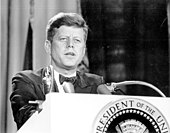
Rumors surrounding the personal life of JFK inspired the presence of the film reel.
A small detail examined by critics and moviegoers was one in which a film reel was burned at the end of the film containing a recently-deceased person in an intimate act. Due to every character being able to tell who the person was, the identity of the person was narrowed down to John F. Kennedy (JFK), Robert F. Kennedy, and Martin Luther King Jr. In their reasoning, Screen Rant decided that the choice to never tell the audience the identity of the person was to lead them to the question of “if it should actually matter”, and that the “key takeaway of the film is that great men aren’t perfect. Good people can do bad things, bad people can do good things, and there’s more to human beings than the binary poles of righteous and wicked.” Lia Beck from Bustle, on the other hand, closely examined the possibility of JFK being the person on the tape, as he had been rumored in 2001 to have had an affair with Marilyn Monroe in the 1960s, who appears in the film through a photograph. They also pointed out that the hotel the El Royale is based on, the Cal Neva Lodge & Casino, was frequently visited by the Kennedy family, with Goddard mentioning the rumor with the San Francisco Chronicle and how Monroe had also stayed at that hotel. In an interview with Newsweek, Goddard mentioned that his choice to leave the person on the tape ambiguous was to move the focus on Sweet, her rant towards Lee, and her character as a whole.
Production
Development

Drew Goddard wrote, produced, and directed the film as his “love letter to the crime thriller” genre.
Drew Goddard began writing the spec script to Bad Times at the El Royale in November 2016. To prepare for the film financially, he pitched the project with a budget and a selection of songs he wanted to be included. On March 8, 2017, 20th Century Fox bought the screenplay, accepted Goddard’s terms, and brought the budget to $32 million. According to The Hollywood Reporter, the script was only given to top studio executives, with potential buyers having to read it off a tablet before returning it to a courier. Also set to direct through TSG Entertainment and Goddard Textiles, Goddard produced the project with Jeremy Latcham, with Mary McLaglen serving as an executive producer.
Gumbo is the perfect way to describe it. I love crime fiction, I love film noir, I love big ensemble movies, I love 60s music. So much of this movie is about my love for the music of the 1960s and wanting to celebrate the artistic revolution that was happening. I take all of those things and throw it into the gumbo pot, spice it up with a little my own stuff, and out comes El Royale.
— Goddard at New York Comic Con
Explaining his inspirations in creating the project, Goddard said the location of the film was inspired by Cal Neva Lodge & Casino, also known as the Calneva Resort, a hotel located in between the border of California and Nevada. On deciding to work with an ensemble cast, he said that he wanted to create a project combining the film noir and crime fiction genres because he was “coming from The Martian which has one lead actor (Matt Damon) and I wanted to play around with a large cast, so that you don’t know who the protagonist is.” On further inspirations, Goddard noted that his cast and crew watched several films during production, including Casablanca (1942), Out of the Past (1947), Chinatown (1974), and Barton Fink (1991), along with reading several novels from Dashiell Hammett, James Ellroy, and Flannery O’Connor.
Casting
Stating that he spent more of his time developing his characters than looking for actors who would best fit the roles, Goddard mentioned that Jeff Bridges was the first person to receive the script. On August 23, 2017, it was announced that Bridges had been in negotiations to star alongside Chris Hemsworth, who had previously worked with the director on The Cabin in the Woods in 2011. In a confirmation report, the Tracking Board also noted that Beyoncé, Tom Holland, and newcomer Cailee Spaeny had been mentioned for lead roles, with the official casting of Spaeny being announced the following day.

After Russell Crowe dropped out of the project, Jon Hamm was quickly picked as his replacement.
While she was working on Widows, insiders considered Cynthia Erivo for a role in the film as a singer. After submitting two auditions tapes to casting director Carmen Cuba, Erivo was cast on August 29, 2017, with insiders telling The Hollywood Reporter that her role did “call for singing”. Goddard would later say Erivo was cast after “she came in and just started doing the scenes I just felt the hair stand up on the back of my neck. It was pretty exciting the day she walked in, that’s for sure.” Furthermore, Erivo would also go on to help Goddard write a scene in the film in which her character gives a speech towards the primary antagonist portrayed by Hemsworth, explaining that as the only lead character who’s a woman of color, that if her character “doesn’t have a moment where she can just speak, it will seem as though we don’t want her to”.
In January 2018, Dakota Johnson joined the film; Russell Crowe signed on to star but dropped out shortly before filming began. To quickly find his replacement, Jon Hamm was given a day to read the screenplay and another to decide whether he wanted to star. After accepting, he was then given less than a week to remember fourteen pages of dialogue as filming was scheduled to begin the following week. With Variety, Hamm noted a major reason he accepted to star was to work with Bridges. On the matter, Hamm said “it was such a truly inspiring group of folks to work with I’ve wanted to work with since I was in college or even younger. So to get that opportunity, you gotta jump with both feet”. In February, it was reported that Nick Offerman and Mark O’Brien had been spotted during filming. In May, it was revealed that Lewis Pullman would also appear, with Goddard stating that he was cast for his “emotional performance”.
Filming and design

The El Royale at Mammoth Studios. The entire set was built after Goddard and production designer Martin Whist envisioned a perfectly symmetrical hotel.
Principal photography for Bad Times at the El Royale began on January 29, 2018, taking place in locations around British Columbia, before concluding on April 6. Shot under the working title Purple Harvest, the project was filmed in chronological order, due to most of the story taking place in the same location, to improve continuity. To bring out the “1960s look” of the film and the “beautiful colors” of each set, cinematographer Seamus McGarvey was hired while he was working on The Greatest Showman in 2017. Shot with Kodak 35mm film with a Panaflex XL camera on a 1:2.39 aspect ratio, McGarvey used Panavision C Series and E series anamorphic lenses to capture the feature film.
To work with the director, various actors took pay cuts to complete the project and to let the production crew “take big creative bets”. For the first few days of the shoot, filming for the main bank robbery sequence took place on location in Agassiz, British Columbia. The following week, cast members were moved to Mammoth Studios, a large sound stage and studio set of the El Royale located in Vancouver. Created entirely by production designer Martin Whist, who had previously worked with Goddard on Cloverfield (2008) and The Cabin in the Woods, and had envisioned designing a perfectly symmetrical hotel with the director. Furthermore, each room of the hotel was made to be unique and specific to each character through their wallpaper, with Sweet’s room being “the most alive, the most vibrant, the most of the era”.
The whole thing is a set. We realized very early on we couldn’t find this place. I just had this idea of fundamentally it being symmetrical. That was the thing that killed us — we just couldn’t find something that’s this symmetrical. I also wanted to control the weather. The weather plays a key role in this story, so I needed to build it all on a stage. We found a massive stage up in Vancouver so we could build the whole thing front and back. So it’s all on one stage so it could just sort of exist.
— Goddard on deciding to construct the entire set for the El Royale with production designer Martin Whist
In interviews with the British Society of Cinematographers and the Motion Picture Association, Goddard and Whist explained how one of the opening scenes introducing the main characters outside the hotel was one of the last scenes shot for the film as it was built on location to have the scene occur during the day; every other scene taking place inside the hotel was shot on the set in Vancouver. A scene during the film’s finale where a large fire starts spreading across the hotel, was planned by the latter’s brother and special effects coordinator Joel Whist using fire retardant materials to have the ability to turn the flame on and off.
Each character’s attire was created by costume designer Danny Glicker, who had decided to work on Bad Times at the El Royale after finding Goddard’s “visual vocabulary” to be “playful and sharp”. Working with “distinctive characters” he believed were representing what appear to be “archetypes” at first glance, Glicker noted that his main job was to create “real tension” in each character “between their outward appearance and who they really are”. To create the design for Hamm’s character, a salesman, Glicker and his production crew researched different types of salespeople and used the 1969 documentary Salesman as inspiration, before deciding that his attire, described as being “very American”, would change as the temperature in the film changed as well. On the other hand, the clothing of Erivo’s character, lounge singer Darlene Sweet, was purposely created to look imperfect to reflect her declining career. In an interview with Women’s Wear Daily, Glicker said he had to screen test each piece of clothing due to conditions presented in the film, such as the weather, environment, and lighting, and that he spent time at the library researching different types of clothing from the 1960s. Summarizing his work, Glicker felt that actors wearing his created costumes were “infused with truthful information to experience that character’s life without inhibition”.

Cinematographer Seamus McGarvey used a wide aspect ratio to shine focus on the ensemble cast.
A tracking shot, in which Hamm’s character discovers the secret corridors of the El Royale and watches the hotel guests through one-way mirrors took eight months to plan. Rehearsals of the scene began in November 2017, with the cast working with a model of the hotel and small figurines to research how to perfect the timing. Due to the complexity of the scene, in which Erivo was singing live for the five-minute continuous shot, cast and crew members had to move silently in unison while wearing “padded shoes and quiet clothes”. Using “30% reflective glass” for the one-way mirrors, the scene took twenty-seven takes to accomplish. An additional scene in which Erivo’s character sings to cover up noises caused by Bridges’s character took twenty takes to complete. Furthermore, the set of a scene involving Billy Lee and his cult talking around a bonfire was built outside of the parking lot of the hotel set. The last scenes that were shot for the film involved flashbacks; the Vietnam War scene, originally going to be shot in Thailand, was filmed at the Polsa Rosa Movie Ranch in Acton, Ontario, while the FBI scene, doctor’s office scene, and the jail scene took place inside an armory from the Canadian Army. Additional filming, in Los Angeles and north of Malibu, took place for three days where scenes involving a flower walk and a beach were shot. On deciding to work using a wide aspect ratio, McGarvey said he had wanted to shine focus on the ensemble cast.
Editing was completed by Lisa Lassek, who had also worked with Goddard on The Cabin in the Woods. Using Avid Media Composer, a tool she used to edit most of her projects, Lassek said she had to wait for the film stock to travel to Los Angeles, where it was processed and returned to Vancouver. As a result, Lassek was permitted to edit the project as filming took place while in a workspace above the set. Due to the delay, the footage shown in the film on television monitors was shot first so the original film stock could be projected on said monitors weeks later. After post-production concluded near the start of October 2018, the finished product reached an Avid DNxHD 115 resolution. On working with the director, she said there were various “scenes that, in the script, were particularly memorable. It was really the way Drew shot them that took them to a whole level.”
Music
| Bad Times at the El Royale (Original Motion Picture Soundtrack) | ||||
|---|---|---|---|---|
| Soundtrack album by
Michael Giacchino
|
||||
| Released | October 12, 2018 | |||
| Genre |
|
|||
| Length | 36:58 | |||
| Label | Republic Records | |||
| Producer | Harvey Mason Jr. | |||
| Michael Giacchino chronology | ||||
|
||||
The film score to Bad Times at the El Royale was composed by Michael Giacchino, who had met Goddard while working on the television shows Alias and Lost. Details for both the score and its accompanying soundtrack album were revealed a few days before they were released on digital download by Milan Records and Republic Records, respectively, on October 12, 2018.
Writing each song into his screenplay as “a love letter to music” before pitching the project for an “organic process of structuring the film and the songs”, Goddard told major studios to avoid buying the film if they couldn’t buy the licenses for each piece of music. Also serving as a music supervisor, Goddard had Erivo sing her songs live on set with the belief that without it, “the movie would not work”. With Entertainment Weekly, Goddard said that the music was “almost like the eighth character in the movie. It serves the function of a chorus in a Shakespearean play. It actually is a key part of the emotional fabric of the film.” As a result, the production crew had each song playing during filming on loudspeakers, with Pullman and Bridges stating that they had originally read the script while listening to the songs in the background as a “great way to set the tone”. In introducing the character of cult leader Billy Lee with “Twelve Thirty”, Goddard said he wanted to provide a metaphorical connection with the character, as the song is “very bright and seductive, but when you really listen to what the words are saying, there’s an incredible darkness”.
The original tracklist for the soundtrack featured eleven prerecorded songs, while a digital rerelease on November 30, 2018, included two additional songs, “This Old Heart of Mine (Is Weak for You)” and “Hold On, I’m Comin'”, performed by Erivo in the film. Following its rerelease, the soundtrack itself received positive reviews from critics and moviegoers. Writing for Polygon, Karen Han called it “one of the year’s best”, while Angelica Florio from Bustle said that “between the music and Darlene’s show-stopping performances, you definitely get the sense that the song selection was key for Goddard”.
- Track listing
| No. | Title | Writer(s) | Performer(s) | Length |
|---|---|---|---|---|
| 1. | “26 Miles (Santa Catalina)” | Bruce Belland & Glen A. Larson | The Four Preps | 2:28 |
| 2. | “Twenty-Five Miles” | Bert Berns, Johnny Bristol, Harvey Fuqua, Edwin Starr, & Jerry Wexler | Edwin Starr | 3:21 |
| 3. | “Bend Me, Shape Me” | Scott English & Larry Weiss | The American Breed | 2:13 |
| 4. | “This Old Heart of Mine (Is Weak for You)” | Lamont Dozier, Brian Holland, & Eddie Holland | Cynthia Erivo | 3:03 |
| 5. | “He’s a Rebel” | Gene Pitney | Alana Da Fonseca | 2:53 |
| 6. | “I Got a Feeling” | Lamont Dozier, Brian Holland, & Eddie Holland | Four Tops | 3:04 |
| 7. | “Can’t Take My Eyes Off You” | Bob Crewe & Bob Gaudio | Frankie Valli | 3:22 |
| 8. | “Bernadette” | Lamont Dozier, Brian Holland, & Eddie Holland | Four Tops | 3:03 |
| 9. | “He’s Sure the Boy I Love” | Barry Mann & Cynthia Weil | The Crystals | 2:45 |
| 10. | “The Letter” | Wayne Carson | The Box Tops | 1:54 |
| 11. | “Twelve Thirty (Young Girls Are Coming to the Canyon)” | John Phillips | The Mamas & the Papas | 3:26 |
| 12. | “Baby, I Love You” | Jeff Barry, Ellie Greenwich, & Phil Spector | Tommy Roe | 2:39 |
| 13. | “Hold On, I’m Comin'” | Isaac Hayes & David Porter | Cynthia Erivo | 2:47 |
| Total length: | 36:58 | |||
Marketing
The marketing campaign from 20th Century Fox for Bad Times at the El Royale began on May 29, 2018, when “exclusive” images of the project were released and Drew Goddard revealed that “real-life historical figures could turn up at the El Royale”. After post-production was completed, a teaser for the film was publicized on June 7, 2018, with Entertainment Weekly calling it a “tense first look” and IndieWire stating that it managed to introduce an “eerie ensemble” while comparing its premise to Clue (1985) and the television series Room 104. On August 28, an official trailer was released, which Collider described as “fantastic” as it was “more delightful for the fact that it reveals pretty much nothing beyond the basic setup and the idea that none of these strangers is who they at first appear to be”. In a trailer breakdown with Empire, who described it as an “instant blast of glossy genre intrigue”, Goddard revealed the names of each character, and explained that there was “more to this movie than appears at first glance”.

In the first set of posters released for the film, reporters noted the appearance of changing temperatures to illustrate the moral spectrum of each character and their nature.
Promotional and theatrical posters for the film were released extensively to broadcast the ensemble cast. On June 26, 2018, eight character posters were unveiled by the studio, with Ben Pearson from /Film noting the “progression of the setting sun” and “how the amount of light in each poster seems to mirror what we know about the characters so far.” That same year, on August 13, seven additional character posters along with an official theatrical poster were released featuring “closeups of the brooding main characters lit by the title’s neon glow”. On August 28, a second theatrical poster was publicized to coincide with the release of the official trailer.
Television advertisements of the film began airing on September 4, 2018. In the week starting with September 17, $5.16 million were spent on seven versions of a commercial aired 721 times on 28 networks seen by 223.4 million viewers, with most of the money going to NBC and FOX. In the final week of September, eleven commercials were aired, which brought the overall promotional money spent on television commercials to $13.75 million. In the first week of October, Bad Times at the El Royale had eighteen versions of similar advertisements aired 1,233 times nationwide, gaining an attention score of 91.74 from over 378 million viewers. With its following week from October 8 to October 14 being its last time as one of the top five projects with the highest commercial spending, twenty-two commercials aired a total of 1,331 times on 34 networks, specifically on Adult Swim and NBC, bringing the film’s overall television advertisement spending to $24.46 million. On December 21, 2018, a 10-minute “extended preview” scene of the film was released, with Collider questioning the studio’s decision, stating that it was “something they should have done back in October, but it is what it is”.
Chris Thilk, from The Hollywood Reporter, analyzed the marketing techniques of Bad Times at the El Royale, summarizing the fact that the studio was ” on noir nostalgia” to attract audiences. In what he believed was “established neon-heavy branding”, Thilk said each of the released posters was “hinting in some way toward the nature or arc” of each character. On the trailers, he wrote that viewers weren’t able to “describe what’s going” and were left “raising lots of questions”. After discussing the initial footage being released at CinemaCon and San Diego Comic-Con, where moviegoers were also allowed to enter a lottery for the chance of seeing an exclusive screening of the film, Thilk tackled the various clips, featurettes, and television spots produced to advertise the film. In his summary, he wrote that the marketing campaign “promoted a strong cast and a wicked sense of humor”, and that 20th Century Fox “has embraced that to sell it to those looking for something a bit different at the theater”.
Release
Theatrical

At its Los Angeles premiere, Joss Whedon gave the film positive remarks.
Bad Times at the El Royale premiered at the TCL Chinese Theatre in Los Angeles on September 22, 2018, where it was attended by its crew, cast, and fellow filmmakers and actors Manny Jacinto, Alvina August, Stefan Kapičić, Bill Pullman (the father of actor Lewis Pullman, who stars in the film), and Joss Whedon along with 20th Century Fox chairman and CEO Stacey Snider and vice chairman Chris Aronson. At the opening, Whedon gave the film positive feedback, having previously worked with Goddard on writing The Cabin in the Woods, and said of the finished product, “It’s gritty, it’s hard-edged, but it’s adorable.” In Austin, Texas, the film was one of the last screened projects at Fantastic Fest and later had its world premiere in Spain, out of competition, at the San Sebastián International Film Festival.
Following negative test screening scores when audiences were given a viewing of the film with a low runtime, 20th Century Fox decided to theatrically release Bad Times at the El Royale with a 141-minute runtime on October 5, 2018. However, in June 2018, the premiere date was postponed to October 12 in an attempt to avoid competition with the October 5 releases of Venom and A Star Is Born.
After it opened in theaters, the film was chosen to introduce the 13th Rome Film Festival, serving as its Italian premiere, with festival director Antonio Monda explaining his choice by calling the film “sophisticated, intelligent, ironic, surprising and elegant”. At the ceremony, which Cailee Spaeny also attended, Goddard said his film contained “parallels to the #MeToo movement” on the topic of abusing power.
Home media
20th Century Studios Home Entertainment released Bad Times at the El Royale on Digital HD via digital distribution on December 18, 2018, before giving the film a physical release on Ultra HD Blu-ray, Blu-ray, and DVD the following year on January 1. Special features on the Blu-ray included several featurettes, a 28-minute documentary with behind the scenes footage titled Making Bad Times at the El Royale, both trailers, and an image gallery. In separate reviews, Chris Evangelista from /Film and Adam Chitwood from Collider both expressed their disappointment in the lack of an audio commentary track from the director.
Reception
Box office
Bad Times at the El Royale grossed $17.8 million in the United States and Canada, and $14 million in other territories, for a worldwide total of $31.9 million against a production budget of $32 million. A box-office flop, its performance was credited to its competition, high runtime, slow pacing, and its R-rating from the Motion Picture Association.
Weeks before its release, Variety reported that film analytics had predicted the film would make $8–12 million in its opening weekend, with some “ambitious estimates” going as high as $17 million. Released alongside First Man and Goosebumps 2: Haunted Halloween on October 12, 2018, in 2,808 theaters, Bad Times at the El Royale made $575,000 through Thursday-night previews, $2.8 million on its Friday opening day, and a grand $7.1 million total across its three-day opening weekend. Below initial estimates despite “relatively strong reviews and a star-studded cast”, and seventh at the box office, Deadline Hollywood noted the fact that the film had made less in its opening weekend than Night School in its third. In its second weekend, the film grossed $3.4 million as ninth at the box office, bringing its total to $13.5 million. By its fourth, the film was being broadcast in a mere 322 theaters, reaching a total of $17 million in the United States and Canada, before being pulled from theaters on December 6, 2018.
Worldwide, Bad Times at the El Royale debuted in 36 markets, making $4 million in its opening weekend; the top countries were Russia ($913,000), Australia ($884,000), the United Kingdom ($620,000), and Germany ($315,000). In its second and third weekends, the film respectively made $2.5 million and $1.63 million in 49 markets outside of the United States and Canada, bringing its total to $10.5 million, before ending its theatrical run with a total of $14 million outside of the two countries.
Critical response


On review aggregator Rotten Tomatoes, Bad Times at the El Royale holds an approval rating of 75% based on 252 reviews, with an average rating of 6.7/10. The website’s critical consensus reads, “Smart, stylish, and packed with solid performances, Bad Times at the El Royale delivers pure popcorn fun with the salty tang of social subtext.” Metacritic, which uses a weighted average, assigned the film a score of 60 out of 100 based on responses from 43 critics, indicating “mixed or average reviews”. Audiences polled by CinemaScore, 53% male and 73% at or over the age of 25, gave the film an average grade rating of “B−” on an A+ to F scale.
From Collider, Adam Chitwood called Bad Times at the El Royale a “compelling, twisty, and surprisingly emotional mystery”, lauding the performances of Cynthia Erivo and Jeff Bridges, and naming it “one of the best films of the year”. Kate Rife, from The A.V. Club, gave it a “B”, comparing the film to Pulp Fiction (1994) and the documentary Voyeur (2017) and lending positive remarks to its use of music and Erivo’s performance while criticizing its “frustrating character beats” and introduction of new characters near its finale. In a video review, Deadline Hollywood’s Pete Hammond mentioned the film’s similarities to several projects from Quentin Tarantino, including Pulp Fiction, and gave a mixed review in which he stated his disappointment with the high runtime while calling it “incredibly violent”.
Writing for Entertainment Weekly, Leah Greenblatt also gave the film a “B” rating, stating that the screenplay “let a bunch of talented actors loose” in their roles, and giving praise to Erivo for her “steely charisma and gorgeous powerhouse of a voice”. From Variety, Peter Debruge called the film an “inverse experiment where the location is everything, and the twists disappoint”, comparing it to Stanley Kubrick’s The Killing (1956) while criticizing its length and slow pacing. From NPR, Simon Abrams gave positive feedback to the film for its use of violence, plot twists, and ability to give each member of the ensemble cast enough time to act out their “best”. Abrams also noted Goddard’s directorial style, and how he was able to keep his “hyper-compartmentalized plot moving forward so swiftly” despite its moments of tension and significant plot points.
Peter Travers, writing for Rolling Stone, gave the film four stars out of five and praised the cinematography from Seamus McGarvey while mentioning that the film included “hidden depths that never materialize”. From Vox, Alissa Wilkinson gave it three stars and closely analyzed the film, comparing it to the 1944 play No Exit from Jean-Paul Sartre. She concluded that the movie was a “stand-in for purgatory” that projected the concept to “mixed results” due to its length, and lauded its premise, ensemble cast, and final product. The New York Times film critic Manohla Dargis wrote that “the performances and the visual style keep you easily engaged Goddard keeps everything smoothly, ebbing and flowing as the characters separate and join together, but at some point you want something more substantial”. Glenn Kenny from RogerEbert.com gave the film one star and a half out of four, and pointed out that the film “has a lot of plot” to support its runtime while criticizing it for ” into a bloody, drawn-out standoff plot in which a preening villain struts around being appalling”, calling it “an unfortunately apt demonstration of what can befall a clever filmmaker who gets too clever.”
Accolades
| Award | Date of ceremony | Category | Recipient | Result | Ref(s) |
|---|---|---|---|---|---|
| Black Reel Awards | February 7, 2019 | Outstanding Breakthrough Performance, Female | Cynthia Erivo | Nominated | |
| British Society of Cinematographers Awards | February 15, 2019 | Best Cinematography in a Theatrical Feature Film | Seamus McGarvey | Nominated | |
| Golden Trailer Awards | May 29, 2019 | Best Home Ent Horror/Thriller | Bad Times at the El Royale (for “Feeling Lucky”) |
Nominated | |
| London Critics’ Circle Film Awards | January 20, 2019 | Supporting Actress of the Year | Cynthia Erivo | Nominated | |
| San Diego Film Critics Society Awards | December 10, 2018 | Best Use of Music in a Film | Bad Times at the El Royale | Won | |
| Saturn Awards | September 13, 2019 | Best Thriller Film | Bad Times at the El Royale | Won | |
| Best Writing | Drew Goddard | Nominated | |||
| Best Actor | Jeff Bridges | Nominated | |||
| Best Supporting Actor | Lewis Pullman | Nominated | |||
| Best Supporting Actress | Cynthia Erivo | Nominated | |||
| Washington D.C. Area Film Critics Association Awards | December 3, 2018 | Best Supporting Actress | Cynthia Erivo | Nominated |