
Star Trek is an American media franchise based on the science fiction television series created by Gene Roddenberry. The first television series, simply called Star Trek and now referred to as The Original Series, debuted in 1966 and aired for three seasons on NBC. The Star Trek canon includes The Original Series, seven spin-off television series, two animated series, and thirteen films.
Television series
Nine television series and one short-form companion series make up the bulk of the Star Trek franchise: The Original Series, The Animated Series, The Next Generation, Deep Space Nine, Voyager, Enterprise, Discovery, Short Treks, Picard and Lower Decks, along with multiple upcoming series which include Prodigy and Strange New Worlds. All series in total amount to 797 episodes across 37 seasons of television.
| Series | Season | Episodes | Originally released | Showrunner(s) | Status | |||||||
|---|---|---|---|---|---|---|---|---|---|---|---|---|
| First released | Last released | Network | ||||||||||
| The Original Series | 1 | 29 | September 8, 1966 | April 13, 1967 | NBC | Gene Roddenberry | Released | |||||
| 2 | 26 | September 15, 1967 | March 29, 1968 | |||||||||
| 3 | 24 | September 20, 1968 | June 3, 1969 | |||||||||
| The Animated Series | 1 | 16 | September 8, 1973 | January 12, 1974 | Gene Roddenberry and D. C. Fontana | |||||||
| 2 | 6 | September 7, 1974 | October 12, 1974 | |||||||||
| The Next Generation | 1 | 26 | September 28, 1987 | May 16, 1988 | Syndication | Gene Roddenberry | ||||||
| 2 | 22 | November 21, 1988 | July 17, 1989 | Gene Roddenberry and Maurice Hurley | ||||||||
| 3 | 26 | September 25, 1989 | June 18, 1990 | Gene Roddenberry, Rick Berman and Michael Piller | ||||||||
| 4 | 26 | September 24, 1990 | June 17, 1991 | |||||||||
| 5 | 26 | September 23, 1991 | June 15, 1992 | Rick Berman and Michael Piller | ||||||||
| 6 | 26 | September 21, 1992 | June 21, 1993 | |||||||||
| 7 | 26 | September 20, 1993 | May 23, 1994 | Rick Berman and Michael Piller and Jeri Taylor | ||||||||
| Deep Space Nine | 1 | 20 | January 4, 1993 | June 21, 1993 | Michael Piller | |||||||
| 2 | 26 | September 27, 1993 | June 13, 1994 | |||||||||
| 3 | 26 | September 26, 1994 | June 19, 1995 | |||||||||
| 4 | 26 | October 2, 1995 | June 17, 1996 | Ira Steven Behr | ||||||||
| 5 | 26 | September 30, 1996 | June 16, 1997 | |||||||||
| 6 | 26 | September 29, 1997 | June 15, 1998 | |||||||||
| 7 | 26 | September 28, 1998 | May 31, 1999 | |||||||||
| Voyager | 1 | 16 | January 16, 1995 | May 22, 1995 | UPN | Michael Piller | ||||||
| 2 | 26 | August 28, 1995 | May 20, 1996 | |||||||||
| 3 | 26 | September 4, 1996 | May 21, 1997 | Michael Piller and Jeri Taylor | ||||||||
| 4 | 26 | September 3, 1997 | May 20, 1998 | |||||||||
| 5 | 26 | October 14, 1998 | May 26, 1999 | Brannon Braga | ||||||||
| 6 | 26 | September 22, 1999 | May 24, 2000 | |||||||||
| 7 | 26 | October 4, 2000 | May 23, 2001 | Kenneth Biller | ||||||||
| Enterprise | 1 | 26 | September 26, 2001 | May 22, 2002 | Brannon Braga and Rick Berman | |||||||
| 2 | 26 | September 18, 2002 | May 21, 2003 | |||||||||
| 3 | 24 | September 10, 2003 | May 26, 2004 | |||||||||
| 4 | 22 | October 8, 2004 | May 13, 2005 | Brannon Braga, Rick Berman and Manny Coto | ||||||||
| Discovery | 1 | 15 | September 24, 2017 | February 11, 2018 | CBS All Access | Gretchen J. Berg and Aaron Harberts | ||||||
| 2 | 14 | January 17, 2019 | April 18, 2019 | Alex Kurtzman | ||||||||
| 3 | 13 | October 15, 2020 | January 7, 2021 | Alex Kurtzman and Michelle Paradise | ||||||||
| 4 | TBA | 2021 | TBA | Paramount+ | Filming | |||||||
| 5 | TBA | TBA | TBA | In development | ||||||||
| Short Treks | 1 | 4 | October 4, 2018 | January 3, 2019 | CBS All Access | Alex Kurtzman | Released | |||||
| 2 | 6 | October 5, 2019 | January 9, 2020 | |||||||||
| Picard | 1 | 10 | January 23, 2020 | March 26, 2020 | Michael Chabon | |||||||
| 2 | 10 | 2022 | TBA | Paramount+ | Terry Matalas | Filming | ||||||
| 3 | TBA | TBA | TBA | In development | ||||||||
| Lower Decks | 1 | 10 | August 6, 2020 | October 8, 2020 | CBS All Access | Mike McMahan | Released | |||||
| 2 | 10 | August 12, 2021 | TBA | Paramount+ | In production | |||||||
| 3 | 10 | TBA | TBA | |||||||||
| Future series | ||||||||||||
| Prodigy | 1 | 10 | 2021 | TBA | Paramount+ | Kevin and Dan Hageman | In production | |||||
| 2 | 10 | TBA | TBA | |||||||||
| Strange New Worlds | 1 | 10 | TBA | TBA | Akiva Goldsman and Henry Alonso Myers | Filming | ||||||
| Section 31 | 1 | TBA | TBA | TBA | Bo Yeon Kim and Erika Lippoldt | In development | ||||||
| 2 | TBA | TBA | TBA | |||||||||
| Ceti Alpha V | 1 | 3 | TBA | TBA | Nicholas Meyer | |||||||
| Untitled Starfleet Academy series | 1 | TBA | TBA | TBA | Stephanie Savage and Josh Schwartz | |||||||
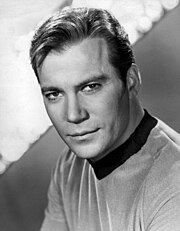


The Original Series (1966–1969)
Star Trek, more commonly known as Star Trek: The Original Series, often abbreviated as TOS, debuted in the United States on NBC on September 8, 1966. The series tells the tale of the crew of the starship Enterprise and its five-year mission “to boldly go where no man has gone before.” The original 1966–69 television series featured William Shatner as Captain James T. Kirk, Leonard Nimoy as Spock, DeForest Kelley as Dr. Leonard “Bones” McCoy, James Doohan as Montgomery “Scotty” Scott, Nichelle Nichols as Uhura, George Takei as Hikaru Sulu, and Walter Koenig as Pavel Chekov. During the series’ original run, it earned several nominations for the Hugo Award for Best Dramatic Presentation and won twice: for the two-part episode “The Menagerie”, and the Harlan Ellison-written episode “The City on the Edge of Forever”.
NBC canceled the series after three seasons; the last original episode aired on June 3, 1969. A petition near the end of the second season to save the series signed by many Caltech students and its multiple Hugo nominations would indicate that despite low Nielsen ratings, it was highly popular with science fiction fans and engineering students. The series later became popular in reruns and found a cult following. In the 2000s, the series was remastered for television, which included special-effect changes including CGI versions of the ships.
The Animated Series (1973–1974)
Star Trek, later marketed as Star Trek: The Animated Series (TAS) to differentiate it from the live-action series, was produced by Filmation, and ran for two seasons from 1973 to 1974. Most of the original cast performed the voices of their characters from The Original Series, and some of the writers who worked on The Original Series returned, including D. C. Fontana, David Gerrold and Paul Schneider. While the animated format allowed the producers to create more exotic alien landscapes and life forms, animation errors and liberal reuse of shots and musical cues have tarnished the series’ reputation. Although it was originally sanctioned by Paramount, which owned the Star Trek franchise following its acquisition of Desilu in 1967, Gene Roddenberry often spoke of TAS as non-canon. As of June 2007, it has references in the library section of the official Star Trek website.
The Animated Series won Star Trek‘s first Emmy Award on May 15, 1975. The Animated Series briefly returned to television in the mid-1980s on the children’s cable network Nickelodeon. Nickelodeon parent Viacom would purchase Paramount in 1994; in the early 1990s, the Sci-Fi Channel also began rerunning TAS. The complete series was also released on Laserdisc format during the 1980s. The complete series was first released in the United States on eleven volumes of VHS tapes in 1989. All 22 episodes were released on DVD in 2006.
The Next Generation (1987–1994)
Star Trek: The Next Generation, frequently abbreviated as TNG, takes place about a century after The Original Series (2364–2370). It features a new starship, Enterprise-D, and a new crew led by Captain Jean-Luc Picard (Patrick Stewart) and Commander William Riker (Jonathan Frakes). Some crew members represent new alien races, including Deanna Troi, a half-Betazoid counselor played by Marina Sirtis. Michael Dorn plays Worf, the first Klingon officer in Starfleet, alongside Gates McFadden as Dr. Beverly Crusher, LeVar Burton as chief engineer Geordi La Forge, the android Data portrayed by Brent Spiner, and Dr. Crusher’s son Wesley Crusher played by Wil Wheaton.
The series premiered on September 28, 1987 and ran for seven seasons, ending on May 23, 1994. It had the highest ratings of any of the Star Trek series and became the #1 syndicated show during the last few years of its original run, allowing it to act as a springboard for ideas in other series. Many relationships and races introduced in TNG became the basis of episodes in Deep Space Nine and Voyager. During its run, it earned several Emmy Awards and nominations—including a nomination for Best Dramatic Series during its final season—two Hugo Awards and a Peabody Award for Outstanding Television Programming for the episode “The Big Goodbye”. The series was released in high definition on Blu-Ray and Netflix with some special effect changes in the 2010s.
Deep Space Nine (1993–1999)
Star Trek: Deep Space Nine, frequently abbreviated as DS9, takes place during the last years and the immediate post-years of The Next Generation (2369–2375) and aired for seven seasons, from January 3, 1993 to June 2, 1999. Like The Next Generation, Deep Space Nine aired in syndication in the United States and Canada. Unlike the other Star Trek series, DS9 takes place primarily on a space station rather than aboard a starship.
The series begins after the brutal Cardassian occupation of the planet Bajor. The liberated Bajoran people ask the United Federation of Planets to help run a Cardassian-built space station, Deep Space Nine, near Bajor. After the Federation takes control of the station, the protagonists of the series discover a uniquely stable wormhole that provides immediate access to the distant Gamma Quadrant making Bajor and the station one of the most strategically important locations in the galaxy. The series chronicles the events of the station’s crew, led by Commander (later Captain) Benjamin Sisko, played by Avery Brooks, and Major (later Colonel) Kira Nerys, played by Nana Visitor. Recurring plot elements include the repercussions of the Cardassian occupation of Bajor, Sisko’s spiritual role for the Bajorans as the Emissary of the Prophets, and in later seasons a war with the Dominion.
Deep Space Nine stands apart from earlier Trek series for its lengthy serialized storytelling, conflict within the crew, and religious themes—all elements that critics and audiences praised but Roddenberry forbade in the original series and The Next Generation.
Voyager (1995–2001)
Star Trek: Voyager ran for seven seasons, airing from January 16, 1995, to May 23, 2001, launching a new Paramount-owned television network, UPN. It features Kate Mulgrew as Captain Kathryn Janeway, the first female commanding officer in a leading role of a Star Trek series, and Commander Chakotay, played by Robert Beltran.
Voyager takes place at about the same time period as Deep Space Nine and the years following that series’ end (2371–2378). The premiere episode has the USS Voyager and its crew pursue a Maquis (Federation rebels) ship. Both ships become stranded in the Delta Quadrant about 70,000 light-years from Earth. Faced with a 75-year voyage to Earth, the crew must learn to work together to overcome challenges on their long and perilous journey home while also seeking ways to shorten the voyage. Like Deep Space Nine, early seasons of Voyager feature more conflict between its crew members than seen in later episodes. Such conflict often arises from friction between “by-the-book” Starfleet crew and rebellious Maquis fugitives forced by circumstance to work together on Voyager. Eventually, though, they settle their differences, after which the overall tone becomes more reminiscent of The Original Series. Isolated from its home, the starship Voyager faces new cultures and dilemmas not possible in other series based in the Alpha Quadrant. Later seasons brought in an influx of characters and cultures from prior series, such as the Borg, Q, the Ferengi, Romulans, Klingons, Cardassians and cast members of The Next Generation.
Enterprise (2001–2005)
Star Trek: Enterprise, originally titled Enterprise, is a prequel to the original Star Trek series. It aired from September 26, 2001 to May 13, 2005. Enterprise takes place in the 2150s, some 90 years after the events of Zefram Cochrane’s first warp flight and about a decade before the founding of the Federation. The series centers on the voyages of Earth’s first warp 5 capable starship, Enterprise, commanded by Captain Jonathan Archer (played by Scott Bakula), and the Vulcan Sub-Commander T’Pol (played by Jolene Blalock). The series originally did not include “Star Trek” in its name and logo, adding it later on in the series’ run.
During the series’ first two seasons, Enterprise featured self-contained episodes, like The Original Series, The Next Generation and Voyager. The entire third season consisted of one arc related to the Xindi, and had a darker tone and serialized nature similar to that of Deep Space Nine. The fourth and final season consisted of several mini-arcs composed of two to three episodes. The final season showed the origins of some elements of previous series, and resolved some of their continuity problems. Ratings for Enterprise started strong but declined rapidly. Although critics received the fourth season well, both fans and the cast criticized the series finale, partly because of the episode’s focus on the guest appearance of cast members of The Next Generation. The cancellation of Enterprise ended an 18-year run of back-to-back new Star Trek television series, which began with The Next Generation in 1987.
Discovery (2017–present)
Star Trek: Discovery is a direct prequel to The Original Series, set roughly ten years prior. It premiered September 24, 2017 in the United States and Canada on CBS before moving to CBS All Access, while Netflix streams the series outside the United States and is also providing most of the series’ funding.
The series centers on the voyages of the USS Discovery, a unique starship with an experimental “spore drive”, commanded in Season 1 by Captain Gabriel Lorca (Jason Isaacs), and in Season 2 by Captain Christopher Pike (Anson Mount), on temporary assignment during a refit of the Enterprise. Lieutenant Commander Michael Burnham (Sonequa Martin-Green), is the lead character of the series. This marks the first Star Trek series to feature a First Officer as the lead. The series opens with the Klingon T’Kuvma attempting to unite the 24 great Klingon houses, leading to a war between his race and the United Federation of Planets that involves the crew of the Discovery.
Short Treks (2018–2020)
Star Trek: Short Treks is a spin-off companion series of stand-alone short films which focus on characters and situations from Discovery. Some of the episodes are animated.
Picard (2020–present)
Star Trek: Picard is the eighth series in the franchise that is set 20 years after the end of Nemesis. Jonathan Frakes, who has directed episodes of multiple Trek series, directs two episodes of the first season. The series premiered on January 23, 2020.
Lower Decks (2020–present)
Star Trek: Lower Decks was announced on October 25, 2018, by CBS All Access as a two-season order for a half-hour adult animated comedy series created by Mike McMahan, the head writer and executive producer of Rick and Morty. It focuses on the support crew of “one of Starfleet’s least important ships”, and shares a name with a Next Generation episode. The first season premiered on August 6, 2020, and consists of 10 episodes.
Future television series
An animated and two live-action television series are currently in development.
Prodigy
In February 2019, it was announced that an animated series developed for young viewers was in development. The series is being co-written and created by Dan and Kevin Hageman and will air on Nickelodeon as a joint-venture with CBS. It focuses on a group of teens who embark on an adventure upon an abandoned Starfleet ship. On July 23, 2020, it was announced that the title would be Star Trek: Prodigy and that it will premiere in 2021.
Strange New Worlds
Announced in May 2020, Star Trek: Strange New Worlds will depict the early days of the Enterprise and feature Discovery actors Anson Mount, Ethan Peck and Rebecca Romijn reprising their roles as Pike, Spock and Number One, respectively. Creator Akiva Goldsman intends for the series to use an episodic format similar to The Original Series and The Next Generation. It will be released on CBS All Access. In June 2020, Jonathan Frakes confirmed he had been asked to return as a director for the series.
Section 31
Announced in January 2019, a live-action television series, currently untitled, will focus on the mirror universe’s Philippa Georgiou and her adventures as a member of Starfleet’s Section 31 division. Michelle Yeoh will reprise her role from Discovery, with Bo Yeon Kim and Erika Lippoldt serving as co-showrunners. The series is reported to feature an ensemble cast. In February 2021, it was announced that the series would only move forward once at least one of the current slate of five concurrent series (Discovery, Picard, Lower Decks, Prodigy and Strange New Worlds) concludes its run.
Other series
In February 2021, it was announced that new series would only move forward once at least one of the current slate of series (Discovery, Picard, Lower Decks, Prodigy and Strange New Worlds) concludes its run. There are several series reportedly in development, including a series by Stephanie Savage and Josh Schwartz that is set at Starfleet Academy, as well as Ceti Alpha V, a limited series based on the character Khan Noonien Singh and his The Wrath of Khan storyline, written by Nicholas Meyer.
Failed television series
Phase II
Star Trek: Phase II was a 1970s follow-up live-action television series to The Original Series. Though sets were constructed, scripts written, characters cast, and production started, the series was cancelled in favor of The Motion Picture, the first Star Trek feature film. The series would have anchored a fourth U.S. television network, the Paramount Network. This would later happen when Star Trek: Voyager anchored the launch of UPN, the United Paramount Network in the 1990s.
Feature films
Paramount Pictures has produced thirteen Star Trek feature films, the most recent being released in July 2016. The first six films continue the adventures of the cast of The Original Series; the seventh film, Generations was designed as a transition from that cast to the cast of the Next Generation series; the next three films, 8–10, focused completely on the cast of the Next Generation series.
The eleventh, twelfth, and thirteenth films take place in an alternate timeline, officially known as the Kelvin Timeline, with a new cast playing younger versions of the original series characters and Leonard Nimoy portraying an elderly Spock. Three major attempts at continuing or reigniting the film franchise have been made, but so far have not continued for various reasons.
The Original Series films
Star Trek creator Gene Roddenberry first suggested the idea of a Star Trek feature in 1969. When the original television series was canceled, he lobbied to continue the franchise through a film. The success of the series in syndication convinced the studio to begin work on a feature film in 1975. A series of writers attempted to craft a suitably epic screenplay, but the attempts did not satisfy Paramount, so the studio scrapped the project in 1977. Paramount instead planned on returning the franchise to its roots with a new television series (Phase II). The massive worldwide box office success of Star Wars in mid-1977 sent Hollywood studios to their vaults in search of similar sci-fi properties that could be adapted or re-launched to the big screen. Following the huge opening of Columbia’s Close Encounters of the Third Kind in late December 1977, production of Phase II was cancelled in favor of making a Star Trek film.
| Film | U.S. release date | Director(s) | Screenwriter(s) | Story by | Producer(s) |
|---|---|---|---|---|---|
| Star Trek: The Motion Picture | December 7, 1979 | Robert Wise | Harold Livingston | Alan Dean Foster | Gene Roddenberry |
| Star Trek II: The Wrath of Khan | June 4, 1982 | Nicholas Meyer | Jack B. Sowards | Harve Bennett and Jack B. Sowards | Robert Sallin |
| Star Trek III: The Search for Spock | June 1, 1984 | Leonard Nimoy | Harve Bennett | ||
| Star Trek IV: The Voyage Home | November 26, 1986 | Steve Meerson, Peter Krikes, Nicholas Meyer and Harve Bennett | Harve Bennett and Leonard Nimoy | Harve Bennett | |
| Star Trek V: The Final Frontier | June 9, 1989 | William Shatner | David Loughery | William Shatner, Harve Bennett and David Loughery | |
| Star Trek VI: The Undiscovered Country | December 6, 1991 | Nicholas Meyer | Nicholas Meyer and Denny Martin Flinn | Leonard Nimoy, Lawrence Konner and Mark Rosenthal | Ralph Winter and Steven-Charles Jaffe |
Star Trek: The Motion Picture (1979)
A massive energy cloud from deep space heads toward Earth, leaving destruction in its wake, and the Enterprise must intercept it to determine what lies within, and what its intent might be.
The movie borrows many elements from “The Changeling” of the original series and “One of Our Planets Is Missing” from the animated series. Principal photography commenced on August 7, 1978 with director Robert Wise helming the feature. The production encountered difficulties and slipped behind schedule, with effects team Robert Abel and Associates proving unable to handle the film’s large amount of effects work. Douglas Trumbull was hired and given a blank check to complete the effects work in time and location; the final cut of the film was completed just in time for the film’s premiere. The film introduced an upgrade to the technology and starship designs, making for a dramatic visual departure from the original series. Many of the set elements created for Phase II were adapted and enhanced for use in the first feature films. It received mixed reviews from critics; while it grossed $139 million the price tag had climbed to about $45 million due to costly effects work and delays.
Star Trek II: The Wrath of Khan (1982)
Khan Noonien Singh (Ricardo Montalbán), whom Kirk thwarted in his attempt to seize control of the Enterprise fifteen years earlier (“Space Seed”), seeks his revenge on the Admiral and lays a cunning and sinister trap.
The Motion Picture‘s gross was considered disappointing, but it was enough for Paramount to back a sequel with a reduced budget. After Roddenberry pitched a film in which the crew of the Enterprise goes back in time to ensure the assassination of John F. Kennedy, he was “kicked upstairs” to a ceremonial role while Paramount brought in television producer Harve Bennett to craft a better—and cheaper—film than the first. After watching all the television episodes, Bennett decided that the character Khan Noonien Singh was the perfect villain for the new film. Director Nicholas Meyer finished a complete screenplay in just twelve days, and did everything possible within budget to give The Wrath of Khan a nautical, swashbuckling feel, which he described as “Horatio Hornblower in outer space.” Upon release, the reception of The Wrath of Khan was highly positive; Entertainment Weekly‘s Mark Bernadin called The Wrath of Khan “the film that, by most accounts, saved Star Trek as we know it”.
Both the first and second films have television versions with additional footage and alternate takes that affect the storyline. (Subsequent Star Trek films tended to have shorter television versions). Especially notable in The Wrath of Khan is the footage establishing that a young crew member who acts courageously and dies during an attack on the Enterprise is Scotty’s nephew.
Star Trek III: The Search for Spock (1984)
The plot picks up shortly after the conclusion of the previous film. When McCoy begins acting irrationally, Kirk learns that Spock, in his final moments, transferred his katra, his living spirit, to the doctor. To save McCoy from emotional ruin, Kirk and crew steal the Enterprise and violate the quarantine of the Genesis Planet to retrieve Spock, his body regenerated by the rapidly dying planet itself, in the hope that body and soul can be rejoined. However, bent on obtaining the secret of Genesis for themselves, a renegade Klingon (Christopher Lloyd) and his crew interfere, with deadly consequences.
Meyer declined to return for the next film, so directing duties were given to cast member Leonard Nimoy. Paramount gave Bennett the green light to write Star Trek III the day after The Wrath of Khan opened. The producer penned a resurrection story for Spock that built on threads from the previous film and the original series episode “Amok Time”.
Star Trek IV: The Voyage Home (1986)
While returning to stand court-martial for their actions in rescuing Spock, Kirk and crew learn that Earth is under siege by a giant probe that is transmitting a destructive signal, attempting to communicate with the now-extinct species of humpback whales. To save the planet, the crew must time-travel back to the late 20th century to obtain a mating pair of these whales, and a marine biologist (Catherine Hicks) to care for them.
Nimoy returned as director for this film. Nimoy and Bennett wanted a film with a lighter tone that did not have a classic antagonist. They decided on a time travel story with the Enterprise crew returning to their past to retrieve something to save their present—eventually, humpback whales. After having been dissatisfied with the script written by Daniel Petrie Jr., Paramount hired Meyer to rewrite the screenplay with Bennett’s help. Meyer drew upon his own time travel story Time After Time for elements of the screenplay. Star William Shatner was promised his turn as director for Star Trek V, and Nicholas Meyer returned as director/co-writer for Star Trek VI.
Star Trek V: The Final Frontier (1989)
Spock’s half-brother (Laurence Luckinbill) believes he is summoned by God, and hijacks the brand-new (and problem-ridden) Enterprise-A to take it through the Great Barrier, at the center of the Milky Way, beyond which he believes his maker waits for him. Meanwhile, a young and arrogant Klingon captain (Todd Bryant), seeking glory in what he views as an opportunity to avenge his people of the deaths of their crewmen on Genesis, sets his sights on Kirk.
This is the only film in the franchise directed by William Shatner.
Star Trek VI: The Undiscovered Country (1991)
When Qo’noS’ moon Praxis (the Klingon Empire’s chief energy source) is devastated by an explosion, caused by over-mining, the catastrophe also contaminating Qo’noS’ atmosphere, the Klingons make peace overtures to the Federation. While on the way to Earth for a peace summit, the Klingon Chancellor (David Warner) is assassinated by Enterprise crewmen, and Kirk is held accountable by the Chancellor’s Chief of Staff (Christopher Plummer). Spock attempts to prove Kirk’s innocence, but in doing so, uncovers a massive conspiracy against the peace process with participants from both sides.
This film is a sendoff to the original series cast. One Next Generation cast member, Michael Dorn, appears as the grandfather of the character he plays on the later television series, Worf. It is the second and last Star Trek film directed by Nicholas Meyer and last screenplay co-authored by Leonard Nimoy.
The Next Generation films
Both the sixth and seventh films acted as transitions between the films featuring the original cast and those with the Next Generation cast, with the sixth focusing on the original cast and the seventh focusing on the TNG cast. The Next Generation cast made four films over a period of eight years, with the last two performing only moderately well (Insurrection) and disappointingly (Nemesis) at the box office.
| Film | U.S. release date | Director(s) | Screenwriter(s) | Story by | Producer(s) |
|---|---|---|---|---|---|
| Star Trek Generations | November 18, 1994 | David Carson | Ronald D. Moore and Brannon Braga | Rick Berman, Brannon Braga and Ronald D. Moore | Rick Berman |
| Star Trek: First Contact | November 22, 1996 | Jonathan Frakes | Brannon Braga and Ronald D. Moore | Rick Berman, Marty Hornstein and Peter Lauritson | |
| Star Trek: Insurrection | December 11, 1998 | Michael Piller | Rick Berman and Michael Piller | Rick Berman | |
| Star Trek: Nemesis | December 13, 2002 | Stuart Baird | John Logan | John Logan, Rick Berman and Brent Spiner |
Star Trek Generations (1994)
Picard enlists the help of Kirk, who is presumed long dead but flourishes in an extra-dimensional realm, to prevent a deranged scientist (Malcolm McDowell) from destroying a star and its populated planetary system in an attempt to enter that realm. This film also included original crew members Scotty (James Doohan) and Chekov (Walter Koenig).
Following seven seasons of The Next Generation, the next Star Trek film was the first to feature the crew of the Enterprise-D, along with a long prologue sequence featuring three cast members of the original series and the only appearance of the Enterprise-B.
Star Trek: First Contact (1996)
After a failed attempt to assault Earth, the Borg attempt to prevent First Contact between Humans and Vulcans by interfering with Zefram Cochrane’s (James Cromwell) warp test in the past. Picard must confront the demons which stem from his assimilation into the Collective (“The Best of Both Worlds”) as he leads the new Enterprise-E back through time to ensure the test and subsequent meeting with the Vulcans take place.
The first of two films directed by series actor Jonathan Frakes.
Star Trek: Insurrection (1998)
Profoundly disturbed by what he views as a blatant violation of the Prime Directive, Picard deliberately interferes with a Starfleet admiral’s (Anthony Zerbe) plan to relocate a relatively small but seemingly immortal population from a mystical planet to gain control of the planet’s natural radiation, which has been discovered to have substantial medicinal properties. However, the admiral himself is a pawn in his alien partner’s (F. Murray Abraham) mission of vengeance.
Insurrection brought in Deep Space Nine writer Michael Piller instead of Ronald D. Moore and Brannon Braga who had written for Generations and First Contact.
Star Trek: Nemesis (2002)
A clone of Picard (Tom Hardy), created by the Romulans, assassinates the Romulan senate, assumes absolute power, and lures Picard and the Enterprise to Romulus under the false pretext of a peace overture.
Written by John Logan and directed by Stuart Baird, this film was a critical and commercial failure (released December 13, 2002 in direct competition with Die Another Day, Harry Potter and the Chamber of Secrets and The Lord of the Rings: The Two Towers) and was the final Star Trek film to feature the Next Generation cast and to be produced by Rick Berman.
The Kelvin Timeline

Reboot film logo
After the poor reception of Nemesis and the cancellation of the television series Enterprise, the franchise’s executive producer Rick Berman and screenwriter Erik Jendresen began developing a new film, entitled Star Trek: The Beginning, which would take place after Enterprise but before The Original Series. In February 2007, J. J. Abrams accepted Paramount’s offer to direct the new film, having been previously attached as producer. Roberto Orci and Alex Kurtzman wrote a screenplay that impressed Abrams, featuring new actors portraying younger versions of the original series’ cast. The Enterprise, its interior, and the original uniforms were redesigned.
This revival of the franchise is often considered to be a reboot, but is also a continuation of the franchise, with Nimoy reprising his role of the elderly Spock. This route was taken to free the new films from the restrictions of established continuity without completely discarding it, which the writers felt would have been “disrespectful”. This new reality was informally referred to by several names, including the “Abramsverse”, “JJ Trek” and “NuTrek”, before it was named the “Kelvin Timeline” (versus the “Prime Timeline” of the original series and films) by Michael and Denise Okuda for use in official Star Trek reference guides and encyclopedias. The name Kelvin comes from the USS Kelvin, a starship involved in the event that creates the new reality in Star Trek (2009). Abrams named the starship after his grandfather Henry Kelvin, whom he also pays tribute to in Into Darkness with the Kelvin Memorial Archive.
| Film | U.S. release date | Director(s) | Screenwriter(s) | Producer(s) |
|---|---|---|---|---|
| Star Trek | May 8, 2009 | J. J. Abrams | Roberto Orci and Alex Kurtzman | J. J. Abrams and Damon Lindelof |
| Star Trek Into Darkness | May 16, 2013 | Roberto Orci, Alex Kurtzman and Damon Lindelof | J. J. Abrams, Bryan Burk, Damon Lindelof, Alex Kurtzman and Roberto Orci | |
| Star Trek Beyond | July 22, 2016 | Justin Lin | Simon Pegg and Doug Jung | J. J. Abrams, Roberto Orci, Lindsey Weber and Justin Lin |
| Star Trek 4 | June 9, 2023 | Noah Hawley | Noah Hawley | Noah Hawley, J. J. Abrams |
Star Trek (2009)
In the 24th century, a supernova destroys Romulus. Piloting a one-man vessel, Spock (Leonard Nimoy) attempts to contain the supernova by generating an artificial black hole, but is assaulted by a Romulan mining vessel captained by Nero (Eric Bana), who is bent on vengeance for Spock’s failure to save Romulus; both vessels are pulled into the black hole and sent back in time to the 23rd century. Nero then captures Spock and uses the black-hole technology to destroy Vulcan. Spock’s present-day younger self (Zachary Quinto), who is a Starfleet Academy instructor, and a volatile and arrogant cadet named James Kirk (Chris Pine) must then set aside their current differences, and join forces to prevent Nero from consigning Earth and the rest of the Federation worlds to similar fates.
This film acts as a reboot to the existing franchise by taking place in an alternate reality, using the plot device of time travel to depict an altered timeline, featuring younger versions of the primary original series characters. It is the first production to feature an entirely different cast of actors playing roles previously established by other actors, with the exception of the aged Spock played by Nimoy. It was directed by J. J. Abrams (who produced it with Damon Lindelof) and written by Roberto Orci and Alex Kurtzman. According to Lindelof, this production was designed to attract a wider audience. It received positive reviews and a number of awards, including the film franchise’s only Academy Award, for “makeup and hairstyling”. A story that covered the events between Nemesis and Star Trek was released as the graphic novel Countdown in early 2009.
Star Trek Into Darkness (2013)
A Starfleet special agent (Benedict Cumberbatch) coerces an officer into blowing up a secret installation in London, shoots up a subsequent meeting of Starfleet brass in San Francisco, and then flees to Qo’noS. The crew of the Enterprise attempt to bring him to justice without provoking war with the Klingon Empire, but find there is much more to the agent’s mission, and the man himself, than what the Fleet Admiral (Peter Weller) has told them; the agent is none other than Khan Noonien Singh; his allegiance and his motives are initially not at all clear.
Star Trek Beyond (2016)
The Enterprise is ambushed and destroyed by countless alien micro-vessels; the crew abandon ship. Stranded on an unknown planet, and with no apparent means of escape or rescue, they find themselves in conflict with a new sociopathic enemy (Idris Elba) who has a well-founded hatred of the Federation and what it stands for.
Star Trek Beyond was released on July 22, 2016, in time for the franchise’s 50th anniversary celebrations. Roberto Orci had stated that Star Trek Beyond would feel more like the original series than its predecessors in the reboot series while still trying something new with the established material. In December 2014, Justin Lin was confirmed as the director for the upcoming sequel, marking the first reboot film not to be directed by J. J. Abrams, whose commitments to Star Wars: The Force Awakens restricted his role on the Star Trek film to that of producer. In January 2015, it was confirmed that the film would be co-written by Doug Jung and Simon Pegg, who revealed the film’s title that May. Idris Elba was cast as the villain Krall, while Sofia Boutella was cast as Jaylah. Filming began on June 25, 2015. This was the last film of Anton Yelchin (Chekov), who died in an automobile accident on June 19, 2016.
Star Trek 4 (2023)
Pine and Quinto had signed contracts to return as Kirk and Spock for a fourth film should one be made. In July 2016, Abrams confirmed plans for a fourth film and stated that Chris Hemsworth would return as Kirk’s father, George, whom he played in the prologue of the first film. Later that month, Paramount confirmed the return of Hemsworth, as well as most of the Beyond cast, producers Abrams and Lindsey Weber, and writers J.D. Payne and Patrick McKay. That same month, Abrams said that Chekov would not be recast, after Anton Yelchin died in an accident outside his residence in California.
In December 2017, it was revealed that Quentin Tarantino had pitched an idea for a potential Star Trek film to Abrams and Paramount, who were reportedly enthusiastic about the idea. Tarantino was mentioned as a possibility to direct the film if his schedule allowed, and that Abrams and Paramount would attempt to assemble a writers’ room to explore the concept. On December 22, writer Mark L. Smith was hired by Paramount and Bad Robot to write a screenplay based on Tarantino’s original pitch, with Tarantino still expected to direct.
In April 2018, it was announced that two new Star Trek films were in development at Paramount. Later that month, it was announced that S. J. Clarkson would direct the second Star Trek film in development, and that the film would enter production before Tarantino’s film. J.D. Payne and Patrick McKay would co-write the screenplay, while Abrams and Lindsey Weber would co-produce the project. In August 2018, Pine and Hemsworth walked away from negotiations to star in the film after refusing to take pay cuts as a result of Star Trek Beyond‘s alleged under-performance at the domestic box office. According to Hemsworth, the reason for his exit was because he found the script underwhelming. In January 2019, Paramount reportedly cancelled development of the fourth installment, refusing to offer a comment.
In May 2019, Tarantino confirmed that his Trek film was still in development, saying:
It’s a very big possibility. I haven’t been dealing with those guys for a while cause I’ve been making my movie. But we’ve talked about a story and a script. The script has been written and when I emerge my head like Punxsutawney Phil, post-Once Upon a Time in Hollywood, we’ll pick up talking about it again.
On November 19, 2019, it was reported that Pine had signed-on to return for a fourth installment alongside Quinto, Saldana, Pegg, and Urban, and that Noah Hawley was in talks to write and direct the film. Simon Pegg later stated that he had no knowledge of the reboot cast’s return in the film. The following year, it was announced that Hawley’s movie had been put on indefinite hold, reportedly by Paramount’s new president to get a better handle on how to move the film franchise forward. In late November 2020, it was revealed that the project was cancelled and Hawley left.
In December 2019, it was reported that Tarantino had left his proposed film, looking to make a smaller budget film. In January 2020, Tarantino stated the film “might” be made, but he would not direct it. In March 2021, Star Trek: Discovery writer Kalinda Vazquez was hired by Paramount to pen a new Star Trek film, which is said to be based on an original story. The following month, it was announced that the next installment in the franchise would be released on June 9, 2023 with J.J. Abrams returning to produce.
Reception
Box office performance
| Film | Release date | Box office gross | Budget | Ref(s) | |||
|---|---|---|---|---|---|---|---|
| U.S. and Canada | U.S. and Canada (adjusted for inflation) |
Other territories | Worldwide | ||||
| The Motion Picture | December 7, 1979 | $82,258,456 | $289,771,535 | $56,741,544 | $139,000,000 | $45 million | |
| The Wrath of Khan | June 4, 1982 | $78,912,963 | $211,714,240 | $16,887,037 | $95,800,000 | $12 million | |
| The Search for Spock | June 1, 1984 | $76,471,046 | $188,189,317 | $10,528,954 | $87,000,000 | $16 million | |
| The Voyage Home | November 26, 1986 | $109,713,132 | $255,897,387 | $23,286,868 | $133,000,000 | $21 million | |
| The Final Frontier | June 9, 1989 | $52,210,049 | $107,685,854 | $17,989,951 | $70,200,000 | $30 million | |
| The Undiscovered Country | December 6, 1991 | $74,888,996 | $140,574,678 | $22,011,004 | $96,900,000 | $27 million | |
| Generations | November 18, 1994 | $75,671,262 | $130,530,379 | $44,328,738 | $120,000,000 | $38 million | |
| First Contact | November 22, 1996 | $92,027,888 | $150,021,274 | $57,972,112 | $150,000,000 | $46 million | |
| Insurrection | December 11, 1998 | $70,187,658 | $110,096,320 | $47,612,342 | $117,800,000 | $70 million | |
| Nemesis | December 13, 2002 | $43,254,409 | $61,484,482 | $24,058,417 | $67,312,826 | $60 million | |
| Star Trek | May 8, 2009 | $257,730,019 | $307,141,265 | $127,950,427 | $385,680,446 | $150 million | |
| Into Darkness | May 16, 2013 | $228,778,661 | $251,100,922 | $238,602,923 | $467,381,584 | $190 million | |
| Beyond | July 22, 2016 | $158,848,340 | $169,222,379 | $184,623,476 | $343,471,816 | $185 million | |
| Total | $1,400,952,879 | $2,373,430,032 | $865,770,317 | $2,273,546,672 | $893 million | ||
Critical response
| Film | Rotten Tomatoes | Metacritic | CinemaScore |
|---|---|---|---|
| The Motion Picture | 41% (41 reviews) | 48 (16 reviews) | N/A |
| The Wrath of Khan | 88% (64 reviews) | 67 (18 reviews) | N/A |
| The Search for Spock | 79% (48 reviews) | 56 (17 reviews) | N/A |
| The Voyage Home | 81% (43 reviews) | 71 (17 reviews) | A+ |
| The Final Frontier | 21% (47 reviews) | 43 (16 reviews) | A− |
| The Undiscovered Country | 82% (56 reviews) | 65 (18 reviews) | A− |
| Generations | 48% (58 reviews) | 55 (22 reviews) | B+ |
| First Contact | 92% (60 reviews) | 71 (18 reviews) | A− |
| Insurrection | 54% (72 reviews) | 64 (19 reviews) | B+ |
| Nemesis | 38% (168 reviews) | 51 (29 reviews) | A− |
| Star Trek | 94% (351 reviews) | 82 (46 reviews) | A |
| Into Darkness | 84% (291 reviews) | 72 (43 reviews) | A |
| Beyond | 86% (309 reviews) | 68 (50 reviews) | A− |
Academy Awards
| Film | Art Direction | Cinematography | Makeup | Original Score | Sound Editing | Sound Mixing | Visual Effects |
|---|---|---|---|---|---|---|---|
| The Motion Picture (1979) | Nominated | category not yet introduced | Nominated | Nominated | |||
| The Voyage Home (1986) | Nominated | Nominated | Nominated | Nominated | |||
| The Undiscovered Country (1991) | Nominated | Nominated | |||||
| First Contact (1996) | Nominated | ||||||
| Star Trek (2009) | Won | Nominated | Nominated | Nominated | |||
| Into Darkness (2013) | Nominated | ||||||
| Beyond (2016) | Nominated | ||||||