
The main systems of the human body are:
- Circulatory system / Cardiovascular system:
- Circulates blood around the body via the heart, arteries and veins, delivering oxygen and nutrients to organs and cells and carrying their waste products away.
- Keeps the body’s temperature in a safe range.
- Digestive system and Excretory system:
- System to absorb nutrients and remove waste via the gastrointestinal tract, including the mouth, esophagus, stomach and intestines.
- Eliminates waste from the body.
- Endocrine system:
- Influences the function of the body using hormones.
- Integumentary system / Exocrine system:
- Skin, hair, nails, sweat and other exocrine glands
- Immune system and lymphatic system:
- Defends the body against pathogens that may harm the body.
- The system comprising a network of lymphatic vessels that carry a clear fluid called lymph.
- Muscular system:
- Enables the body to move using muscles.
- Nervous system:
- Collects and processes information from the senses via nerves and the brain and tells the muscles to contract to cause physical actions.
- Renal system and Urinary system
- The system where the kidneys filter blood to produce urine, and get rid of waste.
- Reproductive system:
- The reproductive organs required for the production of offspring.
- Respiratory system:
- Brings air into and out of the lungs to absorb oxygen and remove carbon dioxide.
- Skeletal System:
- Bones maintain the structure of the body and its organs.
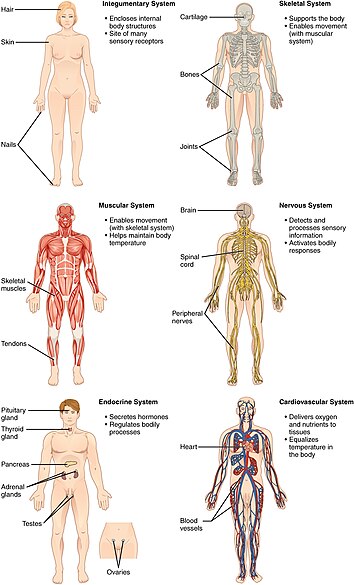
- Clockwise from top left: the integumentary
- skeletal
- nervous
- cardiovascular
- endocrine and muscular systems.

- Clockwise from top left: the lymphatic
- Respiratory system
- urinary reproductive (female
- male) and digestive systems.