
Simony (/ˈsɪməni/) is the act of selling church offices and roles or sacred things. It is named after Simon Magus, who is described in the Acts of the Apostles as having offered two disciples of Jesus payment in exchange for their empowering him to impart the power of the Holy Spirit to anyone on whom he would place his hands. The term extends to other forms of trafficking for money in “spiritual things”.
The appointment of ecclesiastical officials, such as bishops and abbots, by a secular authority came to be considered simoniacal and this became a key issue during the Investiture Controversy.
Etymology
The term “simony” originates from the Biblical passages Acts 8:9,13,18–24:
But there was a certain man, called Simon, which beforetime in the same city used sorcery, and bewitched the people of Samaria, giving out that himself was some great one: … Then Simon himself believed also: and when he was baptized, he continued with Philip, and wondered, beholding the miracles and signs which were done … And when Simon saw that through laying on of the apostles’ hands the Holy Ghost was given, he offered them money, saying, Give me also this power, that on whomsoever I lay hands, he may receive the Holy Ghost. But Peter said unto him, Thy money perish with thee, because thou hast thought that the gift of God may be purchased with money. Thou hast neither part nor lot in this matter: for thy heart is not right in the sight of God. Repent therefore of this thy wickedness, and pray God, if perhaps the thought of thine heart may be forgiven thee. For I perceive that thou art in the gall of bitterness, and in the bond of iniquity. Then answered Simon, and said, Pray ye to the Lord for me, that none of these things which ye have spoken come upon me.
Thus, Simon’s name came to be applied to the practice of selling church offices for money.
Catholic Church
 |
| Part of a series on the |
| Canon law of the Catholic Church |
|---|
 Catholicism portal Catholicism portal |
Although considered a serious offense against canon law, simony became widespread in the Catholic Church during the 9th and 10th centuries. In canon law, the word bears a more extended meaning than in English law. “Simony according to the canonists”, says John Ayliffe in his Parergon,
is defined to be a deliberate act or a premeditated will and desire of selling such things as are spiritual, or of anything annexed unto spirituals, by giving something of a temporal nature for the purchase thereof; or in other terms it is defined to be a commutation of a thing spiritual or annexed unto spirituals by giving something that is temporal.
In the Corpus Juris Canonici, the Decretum and the Decretals of Gregory IX dealt with the subject. The offender whether simoniacus (the perpetrator of a simoniacal transaction) or simoniace promotus (the beneficiary of a simoniacal transaction), was liable to deprivation of his benefice and deposition from orders if a secular priest, or to confinement in a stricter monastery if a regular. No distinction seems to have been drawn between the sale of an immediate and of a reversionary interest. The innocent simoniace promotus was, apart from dispensation, liable to the same penalties as though he were guilty.
Certain matters were simoniacal by the canon law but would not be regarded as such in English law. So grave was the crime of simony considered that even infamous persons (deprived of citizens’ rights due to conviction) could accuse another of it. English provincial and legatine constitutions continually assailed simony.
In 1494, a member of the Carmelite order, Adam of Genoa, was found murdered in his bed with twenty wounds after preaching against the practice of simony.
-
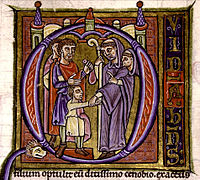
Abbot practising simony (France, 12th century)
-
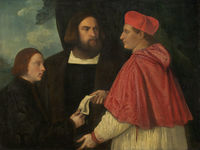
Girolamo and cardinal Marco Corner investing Marco, abbot of Carrara, with his benefice, Titian, c. 1520
In literature
In the 14th century, Dante Alighieri depicted the punishment of many “clergymen, and popes and cardinals” in hell for being avaricious or miserly.
He also criticised certain popes and other simoniacs:
Rapacious ones, who take the things of God,
that ought to be the brides of Righteousness,
and make them fornicate for gold and silver!
The time has come to let the trumpet sound
for you; …
Church of England
| Political corruption | ||||
|---|---|---|---|---|
| Concepts | ||||
|
||||
| Corruption by country | ||||
|