
The Masked Singer (abbreviated as TMS) is an American reality singing competition television series that premiered on Fox on January 2, 2019. It is part of the Masked Singer franchise which began in South Korea and features celebrities singing songs while wearing head-to-toe costumes and face masks concealing their identities. Hosted by Nick Cannon, the program employs panelists who guess the celebrities’ identities by interpreting clues provided to them throughout each season. Ken Jeong, Jenny McCarthy Wahlberg, Nicole Scherzinger, and Robin Thicke appear in each episode and vote alongside an audience for their favorite singer after all perform. The least popular is eliminated, taking off their mask to reveal their identity.
The winners of the first four seasons were T-Pain as “Monster”, Wayne Brady as “Fox”, Kandi Burruss as “Night Angel”, and LeAnn Rimes as “Sun”, respectively. To prevent their identities from being revealed before each prerecorded episode is broadcast, the program makes extensive use of code names, disguises, non-disclosure agreements, and a team of security guards. While considering it more positive than other reality television shows, television critics have had mixed reviews for the series and particularly negative opinions of its panelists. The costumes, however, have attracted praise. Inspired by haute couture, they are designed by Marina Toybina and custom-built by a team ensuring the celebrities can sing clearly while wearing them. In recognition of the show’s costume design, Toybina won a Costume Designers Guild Award and a Creative Arts Emmy Award.
The series has received the highest television ratings for a non-sports program in the adults 18–49 key demographic each American television season it has aired. Two spin-offs—an aftershow and a dance version, The Masked Dancer—have followed as a result. The growth of the Masked Singer franchise has been credited to the show’s success, as has an interest in adapting similar South Korean reality television series and other television formats centered on costumes. A fifth season premiered on March 10, 2021.
Format
Each season of The Masked Singer features a group of celebrity contestants. In a typical episode, four to six contestants each sing a 90-second cover for panelists and an audience anonymously in costume. Hints to their identities—known as the “clue package”—are given before and occasionally after each performs. The perennial format is a taped interview with a celebrity’s electronically masked voice narrating a video showing cryptic allusions to what they are known for. During screenings of the clue packages, after performances, and before an elimination, the panelists are given time to speculate each singer’s identity out loud and write down comments in note binders. They are also allowed to ask questions and request that the host offer additional clues. After every performance concludes, the audience and panelists vote for their favorite singer using an electronic device, and the least popular must take off their mask to reveal their identity. The show uses a weighted voting system; panelists’ and audience members’ votes are worth 50 percent each and combined to form a final score. This process of elimination continues for a set number of episodes until three contestants remain in the season finale, and one is declared the winner after they perform again. The “Golden Mask” trophy is awarded as a prize.
Voting does not occur for certain performances; all contestants in an episode occasionally sing together as a group, and each episode concludes with the eliminated celebrity singing an encore unmasked. Except in the first season, a “smackdown” round is featured in select episodes in which the two least popular competitors from their first performances sing one after another on the same stage, and a second, eliminating vote occurs. Since the second season, the contestants are initially divided and only compete against others in a designated subgroup. A “Golden Ear” trophy awarded to the panelist with the most correct first impression guesses at the end of a season was introduced for the fourth, as was a reduction of performances and the audience viewing and voting remotely. Remote voting and the “Golden Ear” trophy continued for the fifth season, and a “wildcard” round in which a new contestant performs at the end of certain episodes in an attempt defeat another was introduced.
Panelists and host
The permanent panel consists of actor and comedian Ken Jeong, television personality Jenny McCarthy Wahlberg, recording artist Nicole Scherzinger, and singer-songwriter Robin Thicke. A guest occasionally appears as a fifth panelist during an episode. Joel McHale has served as a guest panelist in every season. Previous seasons’ winners have also appeared. Nick Cannon hosts the show; his role was considered unclear in July 2020 after making anti-Semitic statements that Fox said “inadvertently promoted hate”.The network accepted Cannon’s apology, and he pledged to donate his first paycheck from the fourth season to the Simon Wiesenthal Center after visiting with its officials.Niecy Nash will act as guest host for a number of episodes in the fifth season after Cannon tested positive for COVID-19.
Production
Conception and development
—Plestis on the creation of The Masked Singer.
The Masked Singer is based on the South Korean television series King of Mask Singer, which is the originator of the Masked Singerfranchise. Executive producer Craig Plestis first noticed the format in October 2017 at Khao Soi, a small Thai restaurant in Studio City, Los Angeles. While waiting for dinner, he observed the other patrons staring at a television playing an episode of the Thai version of the show. Intrigued, Plestis began researching the series online and contacted an executive of MBC America, a subsidiary of the producer and broadcaster of the South Korean program, Munhwa Broadcasting Corporation (MBC). With the help of his agent, Steve Wohl of Paradigm Talent Agency, Plestis secured the rights to produce an American adaptation from the company. Following the creation of a showreel, he pitched the series to several outlets, all of whom rejected the idea. Plestis then met with Fox executive Rob Wade who said he “responded … right away” to the concept and considered its uniqueness among celebrity singing competitions a strength. After successfully pitching the program under the condition A-list celebrities participate, Plestis began developing it in November.
In January 2018, executive producer and showrunner Izzie Pick Ibarra became involved to aid in the casting process and Americanize the format. Rather than follow the tournament style of the South Korean version in which eight singers perform in at least one of four rounds, with the winner of the final round facing the previous episode’s champion in an attempt to become the new “Mask King”, she opted to air one elimination per episode, emphasize the clue package and guessing components, and have the celebrities wear more extravagant costumes. Plestis agreed, wanting to create a story arc throughout the episodes and—unlike the South Korean show—reuse the costumes. On August 2, 2018, Fox ordered the series and released a trailer.
Endemol Shine North America produced the first season due to Plestis’ relationship with the studio. Following it, production transitioned to a new in-house studio, Fox Alternative Entertainment, which is more financially favorable for the network. Since the second and third seasons, respectively, Rosie Seitchik and Cannon have served as executive producers alongside Plestis. Ibarra exited the series following the third and James Breen assumed her roles since the fourth. Numerous production and format changes were implemented in the fourth due to the COVID-19 pandemic, and testing and safety requirements increased the show’s budget by about 15 percent.
Casting
Since signing a deal with him in 2018, Fox had offered Cannon multiple opportunities to host or produce other television programs, though none interested him. After being fascinated by the Masked Singer concept when presented with it and noticing its success in other countries, Cannon joined the show, believing it was “either going to be a huge failure or a huge hit”. Ibarra cited him as her number one choice for the role because of his personality and experience. Regarding the panelists, she said the production team was less concerned with selecting those with an ability to critique participants’ singing abilities than creating a comedic tone for the series as one of their goals was to reassure celebrities they would not be ridiculed for appearing. Jeong was the first panelist to be signed on due to his humour and pre-existing knowledge of the South Korean version, followed by McCarthy Wahlberg and Thicke because of their enthusiasm regarding the concept, and Scherzinger for her positivity and experience as a singer. According to Plestis, he “only wanted people who loved the program, not people who wanted to work on “. Thicke later questioned whether he would have taken the role “if still been No. 1 on the radio” and Scherzinger said she signed on to the show the day before filming began. In March 2019, Sharon Osbourne stated she was supposed to be signed on as a panelist; those plans fell through after being contractually obligated to appear as a judge on The X Factor.
The show’s producers reach out to celebrities via agents or vice versa. Wade said producers’ goal is to cast celebrities of varying ages, genders, and backgrounds to appeal to as broad an audience as possible. They favor lesser-known celebrities the same as “super big names” because it is harder to guess them. To surprise viewers with an unknown talent when unmasked, those who are not professional singers are desired, though some must send producers recordings of them singing as a quasi-audition. All are given questionnaires to complete before competing and asked if they have claustrophobia. Due to her strategy of sending potential participants sketches of costumes that might be featured, Ibarra said casting for the first season “was not nearly as hard as anticipated”, though several celebrities were reluctant to compete. Following its success, an increased number were interested in participating in the second. By the third, Plestis said casting became “a lot easier”.
Security
Before each participant is unmasked, the show’s staff undertakes significant security precautions to prevent their identities from being released. According to Plestis, the series has two bibles: one related to the format and a second, larger one for security measures. Everyone involved signs a non-disclosure agreement which prevents them from disclosing information about the show until its broadcast. After a celebrity is confirmed to appear, they are allowed to inform a few others who also sign one. Outside of those, only about 25 people know the contestants’ real names during a season, though they never refer to them as such. Most are from Fox and the show’s legal department; Cannon, director Alex Rudzinski, and the majority of the program’s 150-person crew do not know who the celebrities are until they are unmasked. To prevent identities from being revealed in the event of a leak or hack, all documents (except the contract) only list participants’ costume names. Although the contracts do give their real names, the series’ name is unlisted.

The front of hoodies celebrities wear while off camera
Before arriving on the show’s set, celebrities and their family, friends, and agents are disguised and typically driven from a neutral location. If driven from their houses, chauffeurs are instructed to “take long, circuitous routes … to throw off any would-be tails”.The manager of Joey Fatone, “Rabbit” in the first season, said he was picked up at a 7-Eleven near Television City, given a disguise, and driven inside the gate. “Flamingo” in the second season, Adrienne Bailon, stated she was taken to the set inside of an unmarked black car and only discussed her involvement on the show with producers in a “secret warehouse”. Each participant is escorted to and from their trailers outside of the set by security guards while disguised with a mask, visor, gloves, pants, and a hoodieto prevent their skin from showing. According to Scherzinger, they also escort panelists directly to their dressing rooms after arriving.
Due to the show’s security, celebrities said they never encountered another masked participant on set, or if they did, could not speak to them. They are only allowed to talk with those who wear a special cloth on the back of their clothing which is changed each season to prevent replication. Before performing, they are trained to use different body language and mannerisms than their own. The production crew is discouraged from using their phones during filming and the studio audience walks through a metal detector and has their phones placed in a Yondrmagnetic pouch before entering the set. The panelists also forfeit their phones during tapings, and their note binders are placed “in a vault” after each to keep them private.
Design
Costumes

L–R: “Fox”, “Butterfly”, “Monster”, “Kitty”, and “Robot”. “Robot” competed in an episode that won Toybina a Creative Arts Emmy Award.
The series’ costumes are designed by Marina Toybina. In addition to her ideas, she considers celebrities’ and producers’ requests to formulate initial concepts. Each is designed to be dissimilar from those featured in previous seasons and other versions of the Masked Singer franchise by using different sewing and fabrication techniques. After researching “fur and skin textures, historical wardrobe, anything that might be relevant to each character”, Toybina sketches each concept with a pencil and works with an illustrator, Jarett Fajardo, to create a digital version with a 3D effect. Producers then review each design and note adjustments to be made. As a result, Toybina may sketch multiple versions before they collectively decide which will be featured during a season. Based on their background and what might suit them well, participants are presented with several to select from. Their reason for choosing a costume can differ; some have an emotional connection while others want to move around freely during performances.
After handpicking which fabrics and materials to use based on celebrities’ mobility and performing abilities, Toybina collaborates with manufacturers and a team of about 15 people to custom-make each costume. They are created concurrently during “a very sped-up, tight schedule”, taking “about three to four weeks per mask, and about four weeks for costumes”. Beginning as a wire, foam is gradually added around each mask to create an easy-to-wear helmet shape for the performers and a chinstrap often accompanies each to prevent movement. Referencing one of the costumes, Toybina said she enjoys adding depth to them: “The Kitty isn’t just a cat, she is a vintage burlesque-style diva with all of the hand beading, feathers, and even headdress that you would expect from that.” As production time is limited, there is no opportunity for the team to experiment with different materials—”all garments are … cut right away on the original fabric”. Since “the draping and the handwork … all done the old school way”, she cited couturiers such as Alexander McQueen, Thierry Mugler, and Hussein Chalayan as inspirations. 3D printing was used for the first time in the fourth season, and the first two-person costume, the first with animatronics, and the first puppet costume were featured. Although adjustments may be made to customize them to celebrities’ likings, most costumes turn out identical to her sketches.
A maximum of two fittings are conducted with each celebrity at either the costume shop or Toybina’s studio in which a “limited number of people” are present. Before filming occurs, Toybina conducts creative meetings with “every single department” of the show to discuss how to perfect the costumes’ looks on camera. Hoods are worn to absorb sweat, and hidden screens inside of each mask help them breathe and sing clearly. For those who wear a mask detached from their costume’s body, either a face stocking is worn or paint is used to disguise their skin color. Costumes are sanitized between tapings and repaired if needed as there are no backups.
Set

The stage as it appeared in the third season
According to its designer James Pearse Connelly, the set is based on the Thai version of the show and is inspired by the stage designs of electronic dance music festivals. The front is X-shaped and features an LED interior (allowing for video to be played) enclosed with smoked, tinted glass, while the back is made of shiny black laminate and contains space for trap doors and special effects underneath. The performance floor is flat to prevent tripping hazards and is bordered upstage by two 25-foot-tall (7.6 m) polygon faces with wide mouths that act as entrances and exits. A curved LED screen spans the space between the faces and a large logo of the show is hung above it. The stage is surrounded by seats for about 300 audience members and the panelists are seated together behind them on a raised platform at a mask-shaped desk. Backstage, there is a Batcave-inspired area with costumes displayed like mannequins in a museum. In the fourth season, many on-stage set pieces were replaced with virtual reality elements and the panelists’ desk was lengthened due to social distancing requirements.
Pre-performance
Ibarra said selecting which songs they sing is a collaborative process; both the performers and producers submit “ideas merge as go through the clearanceprocess”. While music publishers were reluctant to grant licenses for use in the first season as they were not told who would be performing their songs, this process became easier by the second. Producers gravitate towards songs “that help tell the overall story” of one’s costume and ask those who are famous singers to select songs of a genre they are not known for so viewers will be surprised when they are revealed. Tyler “Ninja” Blevins, “Ice Cream” in the second season, stated he “definitely got to pick the songs”, but producers wanted them to be mainstream so viewers would connect to them. “Flower” in the second season, Patti LaBelle, and “Rhino” in the third season, Barry Zito, remarked they sometimes disagreed with producers’ song choices. Songs are chosen and practiced in “blocks”; some may be unperformed if a contestant is eliminated.
Before the competition begins, vocal coaches and choreographers work with the celebrities for multiple days to determine their strengths and help improve their technique. Tori Spelling, “Unicorn” in the first season, said contestants are given three weeks to practice before their first performance, although only a couple of rehearsals are conducted before then, and the amount of practice time becomes shorter as the season progresses. According to Rudzinski, contestants generally practice in the week leading up to their performances. Their first rehearsals on stage occur for about half an hour the day before a taping, and a 10–15 minute “camera dress rehearsal sequence” is conducted several hours before filming begins. Celebrities may train on their own time to better compete; Bailon, Kandi Burruss (“Night Angel”), and Jesse McCartney (“Turtle”) said they did cardio exercises to prepare for performances and Mark Sanchez (“Baby Alien”) added dumbbells as weight to a backpack he wore while practicing performing at his home.
Filming
Clue packages
Each celebrity attends one or two voice-over sessions to record audio for their respective clue packages. Due to the length and varying filming locations of the video component, stand-ins are used to give them additional performance practice time. No physical filming occurred in the fourth season; producers worked with Fox-owned Bento Box Entertainment to create animated videos. In describing their creation, Wade said “you have to plan stuff and at least drive people down avenues”. They may reveal that a contestant is an athlete, but not the sport they compete in. McCartney said contestants are interviewed every week of the competition and have their answers fact-checked by producers. According to Bailon, “we tell them about things that our fans might know and things that they might not know or things that only die-hard fans know.” Producers listen to podcasts and read contestants’ books; if a fact is on Wikipedia, they try to avoid mentioning it.
Performances

Television City, the filming location of the first three seasons
Filming of the first three seasons took place at Television City in Los Angeles. For the fourth, production moved to Red Studios Hollywood, which is in the same city. With three episodes often filmed per week, the show has a much shorter filming schedule than others. Dates are selected to accommodate celebrities’ other activities. Choosing to tape the series rather than broadcast it live was a difficult decision, Ibarra said, but a necessary one because the time commitment would have prevented celebrities from participating. Following the third season, Rudzinski said while an entire season would unlikely be aired live as “being able to edit helps us tell story”, a live broadcast remains possible.
Except for the fourth season, during which the audience was virtual, a taping begins with them seated next to the stage and a warm-up comedian telling jokes to loosen them up. They are encouraged to act excited by clapping, cheering, and chanting the names of costumes while the production crew records their reactions for later use. Shortly thereafter, the panelists arrive, and the host introduces the first contestant. The clue package plays on the large screen in the studio, and the celebrity enters and performs with at least one background singer accompanying them offstage. They wear in-ear monitors and may use a headset inside of their mask to sing instead of a handheld microphone, opting to use one only as a prop on stage. A teleprompter displays song lyrics as an aid.
After a celebrity sings, their performance is conducted again with background singers only, allowing producers additional audience reactions to film. During this time, they are allowed to cool down in one of the air-conditioned rooms backstage. According to Plestis, the contestants have one take to sing live. Rob Gronkowski, “White Tiger” in the third season, said this was true; after missing lyrics during a performance, he never received an offer from producers to re-record them afterwards. The contestants’ vocals are intended to sound like the songs’ original artists; if they used Auto-Tune processing, then such effects are applied in post-production.
After all performances and guesses conclude, the panelists and audience vote for their favorite singer. Except during the fourth season, the producers film the studio audience acting out how they would react to one’s elimination, with less than two dozen “extremely well-vetted” people (either friends and family of the celebrity or the show’s production crew) remaining on set during the actual reveal. The celebrity is allowed to have their hair and makeup fixed backstage before they are unmasked on camera. Brian Austin Green, who placed 14th in the fourth season as “Giraffe”, described the show’s eliminations as “random and … about whether people want to see a character more or not”.Panelists are discouraged from researching possible answers to the clues presented to them between the filming of episodes.
Series overview
| Season | Contestants | Episodes | Originally aired | Winner | Runner-up | Third place | |||
|---|---|---|---|---|---|---|---|---|---|
| First aired | Last aired | ||||||||
| 1 | 12 | 10 | January 2, 2019 | February 27, 2019 | T-Pain as “Monster” |
Donny Osmond as “Peacock” |
Gladys Knight as “Bee” |
||
| 2 | 16 | 13 | September 25, 2019 | December 18, 2019 | Wayne Brady as “Fox” |
Chris Daughtry as “Rottweiler” |
Adrienne Bailon as “Flamingo” |
||
| 3 | 18 | 17 | February 2, 2020 | May 20, 2020 | Kandi Burruss as “Night Angel” |
Jesse McCartney as “Turtle” |
Bow Wow as “Frog” |
||
| 4 | 16 | 12 | September 23, 2020 | December 16, 2020 | LeAnn Rimes as “Sun” |
Aloe Blacc as “Mushroom” |
Nick Carter as “Crocodile” |
||
| 5 | 14 | TBA | March 10, 2021 | TBA | TBA | TBA | TBA | ||
| Specials | N/A | 4 | September 15, 2019 | December 9, 2020 | N/A | N/A | N/A | ||
Broadcast history and release
The Masked Singer debuted on January 2, 2019, as a mid-season replacement to Star. A month before the season finale on February 27, 2019, Fox renewed the show for a second season. In May 2019, during its upfronts for the 2019–20 United States television season, the network announced it renewed the series for a third season to premiere as the lead-out of Super Bowl LIV. The second season premiered on September 25, 2019, and was preceded by a “Super Sneak Peek” episode which aired two Sundays prior. Before concluding on December 18, 2019, it was pre-empted for two weeks by the broadcast of the 2019 World Series. On February 2, 2020, following Super Bowl LIV, the third season premiered. After a “Road to the Finals” episode aired the previous day, it culminated on May 20, 2020. Two weeks prior, the series was renewed for a fourth season to air during the 2020–21 United States television season. Following a preview episode on September 13, it premiered on September 23, 2020. One week of the season was pre-empted due to the 2020 World Series. Two weeks before the finale on December 16, 2020, the series was renewed for a fifth season, which premiered on March 10, 2021.
The program is aired by Fox in the United States and has been simulcasted by CTV in Canada since the second season. Fox Corporation distributes the series in those countries while Propagate Content does so elsewhere. Outside of North America, it has aired on ITV in the United Kingdom, Network 10 in Australia, Three in New Zealand, M-Net in South Africa, and Channel 5 in Singapore, among others. Aside from double-length episodes, most run for about 43 minutes. They are available for streaming in the United States on Hulu, Fox’s website, and the Fox Now mobile app through video on demand. The Masked Singer is also available on the ad-supported service Tubi, of which it is the highest-profile and most-watched series. Episodes are available internationally on localized streaming services.
Reception
Television viewership and ratings
| Season | Timeslot (ET) | Episodes | First aired | Last aired | TV season | Viewership rank |
Avg. viewers (millions) |
18–49 rank |
Avg. 18–49 rating |
||
|---|---|---|---|---|---|---|---|---|---|---|---|
| Date | Viewers (millions) |
Date | Viewers (millions) |
||||||||
| 1 | Wednesday 9:00 p.m. | 10 | January 2, 2019 | 9.37 | February 27, 2019 | 11.48 | 2018–19 | 13 | 11.57 | 3 | 3.8 |
| 2 | Wednesday 8:00 p.m. | 13 | September 25, 2019 | 8.03 | December 18, 2019 | 8.36 | 2019–20 | 12 | 10.73 | 3 | 3.2 |
| 3 | 17 | February 2, 2020 | 23.70 | May 20, 2020 | 9.01 | ||||||
| 4 | 12 | September 23, 2020 | 5.92 | December 16, 2020 | 7.41 | 2020–21 | TBD | TBD | TBD | TBD | |
| 5 | TBA | March 10, 2021 | 5.66 | TBA | TBD | ||||||
In both 2019 and 2020, the show was named the “Hottest Reality/Competition Series” in the United States by Adweek. Excluding post-NFL game debuts, the program’s premiere was the highest-rated for an unscripted television series in the country since The X Factor in 2011. Ratings grew toward the end of the first season, and The Masked Singer concluded the 2018–19 American television season as the highest-rated new series in the adults 18–49 key demographic and the first unscripted series to rank number one in the genre in its first season since Joe Millionaire in 2003. Media outlets considered its success unexpected, and TV Guide named it the television season’s “most underestimated show”. During the following television season, the series was one of only two non-NFL programs to charge over $200,000 per 30 seconds of advertising.Deadline Hollywood cited the second season as a major reason Fox—for the first time in the network’s history—ranked number one in fall entertainment programming.
The premiere of the third season following Super Bowl LIV became the series’ most-watched episode. Throughout the season’s latter half which aired amid the COVID-19 pandemic in the United States, its episodes experienced—like others—double-digit ratings gains compared to those broadcast before the outbreak. Although the 18–49 rating was lower than the first’s, the show remained the top non-sports program in the demographic. During the 2020–21 United States television season, ad prices for the show increased 12 percent to about $226,000 per 30 seconds. While the highest-rated entertainment broadcast since the third season’s finale, the first episode of the fourth season tied for the series’ lowest 18–49 rating. A broadcast following a Thanksgiving NFL game was the most-watched and highest-rated of the series excluding the post-Super Bowl episode since the first season’s finale.
Simulcasts of the show are popular in Canada; the second season’s premiere received 1.78 million viewers according to audience measurement company Numeris, making it one of the top 10 most watched programs of that week. On February 2, 2020, the post-Super Bowl LIV premiere of the third season was viewed by 2.35 million—the most for a Super Bowl lead-out in the country since 2012. It concluded the 2019–20 Canadian television season as the eighth most-watched series overall. The fourth season’s premiere and finale ranked first and second in the respective weeks they aired. In Australia, The Masked Singer debuted on September 30, 2020, to ratings which were “soundly beaten” by others in its timeslot. With 285,000 viewers, The Music attributed its low viewership to a culture barrier and that reveals are well-publicized by the time the series airs a week after it does in the United States. After viewership fell to 125,000 a month later, the program was moved to a lesser timeslot.
Critical response
The show has received a mixed reception from television critics; their critiques were classified as “befuddled” by The Hollywood Reporter. Review aggregation website Rotten Tomatoes reported a 52 percent approval rating for the first season, with an average rating of 4 out of 10, based on 25 reviews. Its critical consensus states: “Defying all tropes of the reality competition genre, The Masked Singer manages to be both magnetically apocalyptic and inexplicably boring.” Metacritic, which uses a weighted average, assigned the series a score of 36 out of 100 based on 10 critics, indicating “generally unfavorable reviews”.
Concept and appeal
Critics have compared the series favorably to other reality television programs. Entertainment Weekly‘s Joseph Longo considered it the most captivating competition series since The Voice premiered in 2011, and Stuart Heritage of The Guardian called it one of the best singing competition shows in a decade. Writing for NBC News’ Think, Ani Bundel thought the series has an advantage over Dancing with the Stars and The Voice because voting bias is less likely when competitors are unknown. Kelly Lawler of USA Todayagreed, praising the avoidance of overproduced backstories, harsh criticisms, and results episodes. The Daily Beast‘s Laura Bradley felt it was better than Dancing with the Starsbecause costumes can be used to generate interest instead of casting those “who seek to overplay their 15 minutes of fame”.
When contrasted to other series in its franchise, some reviewers felt it was of lesser quality. Due to its competitors being from a variety of musical genres, Yahoo! Music editor Lyndsey Parker thought the British series was superior. Despite The Masked Singer‘s strong viewership indicating the “changes seem to have worked”, some felt the competition length is too slow in comparison and makes reveals occur long after established consensuses about who the celebrities are have formed, nullifying the excitement surrounding them. While contestants on the South Korean series sing the same songs during a duet round, producers’ decision not to do so in the American version was also thought of as an “ill-advised” decision by critics as they felt it inhibits fair comparisons. Joel Keller disagreed, writing for Decider that the programs’ differences are almost indistinguishable. According to Drew Millard of The Outline, the show is better than previous American adaptations of Asian television series because it is “even crazier than the original”.
Critics regarded the program as having a positive nature. John Doyle of The Globe and Mail cited it as a cultural change in the United States away from the competitive and often exploitative essence of reality shows like American Idol. Opining in The Washington Post, Sonia Rao thought the series’ ethos is its support of eccentricity. Matt Zoller Seitzof Vulture named it the best example of escapism on television, and Variety‘s Daniel D’Addario called it a return to form for the medium as he felt it possesses the now-rare ability to uplift and unite people. The way contestants are eliminated has garnered praise for being dignified, though those of “vocal legend” such as LaBelle (placed 8th out of 16), Dionne Warwick (14th out of 18), and Chaka Khan (16th out of 18) have been criticized for being premature.
Performance and production
The costume designs have received praise for being inventive, intricate, and impressive. Opinions of the performances have differed; Variety‘s Caroline Framke described them as “barely any better fine”, The New Yorker‘s Emily Nussbaum thought the choreography was elaborate, and Entertainment Weekly‘s Kristen Baldwin said some celebrities sound professional while others are more karaoke-like. The way the show is edited has attracted criticism; guesses have been called repetitive, episodes excessive in length, and unmaskings slow. To fix the “manufactured” feeling, Hanh Nguyen of IndieWire felt a live broadcast would add excitement, as did those from Gold Derby and E! Online. Los Angeles Times‘ television critic Lorraine Ali noted that viewers on the West Coast discover which celebrity is unmasked later than those on the East Coast do because the show is not aired live across all time zones.
Cast and commentary
Reviews were sometimes critical when referring to the celebrities competing. Rob Harvilla of The Ringer wrote that they are either stars of decades past or only have thin connections to actual celebrities and Ali stated the show’s “idea of celebrity is fairly elastic”. Referencing quotes from post-elimination interviews, Christopher Rosen of Vanity Fair thought many are “indifferent” about appearing at all. Writing for Elle, Claire Downs felt the inclusion of professional athletes “dulls the competition”. With both traditional Hollywoodcelebrities and reality show stars participating, some indicated that the hierarchies of fame are no longer as defined as they once were. In contrast, Adam White of The Daily Telegraph attributed the show’s success in part to the “relative starriness of its participants”, and the BBC’s Neil Smith considered it “particularly starry” compared to other versions of the franchise.


Critics felt the panelists undermined the program with pointless statements and awkward interactions;one characterized their comments during performances as “distracting as hell”. Describing McCarthy Wahlberg as inexperienced, Scherzinger as dull, Jeong as over-the-top, and Thicke as too serious, Kelly Lawler named them the worst panel in reality television history. Rachel Desantis of the New York Daily Newsthought all except Jeong were unfunny; Miles Surrey of The Ringer disagreed, stating Jeong was annoying. Quartz‘s Adam Epstein predicted the panelists could be the show’s downfall. Their guesses have been called stupid, absurd, worthless, and “the worst part of the “ by those who viewed them as implausible. In dissenting, The Daily Beast‘s Jordan Julian felt they made the panelists “surprisingly entertaining” and D’Addario compared the panelists favorably to the original American Idoljudges as non-experts in their fields.
Cannon’s role on the series has divided critics. The Washington Post‘s Emily Yahr felt he “was made for” the show due to his years of experience in the same role “seeing oddities” on America’s Got Talent, and Keller thought he “learned his lesson” from that program by being less distracting. Conversely, Longo remarked that Cannon was overshadowed by the presence and commentary of McCarthy Wahlberg and Doyle called him “as inarticulate as a three-year-old”.
Cultural impact
The show is noted for regularly trending on social media when episodes are broadcast as users debate which celebrity could be under each costume. It generated a Redditcommunity where fans analyze the clues presented during an episode in an attempt to decode them. They discuss results on podcasts and have replicated costumes to wear on Halloween. In December 2019, students at the Fashion Institute of Design & Merchandising (of which Toybina is a graduate) were tasked with designing their own costume concepts as part of an assignment. During the COVID-19 pandemic in North America, students and teachers at numerous middle schools in the United States and Canada participated in Masked Singer-inspired contests to maintain friendly relationships remotely.
The series’ success has been attributed to subsequent local adaptations. It is part of the Korean Wave and follows fellow American versions of South Korean television programs Better Late Than Never and The Good Doctor. The American versions of I Can See Your Voice and My Little Television have been credited to the show’s success, as has an international interest in adapting other costume-centered series such as Wild Things and Sexy Beasts. It has played a major role in Fox’s success as an independent network and in-house production company Fox Alternative Entertainment, of which it is the “centerpiece”. Due to The Masked Singer‘s success, Wade described a shift in the way shows are pitched, noting there is an increased openness to new ideas. He also predicted more direct relationships between Asian production companies and American television networks would form. Masked Singer was MBC’s first format sold to the United States market.
Awards and nominations
| Award | Year | Category | Nominee(s) | Result | Ref(s) |
|---|---|---|---|---|---|
| American Reality Television Awards | 2020 | Competition Show | The Masked Singer | Nominated | |
| 2021 | The Masked Singer | Pending | |||
| Costume Designers Guild Awards | 2020 | Excellence in Variety, Reality-Competition, Live Television | Marina Toybina | Won | |
| 2021 | Marina Toybina | Pending | |||
| Critics’ Choice Real TV Awards | 2019 | Competition Series: Talent/Variety | The Masked Singer | Won | |
| Gracie Awards | 2020 | Showrunner – Unscripted | Izzie Pick Ibarra | Won | |
| Kids’ Choice Awards | 2020 | Favorite Reality Show | The Masked Singer | Nominated | |
| Favorite TV Host | Nick Cannon | Nominated | |||
| 2021 | Favorite Reality Show | The Masked Singer | Nominated | ||
| MTV Movie & TV Awards | 2019 | Best Host | Nick Cannon | Nominated | |
| People’s Choice Awards | 2019 | The Competition Show of 2019 | The Masked Singer | Nominated | |
| The Competition Contestant of 2019 | T-Pain | Nominated | |||
| 2020 | The Show of 2020 | The Masked Singer | Nominated | ||
| The Competition Show of 2020 | The Masked Singer | Nominated | |||
| The Competition Contestant of 2020 | Kandi Burruss | Nominated | |||
| Rob Gronkowski | Nominated | ||||
| Primetime Creative Arts Emmy Awards | 2019 | Outstanding Costumes for a Variety, Nonfiction, or Reality Programming | Marina Toybina, Grainne O’Sullivan | Nominated | |
| 2020 | Marina Toybina, Grainne O’Sullivan, Gabrielle Letamendi, Candice Rainwater | Won | |||
| Primetime Emmy Awards | 2020 | Outstanding Competition Program | The Masked Singer | Nominated | |
| Producers Guild of America Awards | 2020 | Outstanding Producer of Game & Competition Television | Craig Plestis, Izzie Pick Ibarra, Nikki Varhely-Gillingham, Rosie Seitchik, Stacey Thomas-Muir, Nick Cannon, Ashley Sylvester, Lindsay Tuggle, Pete Cooksley, Chelsea Candelaria, Anne Chanthavong, Zoë Ritchken, Deena Katz, Erin Brady, Jeff Kmiotek, Lexi Shoemaker | Nominated | |
| 2021 | Craig Plestis, Izzie Pick Ibarra, Rosie Seitchik, Nick Cannon, James Breen, Deena Katz, Lindsay Tuggle, Chris Wagner, Patrizia DiMaria, Brian Updyke, Jeff Kmiotek, Lauren Taylor Harding, Nick Campagna, Erin Brady, Tiana Gandelman, Kristin Campbell-Taylor, Lindsay John, Dom Worden, PeterHebri, Zoë Ritchken, Lexi Shoemaker, Mike Riccio, Emily Smith, Chelsea Candelaria, Joseph Warwick | Nominated | |||
| Realscreen Awards | 2020 | Talent & Studio-Based Competition | The Masked Singer | Won | |
| 2021 | The Masked Singer | Nominated | |||
| Shorty Awards | 2019 | Best in Entertainment Sites & Apps | The Masked Singer Social Hub | Nominated | |
| Teen Choice Awards | 2019 | Choice Reality TV Show | The Masked Singer | Nominated |
The Masked Singer: After the Mask
Due to the impact of the COVID-19 pandemic on television, Fox postponed the premieres of some scripted series to late 2020 and opted to create The Masked Singer: After the Mask as one of two shows that could be produced remotely to fill the programming gap. Cannon hosts the aftershow; it aired on Wednesdays at 9:00 p.m. (ET) for four weeks following episodes of the third season during which he discusses the outcome of the preceding Masked Singer episode from a “virtual stage” with guests appearing via videotelephony. A final performance from the eliminated celebrity is featured at the end of each episode, which are directed by Tom Sullivan and executive produced by Breen, Plestis, and Cannon. CTV broadcast the series in Canada.
The series premiere received a 1.4 rating in the adults 18–49 demographic and about 5.5 million viewers, a “pretty significant improvement” over the average ratings of the previous lead-out, Lego Masters. Subsequent episodes continued to retain about half of The Masked Singer‘s viewers, which is considered above average for an aftershow. Including DVR, the program concluded the 2019–20 United States television season with an average viewership of 5.29 million (ranking sixty-eighth among all series broadcast), and an average 18–49 rating of 1.4 (ranking twenty-seventh). According to Variety, it received higher ratings “than shows that probably cost ten times to produce”.
The Masked Dancer
Following the premiere of The Masked Singer in January 2019, Ellen DeGeneres began conducting a parody, “The Masked Dancer”, as a popular recurring segment on her daytime talk show. On January 7, 2020, Fox Alternative Entertainment and Warner Bros. Television announced plans to broadcast The Masked Dancer as a television series.Craig Robinson hosts the show, and Jeong, Green, Paula Abdul, and Ashley Tisdale act as panelists. Like The Masked Singer‘s format, celebrity contestants wear head-to-toe costumes and face masks that conceal their identities, but perform alongside a “masked partner” in different dance styles. It premiered on Fox on December 27, 2020.
I Can See Your Voice
Following the success of The Masked Singer, Wade began looking for other “bigger, broader formats” to adapt for Fox. He identified another South Korean reality program, I Can See Your Voice, which features contestants guessing whether singers are good or bad without hearing them sing for a chance to win money. Jeong hosts the game show alongside a panel and a “musical superstar” who aid the contestant. It followed episodes of The Masked Singer‘s fourth season, creating a two-hour programming block based on South Korean television formats and featuring Jeong. Due to the series’ scheduling as a lead-out, Wade described it “as a companion to … The Masked Singer“.
Other media
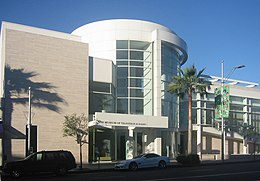
Costumes were displayed in an exhibit at the Paley Center for Media in Los Angeles.
After being worn during a season, the costumes are placed in storage and occasionally displayed. In mid-2019, some from the first season were accompanied by video and Toybina’s original sketches in an exhibit, “Fashion & Fantasy: The Art of The Masked Singer“, at the Los Angeles Paley Center for Media. Selections were also present at the annual “Art of Television Costume Design” exhibit at the Fashion Institute of Design & Merchandising Museum in Los Angeles from August to October 2019. On February 1, 2020, two costumes were displayed at the Natural History Museum of Los Angeles County as part of a meet-and-greet promotion.Later that month, it was announced that the program would be getting a live tour with shows in over forty American cities featuring two celebrity hosts and a local mystery celebrity who would be unmasked at the end of each. Originally scheduled for mid-2020, the tour was later postponed to the following year due to the COVID-19 pandemic and eventually delayed indefinitely.
Hoodies, coffee mugs, phone cases, and other merchandise using the show’s branding are purchasable on the series’ online store. “Family fun packs” consisting of coloring pages, a word search, and a do it yourself mask are free to download on its website, as are official Giphy stickers, clue notebooks, Bingo cards, and phone wallpapers. Images of the series’ logo, costumes, and stage were made available in May 2020 to users on Microsoft Teams as custom backgrounds; others for use on Zoom followed in September. In October, the show launched an official weekly podcast hosted by Bow Wow. In addition to a post-elimination celebrity interview, it features guests and extra clues.