
Tourism in India is important for the country’s economy and is growing rapidly. The World Travel and Tourism Council calculated that tourism generated ₹16.91 lakh crore (US$220 billion) or 9.2% of India’s GDP in 2018 and supported 42.673 million jobs, 8.1% of its total employment. The sector is predicted to grow at an annual rate of 6.9% to ₹32.05 lakh crore (US$420 billion) by 2028 (9.9% of GDP). In October 2015, India’s medical tourism sector was estimated to be worth US$3 billion, and it is projected to grow to US$7–8 billion by 2020. In 2014, 184,298 foreign patients travelled to India to seek medical treatment.
Over 17.9 million foreign tourists arrived in India in 2019 compared to 17.4 million in 2018, representing a growth of 3.5%. This makes India the 22nd most visited nation in the world and 8th in Asia and Pacific . Domestic tourist visits to all states and union territories numbered 1,036.35 million in 2012, an increase of 16.5% from 2011. In 2014, Tamil Nadu, Maharashtra and Uttar Pradesh were the most popular states for tourists. Delhi, Mumbai, Chennai, Agra and Jaipur were the five most visited cities of India by foreign tourists during the year 2015. Worldwide, Delhi is ranked 28th by the number of foreign tourist arrivals, while Mumbai is ranked 30th, Chennai 43rd, Agra 45th, Jaipur 52nd and Kolkata 90th.
The Travel and Tourism Competitiveness Report 2019 ranked India 35th out of 140 countries overall. India improved its ranking by 6 places over the 2017 report which was the greatest improvement among the top 25% of countries ranked. The report ranks the price competitiveness of India’s tourism sector 13th out of 140 countries. It mentions that India has quite good air transport infrastructure (ranked 33rd), particularly given the country’s stage of development, and reasonable ground and port infrastructure (ranked 28th). The country also scores high on natural resources (ranked 14th), and cultural resources and business travel (ranked 8th). However, some other aspects of its tourism infrastructure remain somewhat underdeveloped. The nation has many hotel rooms per capita by international comparison and low ATM penetration. The World Tourism Organization reported that India’s receipts from tourism during 2012 ranked 16th in the world, and 7th among Asian and Pacific countries.
The Ministry of Tourism designs national policies for the development and promotion of tourism. In the process, the Ministry consults and collaborates with other stakeholders in the sector including various central ministries/agencies, state governments, union territories and private sector representatives. Concerted efforts are being made to promote niche tourism products such as rural, cruise, medical and eco-tourism. The Ministry of Tourism maintains the Incredible India campaign focused on promoting tourism in India.
Visa policy of India

Visa policy of India
India requires citizens of most countries to hold a valid passport and apply for a travel visa at their local Indian embassy or consulate, before their visit. Travellers can apply directly by mail or in person, or through their local travel services company. India has recently implemented an online method for citizens of 168 countries to apply for an e-Tourist Visa.
Nationals of Bhutan, Maldives and Nepal do not require a travel visa to enter India. Citizens of Afghanistan, Argentina, Bangladesh, DPR Korea, Jamaica, Maldives, Mauritius, Mongolia, Nepal, South Africa and Uruguay are not required to pay a fee when obtaining an Indian visa.
A Protected Area Permit (PAP) is required to enter the states of Nagaland and Sikkim and some parts of the states of Arunachal Pradesh, Himachal Pradesh, Jammu and Kashmir, Manipur, Mizoram, Rajasthan and Uttaranchal. A Restricted Area Permit (RAP) is required to enter the Andaman and Nicobar Islands and parts of Sikkim. Special permits are needed to visit the Lakshadweep islands.
e-Tourist Visa
As a measure to boost tourism, the Indian Government implemented a new visa policy in November 2014, allowing tourists and business visitors to obtain a “visa on arrival” at 28 international airports, by acquiring an Electronic Travel Authorisation (ETA) online before arrival, without having to visit an Indian consulate or visa centre. In April 2015, the “visa on arrival” scheme was renamed “e-Tourist Visa” (or “e-TV”) to avoid confusion.
The e-Tourist Visa facility requires a tourist to apply online on a secure Government of India website, at least four to thirty days before the date of travel. If approved, the visitor must print and carry the approved visa with their travel documents. The visa allows holders of an ETA to enter and stay anywhere in India for a period of ninety days except for citizens of US, UK, Japan and Canada. Citizens of these countries can stay for up to 180 days at a time. an ETA can be obtained twice in a single calendar year.
India first introduced its “visa on arrival” facility on 27 November 2014, to citizens of the following countries: Australia, Brazil, Cambodia, Cook Islands, Djibouti, Fiji, Finland, Germany, Indonesia, Israel, Japan, Jordan, Kenya, Kiribati, Laos, Luxembourg, Marshall Islands, Mauritius, Mexico, Micronesia, Myanmar, Nauru, New Zealand, Niue, Norway, Oman, Palau, Palestine, Papua New Guinea, Philippines, Russia, Samoa, Singapore, Solomon Islands, South Korea, Thailand, Tonga, Tuvalu, UAE, Ukraine, USA, Vanuatu and Vietnam. On 30 July 2015, the facility was extended to China, Macau and Hong Kong. On 15 August 2015, the facility was further extended to citizens of Andorra, Argentina, Armenia, Aruba, Belgium, Bolivia, Colombia, Cuba, East Timor, Guatemala, Hungary, Ireland, Jamaica, Malta, Malaysia, Mongolia, Monaco, Mozambique, the Netherlands, Panama, Peru, Poland, Portugal, Seychelles, Slovenia, Spain, Sri Lanka, Saint Lucia, Saint Vincent and the Grenadines, Suriname, Sweden, Taiwan, Tanzania, Turks and Caicos Islands, the United Kingdom, Uruguay and Venezuela. The facility should eventually be expanded to about 180 countries.
As a result of the new visa policy, 56,477 tourists arrived on an e-Tourist Visa during October 2015, compared with 2,705 tourist arrivals during October 2014 (just before the facility was introduced), representing a 1987.9% increase. During the period from January to October 2015, a total of 258,182 tourists arrived on an e-Tourist Visa, a 1073.8% increase on the 21,995 tourist arrivals during the same period in 2014 (before the e-Tourist Visa was available).
Statistics
Foreign tourist arrivals and foreign exchange earnings
|
|
| Rank | Country | Number | Share in % |
|---|---|---|---|
| 1 |  Bangladesh Bangladesh |
2,577,727 | 23.58 |
| 2 |  United States United States |
1,512,032 | 13.83 |
| 3 |  United Kingdom United Kingdom |
1,000,292 | 9.15 |
| 4 |  Australia Australia |
367,241 | 3.36 |
| 5 |  Canada Canada |
351,859 | 3.22 |
| 6 |  China (mainland) China (mainland) |
339,442 | 3.11 |
| 7 |  Malaysia Malaysia |
334,579 | 3.06 |
| 8 |  Sri Lanka Sri Lanka |
330,861 | 3.03 |
| 9 |  Germany Germany |
264,973 | 2.42 |
| 10 |  Russia Russia |
251,319 | 2.3 |
| Total of top 10 | 7,330,325 | 67.06 | |
Foreign and domestic tourist visits by State
|
|
||||||||||||||||||||||||||||||||||||||||||||||||||||||||||||||||||||||||||||||||||||||||||||||||||||||||||||||||
World Heritage Sites
There are 40 World Heritage Sites in India that are recognised by the United Nations Educational, Scientific and Cultural Organization (UNESCO) as of August 2019. These are places of importance of cultural or natural heritage as described in the UNESCO World Heritage Convention, established in 1972.[31]
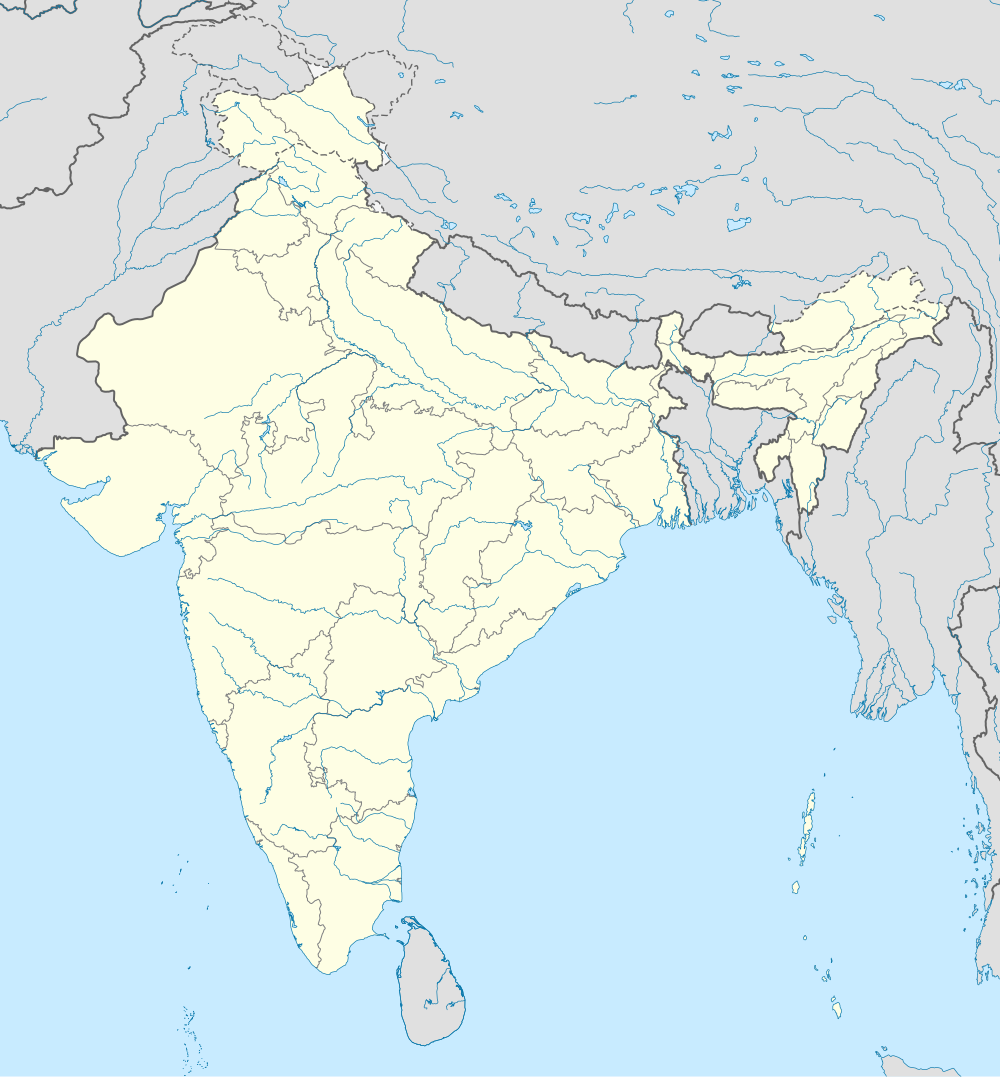


Location of World Heritage Sites in India (
Galler
- North India
-

Munshi Ghat in Varanasi
-
Triveni Sangam in Prayagraj
-

Chaturbhuj Temple in Orchha
-
Udaipur’s City Palace
-

Boats on Naini Lake in Kumaon
-

Lotus Temple in Delhi
-

Tso Moriri in Ladakh
-

Golden Temple, Amritsar
-

Dilwara Temples
- West India
-

Candolim beach in Goa
-
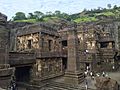
Kailasa Temple at Ellora
-
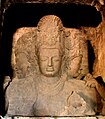
Elephanta Caves
-

Aguada Fort, Goa
-
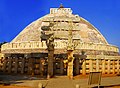
Great Stupa at Sanchi
-

Palitana temples
-

Ajanta Caves in Maharashtra
-

Western Ghats
- East India
-
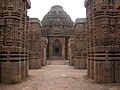
Konark Sun Temple in Odisha
-
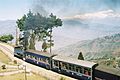
Heritage train in Darjeeling
-

Morgan House, Kalimpong
-

Bengal tiger in Sundarbans
-

Dawki in Meghalaya
-
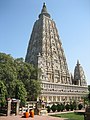
Mahabodhi Temple in Bodhgaya
-

One horned Indian Rhinoceros in Kaziranga National Park, Assam
-

Khajuraho temples
- South India
-
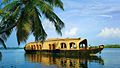
Houseboat in Kerala backwaters
-

Stone chariot in Hampi
-

Mysore Palace illuminated at night
-
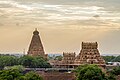
Brihadeeswarar Temple at Thanjavur
-

Charminar in Hyderabad
-
Gommateshwara statue in Shravanabelagola
-

Shore Temple, Mahabalipuram
-
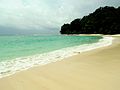
Radhanagar Beach on Havelock Island
- NorthEast India
-
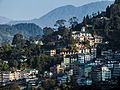
Gangtok from Tibet-Road
-

M.G Marg in Gangtok
-

Sela Pass in Arunachal Pradesh
Outline of Tourism in India
|
|